
Canada’s Water Future: Climate Change, Water Security, and Sustainable Management
Beyond the “myth of abundance,” Canada’s freshwater future is being reshaped by a rapid thaw that threatens the very foundations of our northern communities and western agriculture.

Canadians know how essential water is for agriculture, energy, recreation, industry and communities.
We have built a modern Canada that depends on water for transportation, hydroelectricity, mining, drinking water, food production, forest growth, fisheries, and the ecosystems that support life in our country. Our northern communities are literally built on frozen water mixed with soil, known as permafrost, which supports the land surface in the North.
We also live on the myth of the abundance of clean, limitless water. This myth has misled us and encouraged unsustainable water management, leading to:
- Degradation of water quality and ecosystems in the Great Lakes and other major water bodies
- Drained wetlands
- Dammed waterways that do not permit fish passage
- Water diversions from the original passageways
- Regulated river regimes that are vastly different from natural ones
Climate Change and Canada’s Water Future

We have permitted climate change to overheat our snow and ice, reducing the reliability of spring snowmelt, thinning and reducing lake and sea ice, and causing mountain glaciers to recede and permafrost to thaw.
“Our water mismanagement puts the grand national infrastructure aspirations of Canadians at risk.”
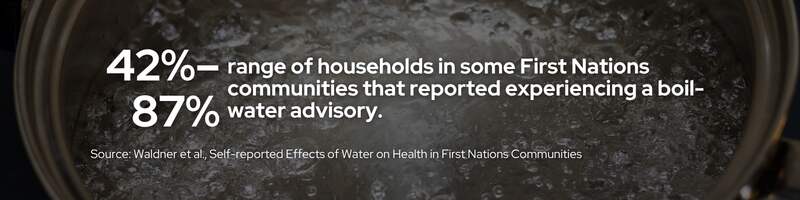
This has resulted in follow-on effects such as harmful algae blooms in our lakes, boil water advisories, extreme droughts, new flood regimes and massive wildfires.
Our water mismanagement puts the grand national infrastructure aspirations of Canadians at risk. And in allowing our freshwater to be degraded, we have deviated from the traditions and knowledge of Indigenous peoples who, for generations, travelled on and lived by the waterways without disturbing them, sustainably harvested the abundant fish and understood that water is life and is inseparable from humans and nature.
To help answer what our water future will be has been very challenging. Climate and hydrological model outputs suggest much warmer winters and summers throughout Canada, earlier and less reliable snowmelts, reduced lake and sea ice formation, thawing permafrost, and more intense floods, wildfires and droughts.
Improved water management and engineering can help us adapt to these changes in many cases, but the dramatic changes in our freshwater resources could push some Canadian communities and economic sectors beyond the limits of adaptation.
This will occur at a time when our forests will be retreating northwards, our population increasing, and the world will be even more reliant on Canada for food, energy and mineral production.
Adapting Canada’s Water Systems to an Uncertain Future
What can we do about this?
Addressing these problems means more than science; it means co-development of equitable solutions with communities and starting to manage our river basins in a comprehensive, integrated way.
“We must slow climate change by reducing greenhouse gas emissions to the atmosphere. This necessary first step is behind track, and efforts to reach net zero must be accelerated, not postponed.”
1. Speed Up Climate Action
We must slow climate change by reducing greenhouse gas emissions to the atmosphere. This necessary first step is behind track, and efforts to reach net zero must be accelerated, not postponed.
2. Increase Water Storage
In the meantime, increasing water storage in wetlands, lakes, ponds and reservoirs can make up for the declining reliability of rainfall and snowmelt due to climate change. We will soon no longer have water from the summer melt of glaciers to dampen the droughts in our western and northern rivers, and so we will need to store and manage water more carefully in drought years.
“We will have to carefully allocate water between our growing cities and ever more valuable agriculture and ensure that new reservoir development does not cost us more in evaporative losses than it gains in water storage flexibility.”
3. Strategically Approach Water Allocation
We will have to carefully allocate water between our growing cities and ever more valuable agriculture and ensure that new reservoir development does not cost us more in evaporative losses than it gains in water storage flexibility. Crop types and decisions about cultivation, pastures, herd sizes and irrigation will have to change to be appropriate for the new emerging climates. Water conservation measures in cities need to be effective and normalized, not the exception in drought conditions.
With improved measurements of our water supply from stream gauges, satellites and weather stations, coupled to better computer modelling prediction systems, we can make precision adaptive water resource allocations and preserve our water for transboundary flows and competing uses for food, communities, hydropower, ecosystems, recreation and culture. This can be implemented through comprehensive and integrated river basin management principles enshrined in law, with everyone represented at the table where water management decisions will be made.
4. Develop Water Intelligence
Canadians can advance towards water sustainability if we have more information made available from improved observations and predictions of water quality, floods, and droughts. This water intelligence will be the key to prosperity and freshwater sustainability in Canada as we deal with change.
But to act on water intelligence and make good choices, we must have:
- Updated federal and provincial water policies
- Revived water science and management institutions
- The inclusion of Indigenous nations in water management decisions
- The consideration of freshwater as not just a commodity, but as the basis for life
- Respect for our freshwater as the basis of our national security
Securing Canada’s Water Future
I look forward to a Canada that rises to this challenge through innovation and accommodation, and leads the world in developing a water-sustainable future that sustains our ecosystems and economic aspirations and preserves our ability to enjoy the life-giving benefits of fresh, clean water throughout the country.
About the Expert
-

Professor John Pomeroy is Director of the Global Water Futures Observatories and UNESCO Chair in Mountain Water Sustainability at the University of Saskatchewan. A distinguished hydrologist and Fellow of the Royal Society of Canada, his research focuses on snow, glacier, and cold-regions hydrology, advancing global understanding of climate change impacts on water resources.
Global Water Futures Observatories is a Canadian national research facility based at the University of Saskatchewan, focused on freshwater security. It operates monitoring networks and research infrastructure to improve the prediction, management, and resilience of water systems under climate change.
See more
-
 Water is Economic Infrastructure. Canada’s Supply Chains Depend on It.
 Justin Murgai
CEO
WaterAid Canada
Justin Murgai
CEO
WaterAid Canada
-
 Canada’s Water Advantage: A Strategic Economic Strength in a Volatile World
 Lorena Patterson
President & CEO
WaterPower Canada
Lorena Patterson
President & CEO
WaterPower Canada
-
 From Hidden Cost to Strategic Value: Rethinking Water in the Age of AI
 Soula Chronopoulos
President
AquaAction
Soula Chronopoulos
President
AquaAction