
Canada’s Water Advantage: A Strategic Economic Strength in a Volatile World
As the world grapples with volatile energy markets and the urgent push for electrification, Canada sits on a dormant economic superpower: its vast, generational water resources.

Canada’s freshwater resources and hydropower assets are a strategic resource and structural economic strength for the country. But abundance alone does not secure advantage. Canada must treat water infrastructure, including hydropower, as strategic national infrastructure that protects our economic stability, enables electrification, and safeguards our country against economic uncertainty.
The Current Environment: Volatility Is the New Normal
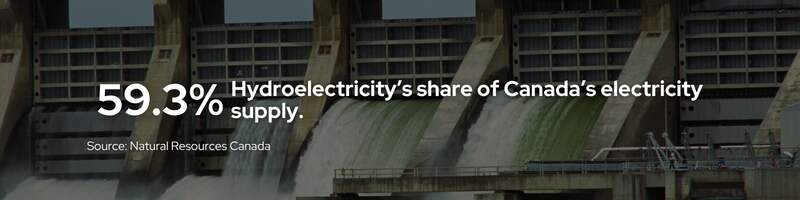
Recent tensions in the Middle East and resulting fuel price volatility underscore how quickly global energy markets can shift, reshaping capital flows and economic planning. As transportation, industry, and heating electrify, electricity grids must remain reliable even as demand grows.
“Unlike many other energy resources, hydropower relies on water flows rather than fuel markets, providing a measure of price stability when global energy markets become turbulent.”
Jurisdictions with stable, diverse power systems are better protected from these disruptions. Reliable electricity systems help shield households and businesses from sudden price spikes while maintaining the steady flow of energy required for economic activity.
Hydropower provides a buffer during periods of market volatility, helping shield consumers from peak electricity prices. Unlike many other energy resources, hydropower relies on water flows rather than fuel markets, providing a measure of price stability when global energy markets become turbulent. Energy reliability underpins productivity and investor confidence.
Hydropower Is Part of Canada’s Water Advantage
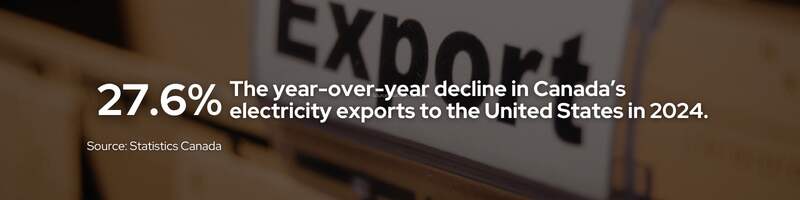
Hydropower already plays a central role in Canada’s electricity system. It provides the majority of Canada’s renewable electricity and contributes significantly to grid diversity and price stability.
Hydropower is not simply another electricity source. It is a generational asset that continues delivering value for decades, often for more than a century.
Within Canada’s evolving energy system, hydropower plays a critical role in stabilizing electrification and supporting grid modernization. As electricity demand grows and systems become more complex, their flexibility helps balance supply and demand reliably. It is also a driver of rural and Indigenous economic participation, supporting long-term partnerships, employment opportunities, and economic development in communities across Canada.
“Many of Canada’s generating stations have been producing electricity for 80 to 100 years and continue to deliver reliable power today. “
Hydropower acts as a backbone technology that enables the integration of other clean energy resources such as wind and solar. Its flexibility helps maintain system stability while expanding clean electricity supply.
Hydropower facilities are also built to operate over exceptionally long time horizons. Many of Canada’s generating stations have been producing electricity for 80 to 100 years and continue to deliver reliable power today. This durability allows hydropower to provide long-term system value that extends far beyond the typical lifespan of most energy infrastructure.
System Value Matters More Than Headline Cost
“Electricity systems must operate reliably across decades. Long-duration dispatchability, integration capacity, and price stabilization all contribute to the total cost of operating a grid.”
In public discussions about energy systems, technologies are often compared using simplified cost metrics. While these metrics can be useful in certain contexts, they often fail to capture how electricity systems actually function.
When evaluated at the system level, hydropower can be a less expensive opportunity than technologies that appear cheaper when considered in isolation.
Electricity systems must operate reliably across decades. Long-duration dispatchability, integration capacity, and price stabilization all contribute to the total cost of operating a grid.
Hydropower acts as a system battery that allows electricity to be delivered when it is needed most. It enables the integration of other renewable resources while maintaining reliability, and it contributes to price stabilization by reducing reliance on volatile fuel markets.
These system benefits reduce total grid costs and lower long-term economic risk.
Abundance Does Not Equal Resilience
“Regulatory complexity and fragmentation slow modernization timelines and create uncertainty for major infrastructure projects.”
Canada’s water advantage is significant, but it cannot be taken for granted. Hydropower development faces challenges. Much of Canada’s water and hydropower infrastructure is aging and will require continued investment to maintain reliability and performance. At the same time, climate volatility can introduce new stresses on infrastructure.
Regulatory complexity and fragmentation slow modernization timelines and create uncertainty for major infrastructure projects. Financing models used by policymakers and regulators do not always align with the generational lifecycle of hydropower assets.
A consolidated approach that addresses these challenges would encourage hydropower growth across the country by improving regulatory frameworks, introducing more flexible approaches with regard to financing, and encouraging refurbishments of existing facilities.
Global Competition Is Intensifying
Canada is not alone in recognizing the importance of long-duration energy infrastructure. Countries around the world are investing aggressively in electricity systems that support electrification, industrial competitiveness, and economic resilience.
Investment capital is mobile. Projects move forward where regulatory frameworks are clear, permitting processes are predictable, and financing tools support long-term infrastructure development. In this environment, policy frameworks can determine whether strategic projects move forward or remain stalled.
Governments Must Create the Conditions for Investment
“The federal government should modernize regulatory frameworks for long-duration infrastructure to reduce unnecessary delays while maintaining environmental rigour.”
Governments have an important role to play in creating the conditions for investment.
The federal government should modernize regulatory frameworks for long-duration infrastructure to reduce unnecessary delays while maintaining environmental rigour. Federal financing tools should also be aligned with the generational timelines of hydropower and other long-duration infrastructure.
Recognizing water infrastructure, including hydropower, as strategic national capital within Canada’s economic growth strategy would also help ensure these assets receive the attention they require. Provinces also have an important role to play. Prioritizing the refurbishment and modernization of existing hydro assets will help maintain reliability while expanding capacity where appropriate. Integrating hydropower into electrification and industrial planning will also support economic growth.
Applying a “one project, one review” approach to major infrastructure would help streamline environmental assessments while maintaining strong environmental standards. Clear and predictable permitting processes would provide greater certainty for investors and accelerate the development of strategic energy infrastructure.
Seizing Canada’s Water Advantage
“Canada’s water advantage is real. But competitive advantage is not a chance occurrence. It must be deliberately built and maintained.”
Canada’s water advantage is real. But competitive advantage is not a chance occurrence. It must be deliberately built and maintained. If the Government of Canada treats water infrastructure, including hydropower, as strategic national capital, it has the opportunity to anchor clean energy reliability, industrial competitiveness, and long-term economic resilience for the next generations of Canadians.
The decisions made today will shape Canada’s economic resilience for decades, and perhaps even centuries, to come.
About the Expert
-

Lorena Patterson is President and CEO of WaterPower Canada, the national association representing Canada’s hydropower industry. She brings more than 25 years of experience in energy policy, public affairs, and international relations, including leadership roles with TC Energy and Spirits Canada. She previously served as President of the Mexican Natural Gas Association.
WaterPower Canada is the national not-for-profit trade association representing the hydropower industry.
See more
Its members account for more than 95% of Canada’s installed waterpower capacity and advocate for responsible hydropower development as a cornerstone of the country’s clean electricity system.
-
 Water is Economic Infrastructure. Canada’s Supply Chains Depend on It.
 Justin Murgai
CEO
WaterAid Canada
Justin Murgai
CEO
WaterAid Canada
-
 Canada’s Water Future: Climate Change, Water Security, and Sustainable Management
 John Pomeroy
Director
Global Water Futures Observatories
John Pomeroy
Director
Global Water Futures Observatories
-
 Fusion’s Decisive Decade and Why Canada Is Positioned to Lead
 Amitava Bhattacharjee
President & Chief Science Officer
Stellarex
Amitava Bhattacharjee
President & Chief Science Officer
Stellarex