
Water is Economic Infrastructure. Canada’s Supply Chains Depend on It.
Beyond a mere humanitarian concern, water and sanitation are the hidden engines of global trade and workforce productivity.

Every economy runs on infrastructure. Energy grids power industry, transportation networks move goods, and digital systems connect markets.
Water belongs in that same category. It is part of an environment that shapes the conditions under which businesses operate. It means production reliability. It means market stability. It means stronger bottom lines.
Why Water Infrastructure Matters to Economic Growth
Water, sanitation, and hygiene services, known collectively as WASH, underpin workforce productivity, agricultural output, public health, and the stability of supply chains. When these systems are weak or absent, the consequences are felt far beyond households and communities. Entire economies lose productive time, absorb preventable health costs, and struggle to sustain growth.
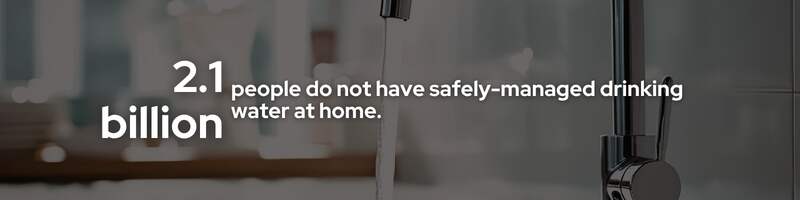
Today, the scale of the crisis has meant 696 million people around the world still lack even a basic water service, while more than 2.1 billion people do not have safely-managed drinking water at home. At the same time, 3.4 billion people lack safely managed sanitation, and 1.7 billion cannot wash their hands at home with soap and water.
“In four African countries alone, the annual economic cost of inadequate water, sanitation, and hygiene services reaches US$5.7 billion, equivalent to 8.3 percent of national GDP.”
Across many emerging markets, these severely inadequate water and sanitation conditions quietly constrain growth. Workers lose time to illness linked to unsafe water. Families spend hours collecting water instead of participating fully in the labour force. Healthcare systems absorb costs associated with preventable diseases. Agricultural production becomes less reliable where water systems are weak. Over time, these pressures accumulate, and public resources are diverted toward problems that basic infrastructure could prevent.
Recent modeling by WaterAid shows that in four African countries alone, the annual economic cost of inadequate water, sanitation, and hygiene services reaches US$5.7 billion, equivalent to 8.3 percent of national GDP. Much of this loss reflects time that could otherwise be spent in paid work, education, or enterprise.
Water Infrastructure Delivers Strong Investment Returns
WaterAid’s recent analysis shows that investments in basic WASH services can generate benefit-cost ratios of more than three to one, while investments in sanitation in some contexts deliver returns of more than eight times their cost. These are returns that rival or exceed many traditional infrastructure investments.
Weak water systems are often treated as someone else’s problem, but in an interconnected economy, their consequences travel quickly. Canada trades with, invests in, and relies on markets where water stress is increasing, and the effects are felt through higher costs and greater uncertainty. It’s part of the economic foundation on which Canadian growth depends.
“Climate change, aging infrastructure, population growth, rapid urbanization, and industrial demand are placing increasing pressure on water systems across the country.”
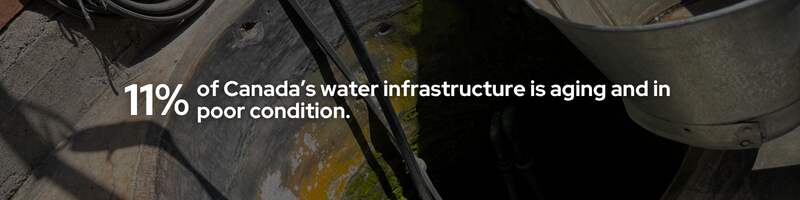
Canada itself holds about one-fifth of the world’s freshwater resources, but abundance does not guarantee security. Climate change, aging infrastructure, population growth, rapid urbanization, and industrial demand are placing increasing pressure on water systems across the country. Floods, droughts, and contamination events are becoming more frequent and more costly. Municipalities depend on the more than 11% of aging infrastructure that is already in poor condition. Indigenous communities continue to face longstanding inequities in access to safe drinking water.
The question is not whether water will shape our economic outcomes, but whether governments will treat it with the same urgency as other strategic priorities to mitigate critical risks. In recent years, Canada and its allies have moved quickly to secure energy supply, strengthen digital infrastructure, invest in critical minerals, and reduce dependence on fragile global systems. As climate pressures intensify and demand grows, the WASH gap will become just as hard to ignore.
What Canada Must Do Next on Water Infrastructure
“Canada must recognize water, sanitation, and hygiene as economic infrastructure in its international development and trade strategies.”
If Canada wants to lead on water sustainability, several steps must happen now.
1. Canada must recognize water, sanitation, and hygiene as economic infrastructure in its international development and trade strategies.
Canada’s companies operate across global markets, particularly in sectors such as mining, agriculture, and manufacturing. Those sectors depend heavily on stable water systems and healthy workforces, but are increasingly operating in or sourcing from regions that lack that sustainability. Supporting stronger WASH systems in partner countries is therefore not only a humanitarian priority, but also an investment in the reliability of global supply chains and the operating environments where Canadian businesses work.
2. Canada should expand financing for water infrastructure through its development finance tools and international partnerships.
Institutions such as FinDev Canada, export financing programs, and blended finance initiatives can play an important role in mobilizing capital for water and sanitation systems that underpin economic growth in emerging markets. Development organizations with long-standing technical experience in water systems and deep-rooted relationships in local communities can help ensure that these investments translate into durable solutions that support both communities and economic activity.
3. Canadian businesses should treat water stewardship as part of their long-term risk management and investment strategies.
Companies operating internationally can work with local governments and civil society to strengthen community water systems that support both economic activity and public health. Water systems are inherently shared infrastructure, and experience from initiatives such as WaterAid’s work with companies in water-stressed regions shows that when businesses collaborate with communities and local partners to improve water access, the benefits extend beyond individual worksites to the broader stability of local economies.
4. Canada should use its voice in global institutions to elevate water as a foundational component of climate resilience, economic development, and trade stability.
Water security is not simply a social issue. It is a prerequisite for functioning markets.
Water Stewardship as a Business Competitiveness Strategy
“Improving WASH services can cut absenteeism by almost 30% and raise productivity by more than 25%, while lowering health costs for workers and employers alike.”
Forward-looking companies are beginning to recognize this reality. Rather than treating water investments solely as philanthropic initiatives, they are approaching them as strategic investments.
WaterAid has seen it firsthand through its Boosting Business work with companies operating in water-stressed regions. When businesses engage with local partners to strengthen water and sanitation systems, the benefits extend well beyond individual worksites.
Across global supply chains, it showed that improving WASH services can cut absenteeism by almost 30% and raise productivity by more than 25%, while lowering health costs for workers and employers alike. In Bangladesh, factories with better facilities also saw measurable gains in product quality. In short, reliable water and sanitation systems are drivers of competitiveness.
The Economic Future Depends on Reliable Water Systems
On World Water Day, attention rightly turns to the millions of people who still live without clean water or safe sanitation. It should also prompt a more practical question.
What kind of economies can grow where basic infrastructure is missing?
Markets cannot thrive where people are sick, where hours are lost collecting water, or where fragile systems limit productivity. The strength of tomorrow’s economies will depend on whether the systems that support daily life are resilient enough to sustain growth. Water is one of those systems, and how seriously we treat it will shape the economic trajectory of many regions in the years ahead.
About the Expert
-

Justin Murgai is CEO of WaterAid Canada, where he leads the organization’s efforts to expand access to safe water, sanitation, and hygiene globally. He brings more than 16 years of experience in international development and humanitarian work, including leadership roles with Engineers Without Borders and LOVE (Leave Out Violence), focusing on social equity and community resilience.
WaterAid Canada is the Canadian arm of WaterAid, an international nonprofit focused on expanding access to clean water, sanitation, and hygiene. The organization works with partners and policymakers to improve public health, strengthen livelihoods, and support sustainable development in underserved communities worldwide.
See more
-
 Canada’s Water Advantage: A Strategic Economic Strength in a Volatile World
 Lorena Patterson
President & CEO
WaterPower Canada
Lorena Patterson
President & CEO
WaterPower Canada
-
 Canada’s Water Future: Climate Change, Water Security, and Sustainable Management
 John Pomeroy
Director
Global Water Futures Observatories
John Pomeroy
Director
Global Water Futures Observatories
-
 Canada’s Economic Future: Balancing Global Trade and Local Supply Chains
 Mauricio Zelaya
EY-Parthenon Canada Partner & National Economics Leader
EY Canada
Mauricio Zelaya
EY-Parthenon Canada Partner & National Economics Leader
EY Canada