Canada’s Economic Future: Balancing Global Trade and Local Supply Chains
Canada can reduce its reliance on the US while increasing foreign direct investment by undertaking strategic investments in infrastructure, technology, and local industries to foster sustainable growth and competitiveness in an uncertain global landscape.

Over the past few months, uncertainty has become a new normal in Canada, especially as our trade relationship with the US has been in constant flux. Changing trade dynamics, coupled with a subdued macroeconomic environment, have led to a renewed focus on how we can strengthen our economy to weather these unprecedented times.
Canada has long faced challenges that have impacted business activity, investment, and sectoral growth. In recent years, economic uncertainty and global geopolitical tensions have opened the Canadian economy to a range of risks, exposing our structural challenges. As such, business leaders and policymakers alike are actively seeking solutions to curb the effects of these challenges, such as strict regulation, availability of quality infrastructure, declining fiscal competitiveness, a lack of capital, an aging workforce, housing affordability and reliance on US trade.
As Canada looks towards its future, balancing foreign direct investment (FDI) attraction and strengthening of domestic supply chains will be the key ingredients to success. By advocating for local sourcing and investment in key infrastructure, Canada can support a more stable economy that is better equipped to handle global disruptions, ultimately redefining strategies for sustainable growth and competitiveness.
Fault lines in the Canadian economy

As a small open economy, Canada has historically grappled with a range of challenges that impact economic growth and resilience:
- Canada is known globally for its strict regulation, which, while sustaining high quality standards, also impacts business location decisions. Among G7 nations, Canada ranks last in FDI regulatory restrictiveness, primarily due to stringent screening and approval processes for foreign investments, making it harder for businesses to establish operations here.
- Outdated transportation networks and red tape delay the movement of goods and people, stifling economic growth. Insufficient investment in critical infrastructure not only impacts domestic businesses but also reduces Canada’s investment attractiveness.
“Among G7 nations, Canada ranks last in FDI regulatory restrictiveness, primarily due to stringent screening and approval processes for foreign investments, making it harder for businesses to establish operations here.”
- Many Canadian entrepreneurs also face unique challenges in securing funds to scale operations, especially when compared to their counterparts in the United States (US), where venture capital flows more freely.
- Canada’s population is evolving, experiencing notable changes due to lower fertility rates and longer life expectancy. As the baby boomer generation retires, the age structure is shifting, leading to fewer youth entering the workforce and contributing to economic activity.
- Housing affordability has long hindered talent and investment attraction in Canada, with skilled workers seeking opportunities elsewhere and businesses struggling to recruit and retain employees. The COVID-19 pandemic exacerbated these disparities, particularly for lower-income households and marginalized communities, as job losses and economic instability increased housing insecurity.
- Canada’s economy heavily relies on trade with the US, its largest trading partner. This dependence exposes Canadian businesses to vulnerabilities from US economic fluctuations, trade policy changes, and geopolitical tensions. It also limits opportunities for diversification into emerging markets that could drive new growth.
“Housing affordability has long hindered talent and investment attraction in Canada, with skilled workers seeking opportunities elsewhere and businesses struggling to recruit and retain employees.”
Foreign Direct Investment Attraction and Strengthening Domestic Supply Chains

FDI, trade and local supply chain development are intricately linked, each playing a key role in supporting business and economic activity. FDI brings access to capital, technology and expertise, providing Canadian businesses with the resources needed to innovate and compete on a global scale. However, an over-reliance on foreign investment can expose the economy to vulnerabilities, particularly in times of external shocks such as international market fluctuations.
While trade can enhance the benefits of FDI by providing Canadian businesses access to larger markets, it also introduces certain risks. Canada’s reliance on American and other markets for exports makes Canadian businesses vulnerable to external economic fluctuations, trade disputes, and other macroeconomic trends that may influence demand in international markets. Similarly, dependence on imported goods can amplify existing domestic supply chain vulnerabilities to external shocks, especially during a crisis like the COVID-19 pandemic, which highlighted the fragility of global supply networks.
“Resilient supply chains can enable Canadian businesses to thrive by reducing reliance on imported goods and services, ultimately contributing to more self-sufficient ecosystems.”
Strengthening local supply chains can support key economic benefits such as job creation, increased innovation potential, and greater resilience against external macroeconomic shocks. Resilient supply chains can enable Canadian businesses to thrive by reducing reliance on imported goods and services, ultimately contributing to more self-sufficient ecosystems. Further, a focus on domestic supply chain integration can enhance our ability to respond to crises, ensuring that essential goods and services remain accessible despite global disruptions.
Business retention is also a crucial aspect of this strategy. By focusing on strengthening local supply chains and supporting a more attractive business environment, Canada can improve its business retention while attracting new investment on Canadian soil. Supporting local companies through targeted initiatives such as access to funding, training, and resources will enable them to thrive and innovate.
So, What is Canada’s Way Forward?
To make balancing FDI attraction, trade reliance, and strong supply chains feasible, Canada must seek out a range of policies and tools that support resilience.
First, investment in technology and encouraging technology adoption are critical drivers for fostering innovation and competitiveness. In a rapidly evolving global economy, the ability to leverage advanced technologies can significantly enhance productivity and market reach, which is why it’s important for supports to be in place to assist Canadian companies with implementation. This is especially true for small and medium-sized enterprises (SMES), which often face more challenges in adopting and integrating new technologies due to high costs and limited resources.
“Outdated transportation networks and inadequate public services hinder the movement of goods and people, stifling economic activity and exposing domestic capacity constraints to foreign investors.”
Second, investing in infrastructure will be crucial to enhance our competitiveness. Outdated transportation networks and inadequate public services hinder the movement of goods and people, stifling economic activity and exposing domestic capacity constraints to foreign investors. This may be seen in the form of modernizing roads, railways, and ports to improve logistics and reduce costs for businesses. Additionally, investing in digital infrastructure, such as high-speed internet access, particularly in rural and remote areas, will support businesses and enhance overall productivity.
Third, the growing sentiment of “buy local” reflects a strong desire among Canadian consumers to support domestic industries. This trend can be leveraged to foster local supply chain development, creating a more resilient economy that is less reliant on global fluctuations.
“By strengthening trade relationships with partners and investing in export-oriented industries, the Canadian economy can mitigate the risks associated with our strong reliance on the US market.”
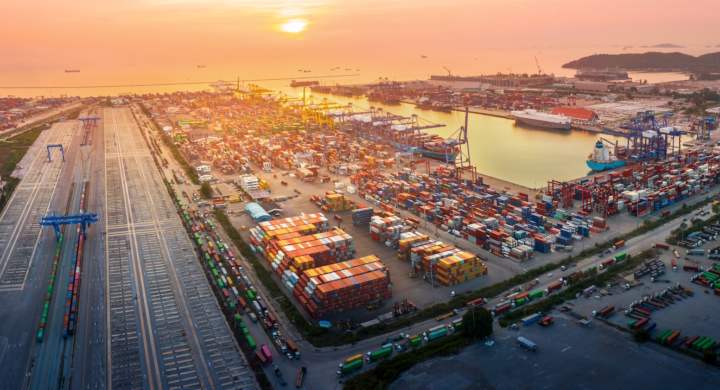
Finally, diversifying our trade relationships is an important step in enhancing Canada’s resilience and path to prosperity. Canada’s geographic advantages provide access to international markets through its ports on the east and west coasts. By strengthening trade relationships with partners and investing in export-oriented industries, the Canadian economy can mitigate the risks associated with our strong reliance on the US market.
Achieving Sustainable Growth
Ultimately, to achieve sustainable growth, Canada must find a balance between attracting FDI, engaging in international trade and strengthening local supply chains. This approach allows us to harness the benefits of foreign investment while simultaneously fostering a robust domestic economy that can withstand external pressures. By investing in local industries and encouraging businesses to source materials and services from within, we can create a more resilient economic ecosystem. A long-term strategic pursuit such as this would require a high degree of collaboration between all levels of government, as well as the private sector, to ensure a holistic transformation that supports the ultimate goal of enhancing economic resilience and positioning Canada for sustained economic growth.