
No More Delays: Efficiency and Integrity Should Guide Canada’s Fisheries Policies
Canada’s fisheries policies are criticized for delays and weak enforcement of marine protections, despite clear evidence that stronger, faster action is needed to rebuild fish stocks.

Canada presents itself as a global leader in ocean protection and sustainable seafood, but beneath the glossy headlines, effective marine conservation is being undermined by endless bureaucracy and what seems to be the authorities’ fear of ruffling the feathers of fishing-industry moguls.
Why Well-Managed Marine Protected Areas Matter for Sustainable Fisheries
Marine Protected Areas (MPAs) are geographical spaces that, by law, ought to be recognized, dedicated, and managed to achieve the long-term conservation of the nature they host. In other words, these are swaths of the ocean where fish are left alone. This is particularly the case of no-take marine reserves; however, the effectiveness of protection varies based on the zoning type, the degree to which the regulations protecting biodiversity are enforced, the size of the MPA and the extractive activities surrounding it.
The advantages of establishing well-placed and managed MPAs are well documented: from supporting the conservation of habitats and biodiversity, to allowing the rebuilding of diminished fish populations, therefore leading to a spillover of larval and adult fish to the surrounding areas and, in consequence, benefiting fisheries.
Delays in Canada’s Fisheries Policies Are Undermining Conservation Goals
From 2003 to date, Canada has established 16 marine protected areas under the Oceans Act, covering ~600,000 km² or about 10% of its Exclusive Economic Zone (EEZ)1. According to the MPAtlas, only 331,000 km are fully or highly protected areas, with oil & gas, mining, dumping, and industrial fishing, particularly destructive bottom trawling, still allowed in some areas declared prior to the 2019 MPA Protection Standard.
But even in more recently declared MPAs, there has been an inconsistent application of prohibitions on harmful activities, a lack of clear guidance to implement protection standards and even after new standards were set, application has been incomplete and inconsistent.
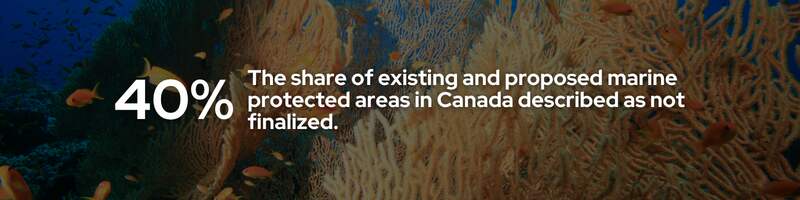
Although it is understandable that authorities want to follow proper procedures before setting up MPAs and their management plans, the fact is that over 40% of Canada’s existing and proposed marine protected areas (excluding marine refuges and Other Effective area-based Conservation Measures—also known as OECMs) have not reached the final stage of the establishment process, with some of them being stalled in the previous stages for over a decade. This is unjustified, particularly when evidence shows that marine resources have been dwindling since the mid-1990s in the Pacific and the Arctic, and since the late-1970s in Canada’s Atlantic waters.
The Atlantic Cod Collapse Shows the Cost of Inaction
“Today, that biomass is around 2% of what it was at the beginning of the 20th Century.”
The classic example for this part of the world is that of the Atlantic cod fishery off Newfoundland and Labrador, which collapsed in the early 1980s, but could have sustained catches of almost 200,000 tonnes per year had the Canadian authorities allowed the stock to rebuild by timely closing the fishery and establishing the Gilbert Bay MPA a couple of decades earlier than they did.
Our research has shown that while the earlier fishery, which used lines and traps, generated sustained catches of 100,000 to 200,000 tonnes per year for 450 years, the unleashing, in the 1960s, of bottom trawlers reduced the Atlantic cod biomass to levels that could not sustain high catches. Today, that biomass is around 2% of what it was at the beginning of the 20th Century.
Rebuilding Depleted Fish Stocks Requires Honest Data
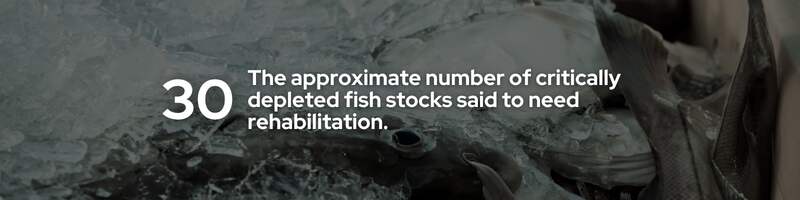
In recent years, the Department of Fisheries and Oceans (DFO) has gathered officials, fishers, and researchers to develop plans to rebuild critically depleted fish stocks, of which about 30 need rehabilitation. However, many of those plans lack hard-hitting measures, defined targets of what a “healthy stock level” means and how to achieve it, as well as clear timelines.
The absence of clarity is evident in the 2026 announcement of the Northern cod stock being described as healthy, not because assessments have shown an increase in fish biomass, but rather because DFO lowered the limit reference point, which is the threshold below which stock size is considered critically depleted, and raised the estimated spawning stock biomass.
This is where the integrity portion of this article’s title comes in: comprehensive catch data, which account for all extractions, from industrial to subsistence catches and everything in between, must be used to evaluate the current status of depleted fish stocks. These data should be used to determine the ideal size of the fish stock that would allow for sustainable catches using proven methodologies that don’t need to be reinterpreted or “adjusted,” and that would clearly show what the conservative fishing limits that would allow the rebuilding of those struggling fish populations are, including their prey.
Canada’s Fisheries Policies Can Restore Our Oceans
Science has shown that if fishing operators, under the guidance of managers and researchers, leave in the water a biomass equivalent to at least 50% of the unexploited fish population, that is, of the biomass that existed before the industrialization of fisheries, then rebuilding is possible, particularly if environmental conditions don’t change much. This is because the biomass left untouched would be equivalent to the population size which the ecosystem would normally accommodate, thus giving fish enough time to mature and reproduce, and promoting ecosystem resilience.
Combined with well-enforced no-take marine protected areas, which promote the aforementioned spillover effect, and the banning of destructive bottom-contact fishing methods, these measures—when taken promptly—support the recovery of diminishing fish populations. Canada, with 40% of its population living within 20 kilometres of an ocean shoreline, deserves this.
- This figure excludes National Marine Conservation Areas managed by Parks Canada, Marine National Wildlife Areas, managed by Environment and Climate Change Canada, and Other Effective Area-based Conservation Measures (OECMs), including marine refuges.
About the Experts
-
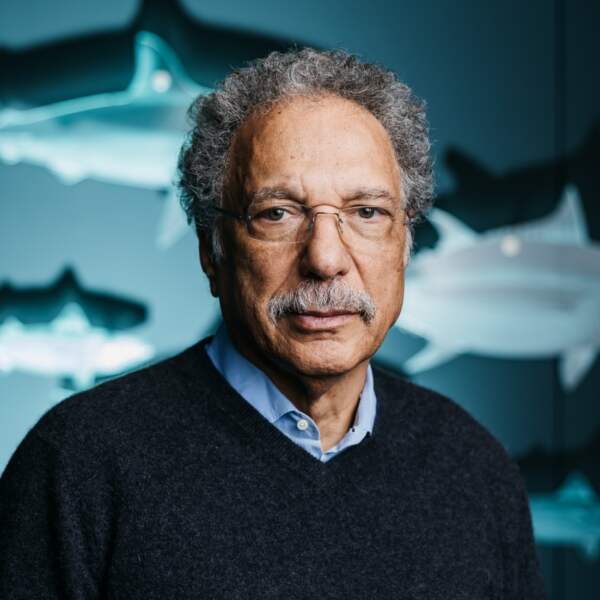
Dr. Daniel Pauly is the world’s most-cited fisheries scientist and a fellow of the Royal Society of Canada. He is the Principal Investigator of the Sea Around Us initiative, a large research project devoted to identifying and quantifying global fisheries trends. He is also a Killam professor at the University of British Columbia’s Institute for the Oceans and Fisheries.
Sea Around Us is a research initiative founded by Dr. Daniel Pauly in 1999 and based at the University of British Columbia’s Institute for the Oceans and Fisheries. By performing catch reconstructions and stock assessments, the program evaluates the impact of fisheries on the world’s marine ecosystems and offers mitigation solutions to a range of stakeholders.
See more -

Valentina Ruiz-Leotaud is a journalist and communications strategist with more than 20 years of experience covering local and global issues. Since 2016, she has led communications for the Sea Around Us initiative at the University of British Columbia. She holds a Master of Journalism from UBC and was a fellow of the International Reporting Program.
Sea Around Us is a research initiative founded by Dr. Daniel Pauly in 1999 and based at the University of British Columbia’s Institute for the Oceans and Fisheries. By performing catch reconstructions and stock assessments, the program evaluates the impact of fisheries on the world’s marine ecosystems and offers mitigation solutions to a range of stakeholders.
See more
-
 Marine Renewables: The Key to Unlocking Canada’s Blue Economy Potential
 Elisa Obermann
Executive Director
Marine Renewables Canada
Elisa Obermann
Executive Director
Marine Renewables Canada
-
 The Ocean Is Not a Sector. It Is the System. Let’s Treat it that Way
 Jennie Moushos
Interim CEO & COO
Ocean Wise
Jennie Moushos
Interim CEO & COO
Ocean Wise
-
 Canada’s Ocean Future: Building Prosperity Through Sustainable Marine Protection
 Jason Goldsworthy
Executive Director
COAST Centre for Ocean Applied Sustainable Technologies
Jason Goldsworthy
Executive Director
COAST Centre for Ocean Applied Sustainable Technologies