
Canada’s Ocean Future: Building Prosperity Through Sustainable Marine Protection
Strategic ocean policy advocate advancing Canada’s three-ocean leadership through integrated innovation, Indigenous partnership, and evidence-based stewardship to align economic prosperity with ecological resilience.

Our planet has five named oceans, but in reality, it holds just one: A single, continuous, circulating body of water that connects every coastline. A drop of water leaving Australia’s southern coast can, through global currents, eventually reach Canada’s Pacific coast.
This is the defining truth of the world’s ocean system: what happens in one region reverberates everywhere else. From climate regulation to food security, from trade routes to biodiversity, the ocean is the foundation of global stability. And because it is shared, its future depends on collective responsibility, not isolated action.
Why Canada’s Oceans Matter More Than Ever
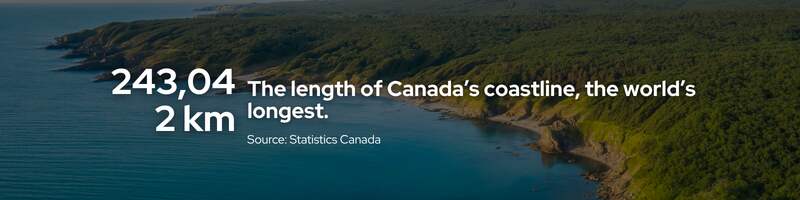
Canada’s oceans are the quiet achiever. For thousands of years, Canada’s oceans and waterways have been sources of food, trade routes, recreation, and spirituality. Throughout history, they have been the setting for conflicts and lines of national defence. More recently, we have recognized the importance of the ocean for ensuring planetary health. Yet we have long taken the ocean’s importance for granted, including in Canada.
Canada must adopt a coherent, long-term ocean strategy that aligns prosperity with ecological stewardship, Indigenous leadership, and national security.
Leveraging Canada’s Three-Ocean Advantage
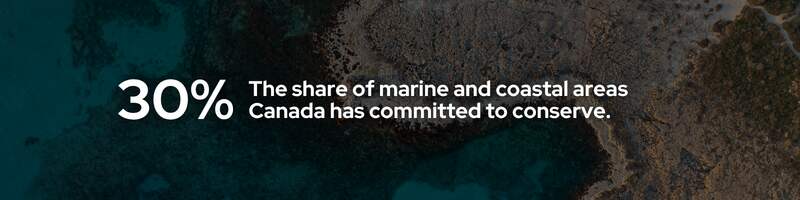
It is a fact that Canada has the longest coastline in the world (more than double the next longest) and is one of the few countries in the world that has shorelines for three oceans (Pacific, Atlantic and Arctic). This unique three-ocean geography, combined with Canada’s diverse ocean industries, research strength and commitment to sustainability and social reconciliation, sets Canada on the path to being a global leader in defining the future of our oceans and the role of sustainable marine protection.
Canada’s ocean future must balance ecological and social impacts with economic opportunity. It goes beyond conservation and protection to strategically seize the opportunities the ocean provides. It means treating the ocean as an asset to be nurtured, not a resource to be extracted. Economic growth must be paired with ecological and social responsibility.
Overcoming Fragmented Priorities in Ocean Policy
Canada has all the ingredients to demonstrate this delicate balance, yet we are plagued with inconsistent vision, competing priorities and limited capacity. Not only do these factors impact the growth of a prosperous ocean economy in Canada, but they also constrain ecological and social considerations like marine protected zones and conservation efforts. Too often, we start down a path only to abandon it when priorities shift. This causes uncertainty in our commitment towards achieving our goals.
Recent geopolitical changes have demanded the need for increased investment in national security and the diversification of Canadian trade, most likely by sea. Much of this investment will flow into the ocean sector. But if this is the only lens we apply, we miss the broader opportunity to build a long-term, responsible ocean strategy. We should use this moment to advance a long-term, responsible ocean vision, leveraging the resources made available by the current global context.
Canada needs to formally recognize our oceans as a strategic economic, environmental and geopolitical domain that can support Canadian sovereignty through innovation adoption and signal a clear commitment to global health, both socially and environmentally.
Defining a National Vision for Canada’s Ocean Future
“We need to be bold and commit to new innovations in the ocean sector, like marine energy, autonomous systems and innovative conservation means.”
To move from potential to leadership, Canada must take deliberate, coordinated action. That begins with:
- Defining a clear vision for Canada’s ocean future
Our vision must transcend Government policies and align with community-based priorities, focusing on protection and prosperity. Government policies change, but our vision of how to work with our oceans must remain consistent and clear. The vision should recognize the value of our ocean ecosystem and ensure we are not wasting the opportunity, whether economically, environmentally or socially significant. A national ocean strategy must be grounded in community priorities – coastal, rural, urban and Indigenous – because we are all stewards of the same ocean.
- Prioritizing the strength of partnerships
We need to recognize the limitations of our capacity as a “middle nation” with vast potential and combine our efforts to have the greatest impact. Too often, we see a dilution of resources towards multiple overlapping or competing interests. Canada cannot be everything to everyone, nor can we fund every initiative. We must choose with intention and go all in. Governments need to align their efforts in supporting this call for partnerships by prioritizing support for collaborative efforts rather than rewarding “go-it-alone”.
- Lean into innovation by connecting research and industry
Canada is known globally for its strength in research and innovation. Fundamental research is essential, but industry is where the biggest impacts occur, both positive and negative. We need to strengthen the connection between academic research and industry. Too often, we see disconnects between advanced research and industry adoption. We need to be bold and commit to new innovations in the ocean sector, like marine energy, autonomous systems and innovative conservation means.
- Rely on evidence-based decision-making
Canada needs to invest in ocean data, digital infrastructure and monitoring capacity to support evidence-based decision-making. Our decision-making is often based on fragmented information and incomplete analyses. Advanced tools like artificial intelligence will support faster analyses, but the integrity and quality of the underlying data are paramount. Canada already has a strong foundation through major investments in ocean data collection, but this must be expanded, especially with the expected investments in defence and security.
Creating a Global Model for Ocean Prosperity
Canada can use its ocean future as a global benchmark for how prosperity can mean more than economic growth, but also ecological preservation and community advancement. Canada has strengths in many sectors, but none provide us a unique opportunity to demonstrate our ability to balance the need for economic opportunity, community well-being and ecological empathy more than working in the ocean. And we have the world’s longest coastline as our proving ground.
If Canada chooses to lead, we can show the world that ocean prosperity means more than economic gain – it means ecological resilience, community support, and a healthier planet for generations to come.
About the Expert
-

Dr. Jason Goldsworthy is the Executive Director of COAST, a not-for-profit advancing the commercialization of ocean innovation in Pacific Canada. Since 2023, Jason has led COAST and established it as a key player in the ocean innovation community in Canada. Jason also serves on the board of MEOPAR Inc., the Marine Environmental Observation Prediction and Response network.
COAST is a Canadian non-profit organization that supports innovation and commercialization in the sustainable blue economy. Through venture programming, workforce development, industry partnerships, and access to facilities and expertise, COAST helps entrepreneurs, researchers, Indigenous communities, and companies develop and scale ocean-based technologies and solutions. Headquartered in British Columbia, it works to advance sustainable economic growth across ocean and marine sectors, including clean technology, marine energy, conservation, aquaculture, and ocean monitoring.
See more
-
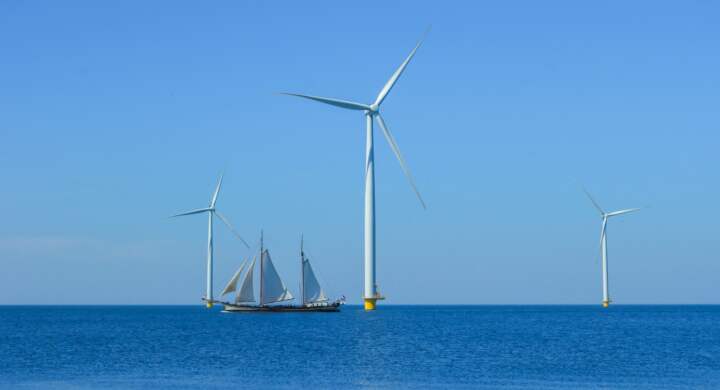 Marine Renewables: The Key to Unlocking Canada’s Blue Economy Potential
 Elisa Obermann
Executive Director
Marine Renewables Canada
Elisa Obermann
Executive Director
Marine Renewables Canada
-
 The Ocean Is Not a Sector. It Is the System. Let’s Treat it that Way
 Jennie Moushos
Interim CEO & COO
Ocean Wise
Jennie Moushos
Interim CEO & COO
Ocean Wise
-
 No More Delays: Efficiency and Integrity Should Guide Canada’s Fisheries Policies
 Daniel Pauly
Principal Investigator
Sea Around Us
Daniel Pauly
Principal Investigator
Sea Around Us
 Valentina Ruiz-Leotaud
Communications Lead
Sea Around Us
Valentina Ruiz-Leotaud
Communications Lead
Sea Around Us