
The Role of AI in Mining: Accelerating Critical Mineral Exploration for the Energy Transition

The mining industry is at an inflection point. And while that may be of interest to those who are engaged in mining, it also needs to be something that everybody else cares about. Unless mining can make the leap and evolve into a more modern, data-driven industry, the world is going to be unable to meet the fundamental challenge that we as a society need to address: the energy transition.
We need to develop products and solutions that will move us away from hydrocarbon-based energy sources and an economy based on dirty energy. That means incorporating critical minerals, including copper, lithium, nickel, cobalt and rare-earth elements, into the devices and infrastructure that make up clean-energy components and products. But there’s a problem: we simply do not have enough global supply of these critical minerals to meet the demand.
“It is critical to find new supplies of critical minerals, and we need to find them in Canada or within the borders of our neighbours and allies. This way, we will be able to control what we extract, how we process it, and eventually, how it enters the market.”
There is no part of mining that is easy. From mineral processing and metallurgy to mine design and construction, each step of a mine’s life cycle poses incredible challenges to even the most experienced in their fields. And when it comes to geoscience, it’s the leading edge of the spear. This is especially true today as all of the easy-to-find, large, high-grade deposits are diminishing in supply, and what we are searching for today are smaller and lower-grade orebodies that need to be extracted and processed more carefully to preserve the highest amount of resources possible and to make the project economically viable over a shorter life of mine.
It is critical to find new supplies of critical minerals, and we need to find them in Canada or within the borders of our neighbours and allies. This way, we will be able to control what we extract, how we process it, and eventually, how it enters the market.
The Challenge of Mining for the Future
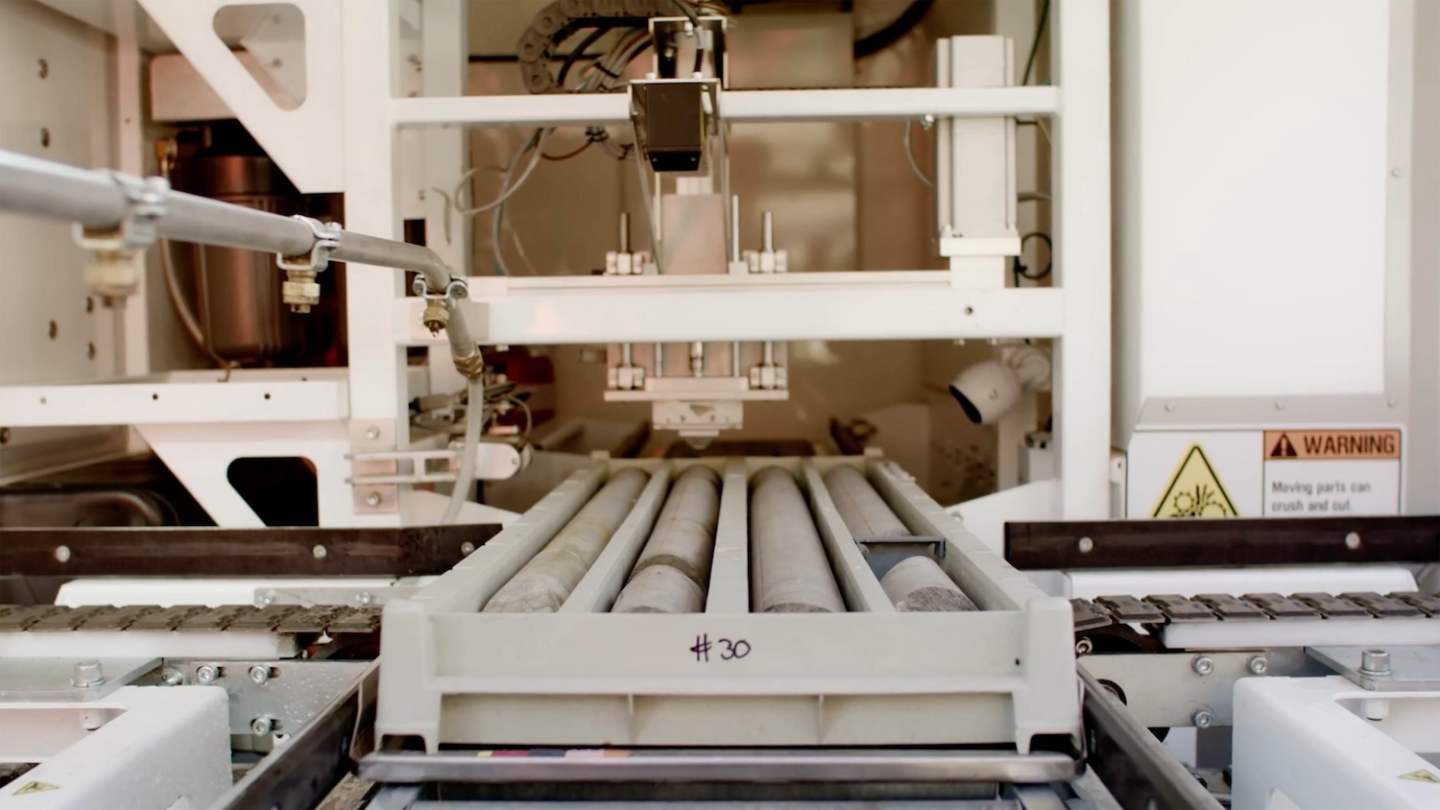
Historically, it was common to see mines operate for 40, 50 or even 70 years. The Bingham Canyon Mine (also known as the Kennecott Copper Mine) in Utah has been an active mine for 120 years. If you make a mistake on the front end of a 70-year project, the odds are pretty good you’ll be able to recover financially over the life of that project.
However, the new mining assets that are coming to market now will have life spans of anywhere from 20 years down to three or five years in some smaller lithium deposits. To access these challenging orebodies, the industry has to be more precise in designing mines and extracting their minerals from the earth. That means we need to understand exactly what the orebody—the veins and the mineral deposits—looks like underground. If we don’t, the laws of microeconomics will take over. The incremental mineral resource will become more expensive, and it will become cost-prohibitive to transition away from the hydrocarbon economy. It is the mining industry’s moral obligation to bring these necessary resources to market as cost-effectively as possible to enable the energy transition.
“We need to find new deposits, new orebodies, and new sources of critical minerals now, which is why we need improved data and AI to speed up the exploration process.”
Given society’s immediate need for critical minerals, there just isn’t time to wait for traditional exploration methods to pay off. We need to find new deposits, new orebodies, and new sources of critical minerals now, which is why we need improved data and AI to speed up the exploration process.
The Role of AI in Mining

In decades past, exploration has been driven by building datasets that are easily understood by humans. In large part, this was done by drilling into the ground and examining the rock that was extracted. The sample either comes out as a core—a cylindrical piece of rock that can be hundreds of metres in length—or drill chips, which are broken pieces of rock. However, drilling is expensive, time-consuming, and labour-intensive. It is very hard to paint a clear picture of the deposit when you are only able to extrapolate from the geological data obtained from a limited number of drill holes.
There is a better way to obtain geological information and to define deeply buried orebodies, and that’s through the combination of sensor-gathered data and AI-based systems that interpret the information.
“Interpreting such complex datasets is too much for individuals, no matter how accomplished or well-educated they are, especially as sensor technology keeps improving and providing more and more insights into the ground and rocks and minerals beneath our feet.”
At Veracio, it is common for us to use a mix of X-ray fluorescence (XRF) to determine geochemistry, hyperspectral to determine mineralogy, LiDAR to identify physical and structural changes in the rock and view things like fractures and some types of veins and map them out, and super-high-resolution fault photography to see and identify the mineral structures themselves (think of images captured by a low-level microscope). By combining a range of sensors, geologists can compile vast datasets for each potential mining site. Now, instead of building a picture based on the results of a few dozen drill holes, there can be thousands or millions of data points collected. And that’s where AI comes into the picture. Interpreting such complex datasets is too much for individuals, no matter how accomplished or well-educated they are, especially as sensor technology keeps improving and providing more and more insights into the ground and rocks and minerals beneath our feet.
Increasingly, it’s not enough to understand just geochemistry or mineralogy or some other aspect of the deposit. You must understand the mix of the two and how they interact with each other. This means managing the captured sensor data in a way that facilitates the cross-interpretation. In addition to that, there is data from other sets of sensors to add to the analysis, such as gamma radiation-based sensors that offer insight into geophysical properties. AI-based systems can handle all the data collected by every scan, every photograph and every sensor in a way that a person cannot.
“Based on the geophysics and the surface samples and the geochemistry and the mineralogy results, AI systems can start to predict what the orebodies will look like and create virtual datasets of information that can’t be measured or captured in a physical dataset.”
AI-based systems are also capable of moving out of the realm of collected data and into the area of interpretative and enhanced data analytics. Based on the geophysics and the surface samples and the geochemistry and the mineralogy results, AI systems can start to predict what the orebodies will look like and create virtual datasets of information that can’t be measured or captured in a physical dataset.
With both physical datasets and predictive datasets in hand, it’s easier for mining companies and executives to make decisions about where and how to mine, and that’s the value of the data. The data itself is not valuable until it is used to make decisions, and even then, it’s not the pure data which is what makes the difference and enables the decision-making to occur. It’s the underlying software platform that supports the countless data types and the numerous sensors and the applications to run those sensors, and it does so while operating in the harshest environments on earth. It is the platform that grants people around the world remote access to the collected data and offers it up in a way that is useful and informative. When the platform can accomplish this quickly (in nearly real-time) and cost-effectively, miners can employ it to make incredible finds and accomplish amazing things.
The Future of Mining Technology
As mentioned earlier, the mining industry is just in the early stages of this AI-led and data-driven revolution, and while most mining companies haven’t moved to adopt the full range of technology yet, some have, and they are seeing real results.
In Canada’s resource-rich Saskatchewan, a groundbreaking collaboration between Veracio and Foran Mining has set a new standard in mineral exploration at the McIlvenna Bay and Tesla deposits. Veracio’s TruScan platform, an innovative in-field sample scanner, played a pivotal role, offering near real-time geochemical data and enabling the discovery of the Bridge Zone. The TruScan system allowed Foran Mining’s team to make swift, informed decisions on drill targets, thanks to its ability to deliver detailed geochemical insights directly from drill cores. With the integration of advanced technologies, the area was not only discovered but also modelled within an impressive eight-week timeframe. This speed is unprecedented in an industry where projects often span years from conception to development, a mission-critical challenge that the industry faces the world over.
In November of 2023, Foran Mining announced they had secured a $200M capital raise for the project. Such rapid advancement is a clear indicator of Veracio’s potential to revolutionize the industry, providing Foran Mining with a competitive edge for funding in a critical window for minerals worldwide and setting a new standard of expectation for exploration timelines.
This is exactly the kind of results miners need: to be able to quickly, efficiently, and economically find new deposits of the critical minerals that are so desperately needed and turn those exploration sites into producing mines—mines that are extracting the ores that will propel the energy transition forward and secure a safe and healthy future for generations to come.
-
 A Territorial Development Approach to Mining in Canada
 Andres Sanabria
Policy Analyst
OECD’s Centre for Entrepreneurship, SMEs, Regions and Cities
Andres Sanabria
Policy Analyst
OECD’s Centre for Entrepreneurship, SMEs, Regions and Cities
 Bridget Donovan
Policy Analyst
OECD’s Centre for Entrepreneurship, SMEs, Regions and Cities
Bridget Donovan
Policy Analyst
OECD’s Centre for Entrepreneurship, SMEs, Regions and Cities
 Tamara Krawchenko
Associate Professor
University of Victoria
Tamara Krawchenko
Associate Professor
University of Victoria
-
 Canadian Lithium Production: The Value of Domestic Refining
 Saad Dara
Founder and CEO
Mangrove Lithium
Saad Dara
Founder and CEO
Mangrove Lithium
-
 Spotlight on Investing in Yukon’s Mining Sector
 Scott Donaldson
Director & CEO
BMC Minerals
Scott Donaldson
Director & CEO
BMC Minerals
 Shelagh Rowles
Executive Director
Centre for Northern Innovation in Mining, Yukon University
Shelagh Rowles
Executive Director
Centre for Northern Innovation in Mining, Yukon University
 Isaac Fage
President and Co-Founder
GroundTruth Exploration
Isaac Fage
President and Co-Founder
GroundTruth Exploration
 Jani Djokic
CEO
Na-Cho Nyäk Dun Development Corporation
Jani Djokic
CEO
Na-Cho Nyäk Dun Development Corporation