



Northern Ontario is Canada’s top gold producer and an important supplier of critical minerals. It is at the centre of Canada’s mineral and industrial ambitions. Like other OECD countries, federal and provincial governments in Canada are looking at accelerating mining project approvals and investments, driven by economic competitiveness and national security. Many of the future mineral projects expected in Canada will occur in Northern Ontario.
Yet as mining accelerates, disparities in living standards, housing, and access to services (especially for Indigenous Peoples) threaten to undermine sustained and inclusive regional development, highlighting the urgency for territorial development planning.
A territorial development approach to mining is thus essential to unlock sustained prosperity and resilience in Northern Ontario’s communities. The new OECD report Mining Regions and Cities in Northern Ontario, Canada takes a territorial approach to mining policy, arguing that the success of the region’s mining projects relies on embedding mining-related decisions within local development priorities, supported by coordination between industry, communities and all levels of government.
First Nations: Rightsholders and Regional Leaders
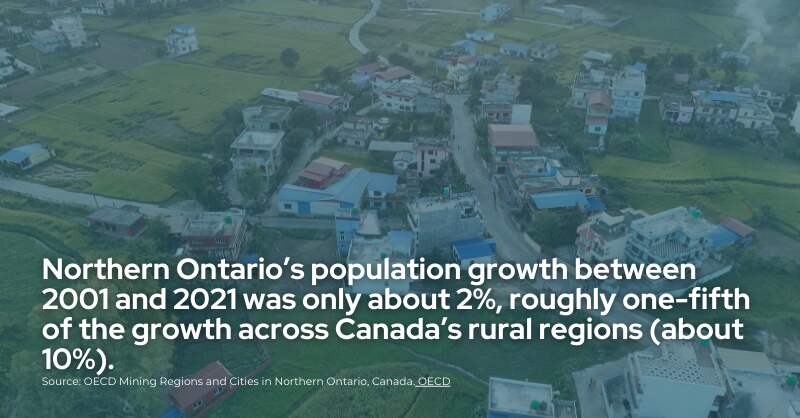
Indigenous Peoples make up nearly 18% of Northern Ontario’s population and 15% of its mining workforce, well above provincial and national averages. Their leadership is central to territorial development.
The OECD highlights successful models of First Nations equity participation, business ventures, and land-based learning, such as Aki-eh Dibinwewziwin, a First Nations-led mining partnership that provides competitive mine services, or the Côté Gold project’s involvement of First Nations knowledge in environmental monitoring.
However, some barriers remain to improving the well-being outcomes of First Nations and ensuring meaningful engagement in mining. For example, addressing persistent socioeconomic inequalities, how to formally implement Free, Prior, and Informed Consent (FPIC), including during the exploration phase, and ensuring strong policy support to boost legal and planning capacities to engage with mining across all First Nations governments in the region.
Why Territorial Development Matters: Building Regional Ecosystem Resilience
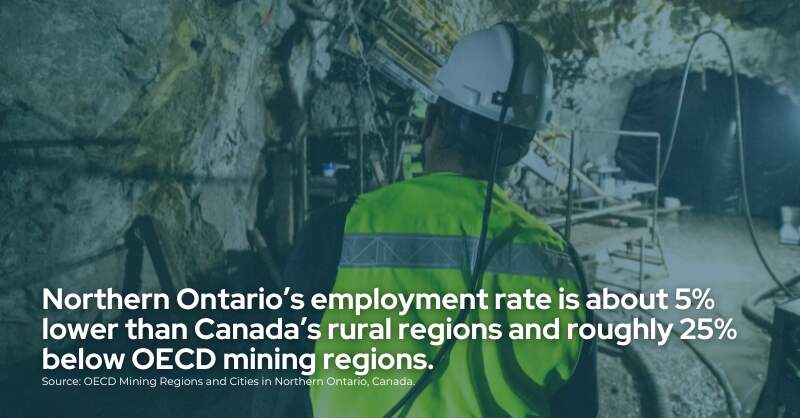
“Canada’s innovation output and population growth lag behind those of OECD peers. The prospect of high vacancy rates and skilled worker shortages risks future project competitiveness.”
A territorial development approach means embedding mining-related decisions within local development priorities, aligning industry, communities and all levels of government to harness regional strengths and tackle local challenges.
In Northern Ontario, the mining sector’s legacy has strengthened local education and research, and supported a robust supply chain of SMEs, echoed in internationally renowned training centres like NORCAT. Mining areas in the region experience a median income on average higher than non-mining areas, and the region also benefits from low-carbon energy and export infrastructures.
Despite this, Canada’s innovation output and population growth lag behind those of OECD peers. The prospect of high vacancy rates and skilled worker shortages risks future project competitiveness; meanwhile, municipal governments often struggle with limited planning and financial capacity due to outdated property tax systems and high construction costs.
Addressing these main challenges in Northern Ontario requires a territorial development approach. Its strengths (deep expertise, global reach, First Nations leadership and cooperation, and strong policy frameworks) can be further mobilized and connected to new and existing mining activity, improving benefits to local communities and First Nations rights holders as well as de-risking projects and preparing local workforces for new projects.
Across OECD countries, regions like the Pilbara (Australia), Antofagasta (Chile), and Andalusia (Spain) have focused on establishing territorial approaches to address the complexities of mining, balancing environmental protection, economic benefits, and social inclusion.
This OECD report provides targeted suggestions for governments and industry to focus their actions towards the most critical local and First Nations needs and on deepening relationships with communities to close persistent gaps.
OECD Recommendations: Place-Based Mining for Long-Term Well-Being
“Mining projects should be based on First Nations’ free, prior, and informed consent, with project co-ownership and contracting opportunities available for those interested.”
The OECD study sets out eleven recommendations for governments and industry, organized into three strategic pillars:
- Deepening First Nations engagement and ensuring benefits: Mining projects should be based on First Nations’ free, prior, and informed consent, with project co-ownership and contracting opportunities available for those interested. To enable this, it is essential to invest in improving the capacity of First Nations to meaningfully engage in the industry and strengthen long-term partnerships and shared decision-making across the full project lifecycle.
- Empowering local competitiveness and quality of life: Foster innovation by aligning regional players, broaden workforce inclusion for youth and women, and invest in affordable housing and local infrastructure linked to mining initiatives.
- Reinforcing governance and municipal capacity: Update funding models, enhance multi-stakeholder planning bodies, and better coordinate mining growth with community development plans.
Canada cannot pursue speed or competitiveness at the cost of trust and sustainability. Real progress needs early First Nations engagement, strong collaboration, and local, evidence-based action to ensure mining contributes to building resilient communities.
Looking Ahead
Northern Ontario’s mining activities can pave the way for successful territorial development in Canada. With bold leadership from First Nations, informed regional governance, and coordinated action by all stakeholders, the region can redefine what sustainable, inclusive mining looks like, for the benefit of all who call Northern Ontario home.
This OECD study demonstrates that the path forward is local, place-based, and deeply collaborative. Canada can seize this moment, investing in territorial development approaches that ensure mining drives prosperity for generations to come.
About the Experts
-
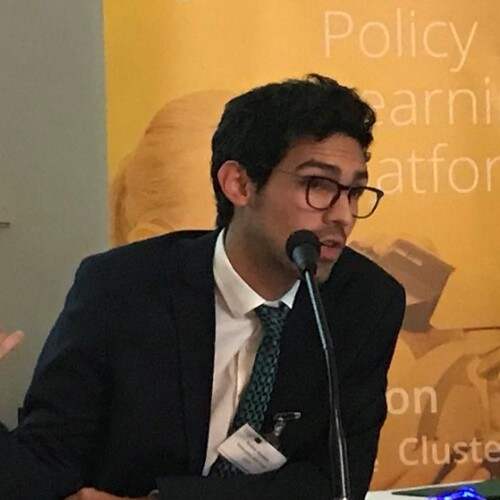
Andres Sanabria is a Policy Analyst at the OECD’s Centre for Entrepreneurship, SMEs, Regions and Cities, specialized in rural development policy and resource-extractive economies . He leads the Mining Regions and Cities Initiative and has coordinated rural country reviews and supported the development of the OECD rural policy framework and OECD rural principles. Andres is also an invited lecturer on rural development at Paris-Dauphine University and Sciences Po, Paris. He holds a Master’s degree in Public Affairs from the London School of Economics.
See more -
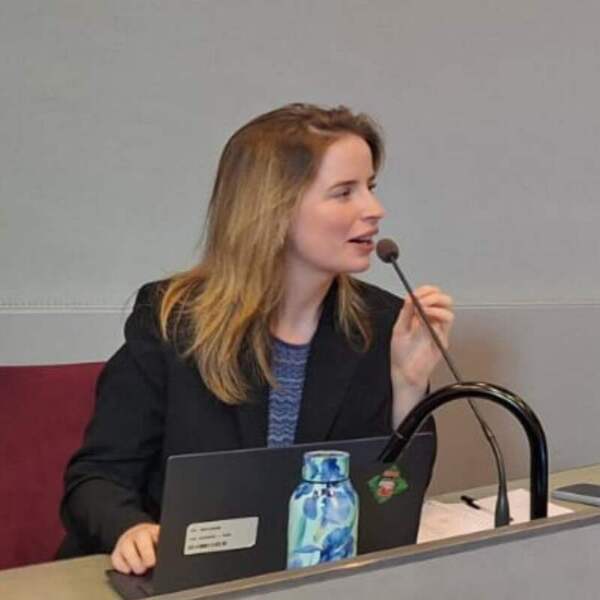
Bridget Donovan is a Policy Analyst at the OECD’s Centre for Entrepreneurship, SMEs, Regions and Cities, where she contributes to the Mining Regions and Cities Initiative. Her work focuses on strengthening wellbeing across economic, social, and environmental dimensions in regions affected by mining. Previously, she worked in ESG consulting, conducting materiality assessments for mining companies, and in Indigenous organizations, supporting capacity building and organizational development. Bridget holds a master’s degree in international development from Oxford University.
See more -

Tamara Krawchenko is an Associate Professor at the University of Victoria, specializing in comparative public policy, regional development, and sustainability transitions. She leads research on just energy transitions and rural economies, and regularly advises governments and organizations in Canada and internationally on development and climate policy.
See more
-
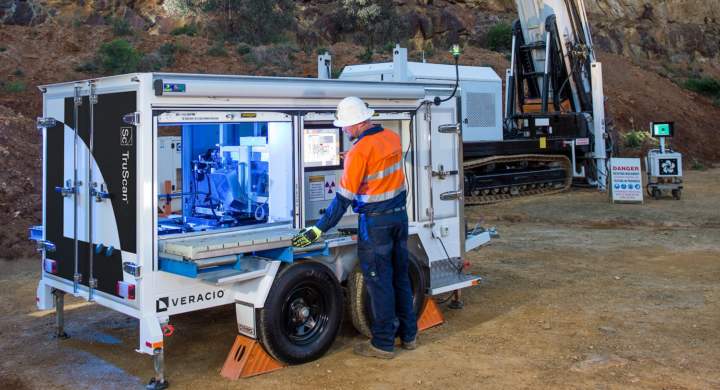 The Role of AI in Mining: Accelerating Critical Mineral Exploration for the Energy Transition
 JT Clark
Chief Executive Officer
Veracio
JT Clark
Chief Executive Officer
Veracio
-
 Canadian Lithium Production: The Value of Domestic Refining
 Saad Dara
Founder and CEO
Mangrove Lithium
Saad Dara
Founder and CEO
Mangrove Lithium
-
 Spotlight on Investing in Yukon’s Mining Sector
 Scott Donaldson
Director & CEO
BMC Minerals
Scott Donaldson
Director & CEO
BMC Minerals
 Shelagh Rowles
Executive Director
Centre for Northern Innovation in Mining, Yukon University
Shelagh Rowles
Executive Director
Centre for Northern Innovation in Mining, Yukon University
 Isaac Fage
President and Co-Founder
GroundTruth Exploration
Isaac Fage
President and Co-Founder
GroundTruth Exploration
 Jani Djokic
CEO
Na-Cho Nyäk Dun Development Corporation
Jani Djokic
CEO
Na-Cho Nyäk Dun Development Corporation