
Phasing Out Single-Use Plastics: Embracing a Circular Economy

Every minute, a truckload of plastic waste is dumped into the ocean, a grim reality that will lead to more plastic than fish in our seas by 2050. Among the culprits are bags, bottles, food containers, cutlery, and wrappers, accounting for almost half of ocean plastic.
“At the root of this problem is not a single material (plastic), but the linear “take-make-dispose” supply chain that governs single-use products.”
At the root of this problem is not a single material (plastic), but the linear “take-make-dispose” supply chain that governs single-use products. The production of these disposables, regardless of material, exacts an enormous toll on raw materials, water, and energy, all for products with fleeting utility. For example, a single-use paper cup uses approximately three litres of water and 33 grams of wood and produces 350 grams of greenhouse gas emissions in production.
To truly combat this crisis, we must address the overarching challenges of the linear supply chain and disposables in general.
As Canada confronts a challenge extending beyond plastics, the path to minimizing the impact of single-use products demands systemic change.
Canada’s Single-Use Plastics Landscape

Despite intentions to reduce waste, Canada holds the unenviable title of the world’s highest waste producer per capita. Not only do we produce a lot of waste, but we also don’t manage it particularly well, as only 9% of plastic is recycled in Canada.
“Canada holds the unenviable title of the world’s highest waste producer per capita.”
To meet the ambitious goal of zero plastic waste by 2030, the federal government announced a single-use plastics ban in June 2022. The ban will prohibit the sale, distribution, and manufacture of six product categories by the end of 2023. These categories include straws, checkout bags, cutlery, stir sticks, takeout containers made from hard-to-recycle plastics, and aluminum can ring carriers. Unfortunately, the ban has since been overturned, highlighting an ever-growing need for a more far-reaching solution.
That being said, municipalities around Canada are introducing their own regulations and bans around single-use products. In March 2023, Montreal introduced a by-law prohibiting the use of single-use cups, glasses, straws, sticks, and cutlery in restaurants and food stores, including products labelled as compostable.
Vancouver also attempted to curb single-use items with a $25 cent cup fee for single-use cups. The fee was collected by businesses, who were encouraged to use the additional revenue to source reusable alternatives. Due to unclear environmental benefits and challenges for the businesses in collecting the tax, the cup fee was scrapped.
In addition to bans, Extended Producer Responsibility (EPR) is gaining ground in provinces such as British Columbia and Ontario. EPR shifts the onus of waste management from municipalities to producers, with the goal of boosting recycling rates and standardizing recycling programs across regions.
Looking Beyond Single-Use Plastics

While these new regulations are a step in the right direction, there is no silver bullet to the complex challenges posed by single-use products. Replacing banned items with so-called “sustainable alternatives” risks introducing fresh environmental concerns.
The path forward is not substituting single-use plastics with paper or compostable options. The core issue lies in the disposability of these products, which entails significant resource consumption, energy use, and greenhouse gas emissions during production.
“Paper-based products also require large amounts of energy and water to produce. A shift towards paper invites resource depletion and heightened energy and water consumption.”
Environmental advocates like Canopy caution against swapping plastics for paper, noting the depletion of three billion trees annually for paper packaging production. Paper-based products also require large amounts of energy and water to produce. A shift towards paper invites resource depletion and heightened energy and water consumption.
While there is a general perception that paper-based products are always recyclable, this is not always the case. Lower-grade paper, such as that used in takeout bags, typically heads to landfills, emitting methane as it decomposes. Food packaging that is contaminated with grease or food faces a similar fate.
Businesses’ transition to compostable and biodegradable products also poses hurdles, mirroring the resource-intensive drawbacks of paper. Many of these items cannot be handled in municipal composting streams and will ultimately end up in landfills.
The Path to True Transformation: Embracing a Circular Economy
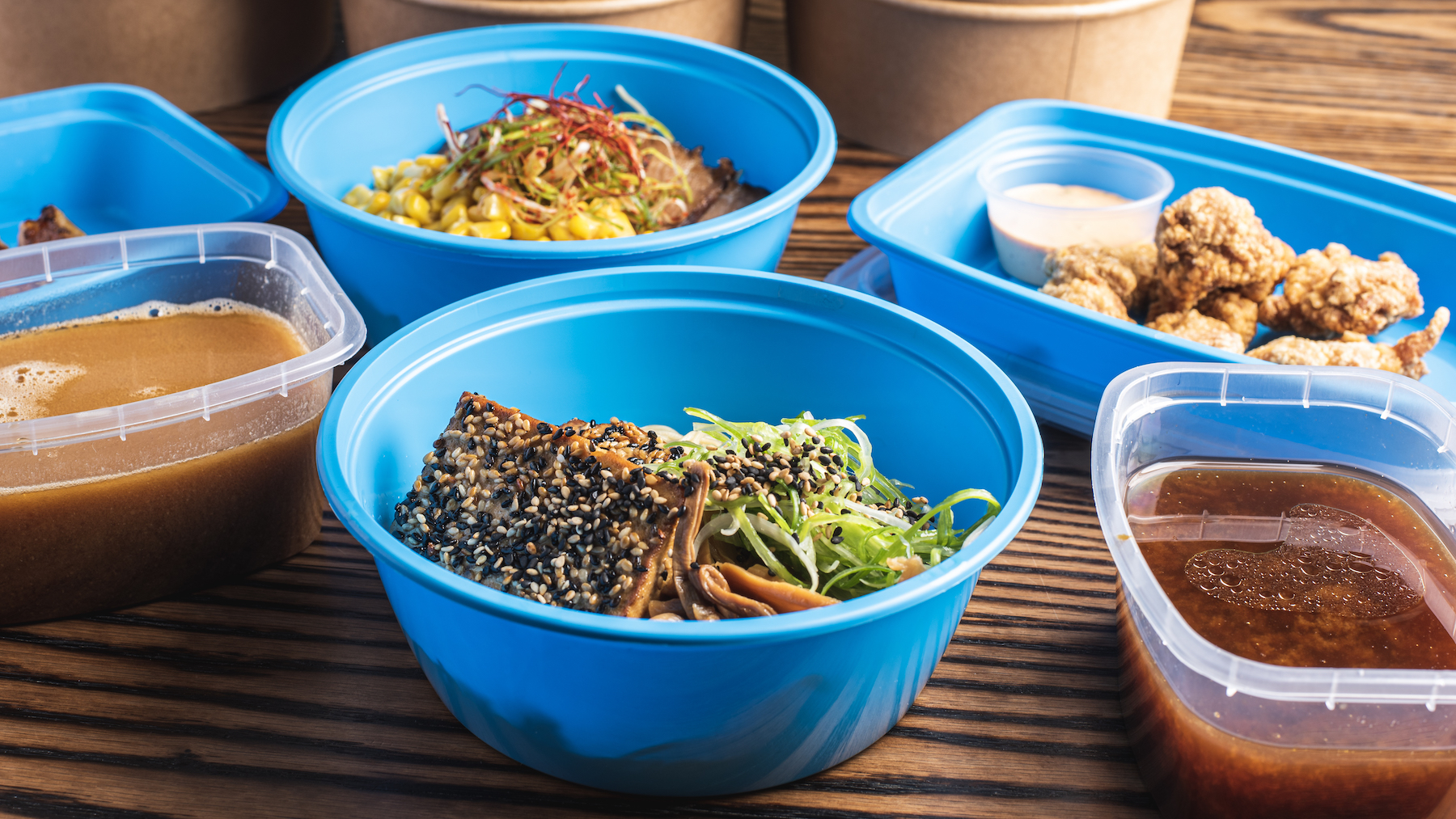
Addressing the urgent challenge of single-use products calls for a fundamental shift towards a circular economy – a revolutionary approach that redefines how we produce, consume, and manage resources. Unlike the linear “take-make-dispose” model, the circular economy envisions a closed-loop system where products are designed for durability, repair, and recycling. A circular supply chain reduces the environmental impact of each step along the life of a product, from raw material extraction to end-of-life handling. By creating local, circular supply chains, Canada can minimize waste, emissions, energy consumption, and resource depletion.
“Unlike the linear “take-make-dispose” model, the circular economy envisions a closed-loop system where products are designed for durability, repair, and recycling.”
The concept of a circular economy isn’t new – think back to the days of the milkman who used to collect and reuse milk jugs. A very successful circular system that is still thriving today is the Beer Store return system for empty alcohol bottles in Ontario. The Beer Store has one of the most successful bottle return programs in North America, with a 97% recovery rate on the industry standard bottle.
A new wave of cleantech companies is driving the adoption of the circular economy across industries in Canada. My company, Friendlier, is providing reusable food containers, drop-off and pick-up services, washing and sanitizing, and a software platform to track consumer use, to help food businesses ditch their single-use packaging.
How Canada Can Lead in a Circular Economy
As the world grapples with the environmental repercussions of single-use products, Canada has a unique opportunity to be a global leader in sustainability. To seize this pivotal moment, Canada must recognize that it is not just a plastics problem, but a consumption problem.
“Canada must create incentives that catalyze the adoption of circular economy practices.”
1. Legislative Vision: Canada’s proposed plan to eliminate single-use plastics is commendable, and yet even if the government ban had not been overturned, we would still need a more comprehensive legislative framework. The ban on select items is a starting point, but it should evolve to encompass a broader array of single-use products, driving both innovation and accountability across industries.
2. Incentive Ecosystem: Canada must create incentives that catalyze the adoption of circular economy practices. Supporting businesses that offer reusable alternatives through grants, tax breaks, or streamlined regulations can stimulate a thriving ecosystem of sustainable solutions.
3. Education and Engagement: Shaping public perception is pivotal. By fostering education campaigns about the environmental consequences of single-use products and the benefits of the circular economy, Canada can inspire a collective commitment to change. Engaging schools, community organizations, and media outlets can amplify the message.
4. Collaboration and Innovation: Canada’s role as a leader necessitates partnerships between government bodies, businesses, and civil society. Collaborative platforms can incubate innovative solutions that disrupt the traditional linear model. Supporting businesses that are building innovative circular initiatives with funding to scale is imperative.
5. Exporting Expertise: As Canada develops its circular economy infrastructure, it can share its experiences and expertise with the global community. Engaging in international collaborations and partnerships can amplify the impact of Canada’s initiatives, fostering a broader worldwide shift towards sustainability.
6. Cultivating Conscious Consumption: Recognizing that the challenge transcends plastics, Canada should focus on promoting a culture of reusability, repairability, and conscious consumption. Encouraging businesses to adopt product designs that prioritize durability and reparability can align economic interests with environmental values.
7. Establishing Clear Targets: A roadmap for a circular economy demands well-defined, measurable targets. Canada should commit to reducing waste, conserving resources, and minimizing emissions, while rigorously monitoring progress and refining strategies as needed.
The circular economy isn’t a distant dream – it’s happening now, and Canada has a prime opportunity to lead the charge. By embracing this approach, we can reshape industries, build stronger communities, and leave a healthier planet for generations to come. The success of existing circular initiatives underscores that this shift isn’t just good for the environment – it’s smart business too. Let’s seize this moment, partner with innovative thinkers, and carve a path toward a truly sustainable future. The time to embark on this circular journey is now.
-
 Beyond the Bucket List: Canadian Tour Operators Must Lead on Sustainable Tourism
 Jean Hébert
Executive Director
Canadian Association of Tour Operators (CATO)
Jean Hébert
Executive Director
Canadian Association of Tour Operators (CATO)
-
 The Purposeful Economy: Why Canada’s Tourism Future is About People, Not Postcards
 Bruce Poon Tip
Founder
G Adventures
Bruce Poon Tip
Founder
G Adventures
-
 Eco-Effectiveness: Canada’s Path to Genuine Sustainable Growth
 Jury Gualandris
Associate Professor of Operations Management & Sustainability
Ivey Business School
Jury Gualandris
Associate Professor of Operations Management & Sustainability
Ivey Business School