
The Purposeful Economy: Why Canada’s Tourism Future is About People, Not Postcards
Canada’s tourism future depends on shifting from mass-market postcards to purposeful, people-centred experiences that empower communities, drive sustainability, and position the country as a global leader in meaningful travel.

For over 35 years, my professional life has been dedicated to a singular idea: that travel is the most powerful force for good on this planet. As a Canadian entrepreneur, I’ve had the immense privilege of building a global company from a startup in my Toronto garage. But my experience has shown me that the future of Canadian tourism, and indeed, global tourism, lies not in a race for scale and amenities but in a significant shift toward purpose and people.
The old model of tourism was built on selling polished postcards and all-inclusive packages. It was about “more and bigger”. More hotel rooms, bigger cruise ships, and a commoditized experience that often left destinations and their local people behind. That old model isn’t the way forward. Today’s consumer, armed with information and a heightened sense of social consciousness, is asking more from their holiday. Now, they’re asking how their travel dollars are impacting the world. This is not a fleeting trend, but instead is the foundation of a new, purposeful economy, and it presents Canada with an extraordinary opportunity to lead.
From Amenities to Experiences: A New Economic Driver
The traditional economic value of tourism has always been measured in a straightforward way: hotel stays, flight purchases, and attraction tickets. However, we need to expand this definition. In my view, the real economic driver of tomorrow’s tourism will be the value of meaningful, transformative experiences. This is a subtle, but seismic shift. When a traveller connects with a local community, learns a new skill from an Indigenous artisan, or shares a meal in a family-run home, we are creating a form of value that transcends a simple transaction. This value translates into deeper loyalty, more powerful word-of-mouth marketing, and a more resilient tourism model.
“When a traveller connects with a local community, learns a new skill from an Indigenous artisan, or shares a meal in a family-run home, we are creating a form of value that transcends a simple transaction.”
This new model speaks to an increasingly savvy consumer. I have immense hope that travellers will continue to become more intentional about their choices, moving beyond the surface-level concern for the environment and demanding tangible social and economic benefits for the communities and destinations they visit. They will ask the difficult questions: “Where is my money actually going?” and “Who is really benefiting from my presence here?”
The Broader Definition of Sustainability
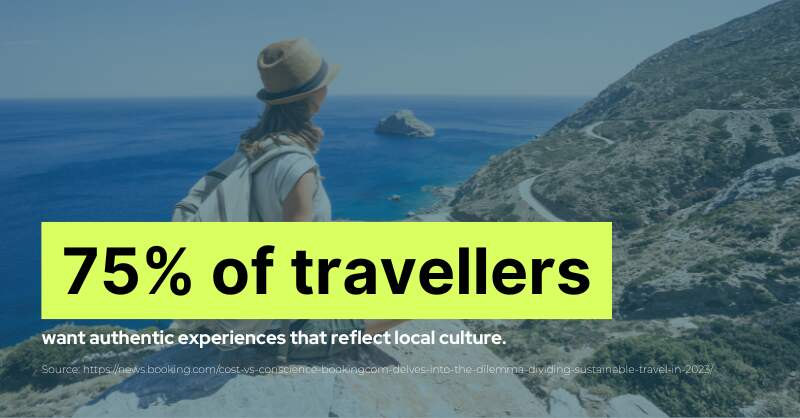
The travel industry has become very good at talking about sustainability, but often, the conversation is limited to environmental impact, carbon offsets and reducing single-use plastics. However, true sustainability, the kind that creates a lasting ripple effect, must also include social and economic responsibility.
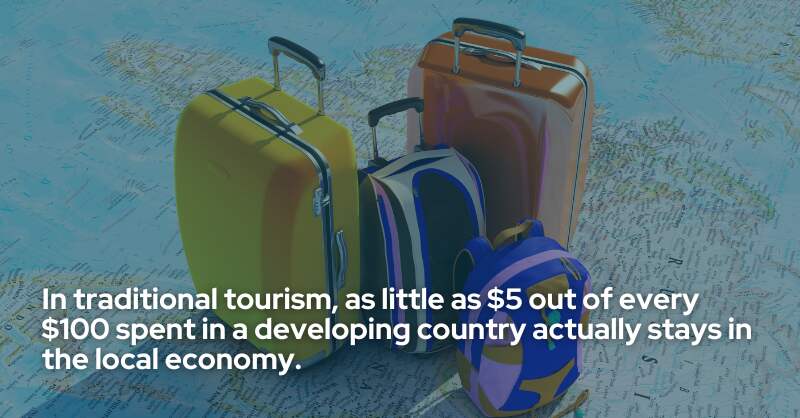
This is a key principle of community tourism. It’s an approach where we intentionally design our trips to include everyone in the tourism supply chain. It means that the people who need it most—women, youth, and marginalized communities —are the direct beneficiaries of tourism growth. This is the antidote to the leakage in traditional tourism, where as little as $5 out of every $100 spent in a developing country actually stays in the local economy. Our model is built to counter this, ensuring that as G Adventures rises, the communities we partner with rise with us. This is not just a moral imperative; it’s a sound business strategy that builds trust, authenticity, and a more resilient supply chain.
“True sustainability, the kind that creates a lasting ripple effect, must also include social and economic responsibility.”
Canada’s Path to Global Leadership
Our nation, with its tapestry of diverse cultures and stunning landscapes, has an opportunity to champion this model. We can show the world how to do it right. We have a moral and economic responsibility to empower our local and Indigenous communities, who have been sharing their land and stories for millennia. By investing in them as our primary tourism partners, we can provide authentic experiences that visitors crave, while also driving economic reconciliation and community pride.
“We have a moral and economic responsibility to empower our local and Indigenous communities, who have been sharing their land and stories for millennia.”
The path forward requires a collaborative approach that leverages technology, strategic investment, and above all, respect. Ultimately, the future of Canadian tourism is about a choice: do we continue to sell a fleeting fantasy, or do we sell a living, breathing reality? I believe we can shift to an industry that is a powerful force for good, one that proves a prosperous business can also be a compassionate one. When we send our travellers out into the world, we’re guiding them to find their place in it and to experience the truth that travel is the ultimate path to peace.
About the Expert
-

Bruce Poon Tip is the founder of G Adventures, a pioneering small-group adventure travel company he launched in Toronto in 1990. A leading advocate for community tourism, he champions sustainable, socially responsible travel that empowers local and Indigenous communities worldwide, and is the bestselling author of Looptail and Do Big Small Things.
See more
-
 Beyond the Bucket List: Canadian Tour Operators Must Lead on Sustainable Tourism
 Jean Hébert
Executive Director
Canadian Association of Tour Operators (CATO)
Jean Hébert
Executive Director
Canadian Association of Tour Operators (CATO)
-
 Tourism in Canada: A Cornerstone of Growth and Sustainable Transformation
 Amy Butcher
Vice President of Public Affairs
Tourism Industry Association of Canada
Amy Butcher
Vice President of Public Affairs
Tourism Industry Association of Canada
-
 Eco-Effectiveness: Canada’s Path to Genuine Sustainable Growth
 Jury Gualandris
Associate Professor of Operations Management & Sustainability
Ivey Business School
Jury Gualandris
Associate Professor of Operations Management & Sustainability
Ivey Business School