
Eco-Effectiveness: Canada’s Path to Genuine Sustainable Growth
Canada’s path to sustainable growth requires moving beyond eco-efficiency—reducing harm—to eco-effectiveness, where businesses and policies actively regenerate ecosystems, restore communities, and create genuine long-term prosperity.

The Problem of “Fictional” Growth—and the Opportunity for Regeneration
In the race for economic progress, Canada—and much of the world—has been measuring success by the wrong metrics. Gross Domestic Product (GDP), quarterly profits, and output volumes dominate our understanding of “growth.” But what if these signals of prosperity are, in many cases, fictional?
Across sectors, businesses have grown efficient at doing less harm—cutting emissions, reducing waste, optimizing processes. This approach, called eco-efficiency, is a step forward, but it’s not enough. Reducing damage to ecosystems and local communities does not restore them. Preventing further harm does not regenerate what’s already been lost. As leading scholars in management and economics argue, real progress demands a shift from efficiency to eco-effectiveness: organizing in ways that actively heal nature and society. We need to move beyond the illusion of fictional growth where short-term efficiencies at the firm level come at the long-term cost of communities, ecosystems, and future generations. We need genuine, qualitative growth that recouples prosperity with sustainability.
Fictional Growth, Real Losses
From research in entrepreneurship to research in supply chain management, the evidence is mounting: organizational efficiencies built through excessive specialization and rapid scaling of activities often come with hidden costs elsewhere in the economy, at home or abroad. Firms, for example, may reduce their carbon footprint internally by outsourcing emissions to suppliers or displacing harm to local communities. In doing so, they appear more sustainable on paper, but the net impact across society is neutral or even negative.
“Organizational efficiencies built through excessive specialization and rapid scaling of activities often come with hidden costs elsewhere in the economy, at home or abroad.”
Globally, we’ve seen GDP more than triple since 1950. But have we really improved well-being in that time? Not according to measures like the Genuine Progress Indicator (GPI), Life Satisfaction Index, or Biocapacity Index, which have remained stagnant since the late 1970s.
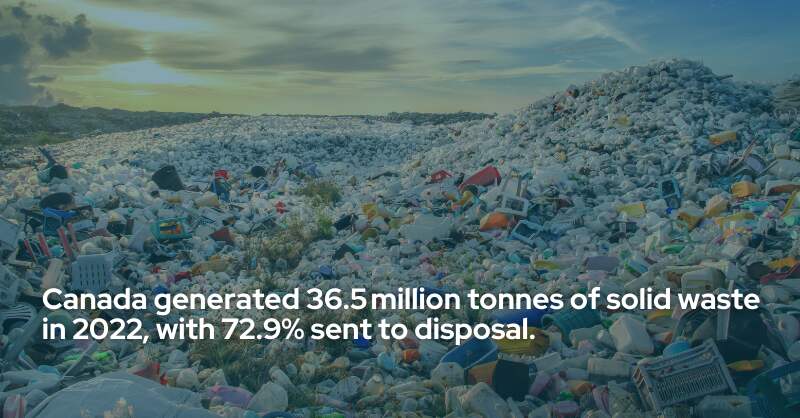
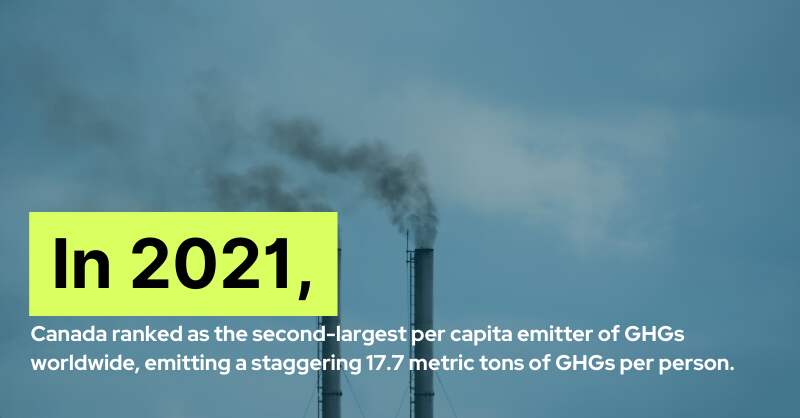
In Canada, GDP has more than tripled since 1970 (from 457 B US$ to 1.83 T US$). During the same timeframe, the total amount of solid waste generated has continued to increase to reach 36.5 million tonnes (937 kg per person per year), with 72.9% of this waste currently sent for disposal. Half a century ago, Canada boasted twice the level of biodiversity it currently possesses. In 2021, Canada ranked as the second-largest per capita emitter of GHGs worldwide, emitting a staggering 17.7 metric tons of GHGs per person. In the US, while GDP per capita has surged far beyond Europe’s—from 28% higher in 1990 to over 80% today—life satisfaction and even life expectancy have declined, with rising social isolation and mental health struggles.
Economic growth, as it turns out, isn’t the same as sustainable development.
Regeneration is Based on Eco-Effectiveness, Not Eco-Efficiency
Unlike eco-efficiency, which focuses on reducing the harm done per unit of output, eco-effectiveness seeks to generate positive contributions—outputs that restore harm already done to society and nature. It’s about designing business models, supply chains, and economies that function more like ecosystems: circular, regenerative, and symbiotic.
“Eco-effectiveness means using resources—whether forests, minerals, or human effort—in ways that enhance their long-term value for all stakeholders: businesses, communities, and ecosystems alike.”
At its core, eco-effectiveness means using resources—whether forests, minerals, or human effort—in ways that enhance their long-term value for all stakeholders: businesses, communities, and ecosystems alike. This approach involves shifting away from systems built on specialization and scale toward systems that embrace diversity, reciprocity, and scope economies.
To understand how this approach works in practice, we need only look to nature. Nature has been regenerating value for billions of years—not by extracting more, but by cycling better. Nature is most efficient at using solar energy because it is organized to use and pass around the basic elements of life, like carbon, hydrogen and phosphorus most effectively. Powered by the sun, ecosystems operate in dynamic balance, where every by-product and organism at the end of life becomes an input for something else. There is no waste. Everything—from carbon to nitrogen to water—is constantly being reused, transformed, and recombined into new life.
“Organizations must reduce landfill contributions by more than 90% through better by-product management.”
By mimicking these dynamics, businesses can unlock real, genuine value—not just for shareholders, but for society and the planet. To bring eco-effectiveness into supply chains and business models, organizations must meet four key conditions:
- Zero Waste Operations: Organizations must reduce landfill contributions by more than 90% through better by-product management. This involves collaborating with partners to find new uses for waste—turning what’s discarded by one firm into valuable input for another.
- Circularity of Materials and Water: Companies should prioritize inflow circularity by sourcing renewable, reused, or recycled inputs, and outflow circularity by designing products for their commercial afterlife, so that they can biodegrade, be reused, or be recycled.
- Energy Efficiency in Process Design: Even renewable energy sources have environmental costs over their life cycles. That’s why supply chains must be “climate-smart,” using energy most efficiently.
- Regenerative Impact: Beyond avoiding harm, eco-effective businesses should actively target harm already done. This might involve purifying water (see the case of Jarki Sarki in Finland), reviving soil health (see the case of regenerative agriculture throughout Europe and All Birds Shoes), removing invasive species (see the case of Inversa), tackling food waste through cycling nutrients and energy (see the case of Loop Mission and Calmura Natural Walls) or reducing plastic pollution in Oceans (see the cases of Karun, HP and Interface).
Importantly, not all firms in a supply chain need to do everything, but they must create the conditions for regeneration across their supply chains.
From Fiction to Function: Practical Recommendations for Real, Genuine Growth
Ironically, the scale of today’s crisis creates a rare opening: because nature is so degraded, there is enormous untapped potential for regenerative business models that heal, rather than harm. Nature has already achieved extraordinary efficiency and effectiveness. Now it’s time for us to catch up—by working together.
“Farmers shifting to regenerative practices, for instance, face significant upfront investments while market and policy incentives often fall short.”
Transitioning from extractive to regenerative business practices is not a question of technology. The tools and models exist. The real challenge lies in how we organize—within firms, across supply chains, and across regions. Eco-effective regeneration can generate strong long-term economic benefits—but for many firms, especially small and medium-sized ones, the short-term costs are steep. Farmers shifting to regenerative practices, for instance, face significant upfront investments while market and policy incentives often fall short. Meanwhile, the erosion of local farming communities and increased competition among peers make collaboration more difficult.
“When social capital is strong, firms are more willing to share information, co-invest in innovation, and co-develop sustainable solutions.”
Against this trade-off, here are three practical evidence-based recommendations to guide that transition.
1. Build Social Capital Across Businesses. Social capital is the web of relationships, shared norms, and mutual commitments that allow organizations to take risks together and make short-term sacrifices for long-term gains. In community-based enterprises like Mondragon in Spain, New Dawn Enterprises in Atlantic Canada, or the Walkers Wood Cooperative in Jamaica, this kind of embedded trust has enabled complex coordination, peer learning, and resilience during downturns. When social capital is strong, firms are more willing to share information, co-invest in innovation, and co-develop sustainable solutions. They’re also more likely to hold each other accountable—not just through contracts, but through shared values and governance structures. In business, trust built on social obligation and kinship ties—rather than short-term economic gain—can be a powerful enabler of regeneration by reducing transaction costs and facilitating collective learning and adaptation.
“Organizations with a strong sense of place are better positioned to identify valuable local assets, build meaningful partnerships patiently, and co-develop sustainable products and services.”
2. Reconnect with Your Place. Regenerative strategies are place-based by nature. Whether it’s farming practices that match soil and weather conditions, or procurement strategies aligned with local biodiversity, eco-effective innovation begins by understanding the ecology and culture of place. “Sense of Place” refers to the meaning that certain organizations associate with the socio-cultural and geographical characteristics of their bio-region. Research shows that organizations with a strong sense of place are better positioned to identify valuable local assets, build meaningful partnerships patiently, and co-develop sustainable products and services. For Canadian businesses, this means a) Deepening your knowledge of your own bioregion; b) Helping suppliers and customers understand it; c) Showing curiosity and care for their regions in return. These steps guide how business moves from fast transactions to deep relationships—and from harm reduction to place-based regeneration.
3. Policy and Finance Must Reward Real, Genuine Growth. Firms alone cannot bear the full cost of transformation. Without clear signals from policymakers and financial institutions, the market will continue to reward localized efficiency over societal-level effectiveness, and short-term gain over long-term sustainable value. A regenerative economy requires a new incentive structure—one that rewards ecosystem services not just related to carbon, but also water purification, soil health, and biodiversity restoration. That might include:
- Monetary incentives that reward not only individual firms (e.g., ALUS’s payments for ecosystem services) but groups of firms managing shared resources (like watersheds, or energy communities in Europe).
- Green finance tools that lower borrowing costs for firms meeting regenerative criteria, or that blend capital from investors seeking different risk-return profiles.
- Targeted subsidies or tax credits for firms removing legacy harm from their regions or enabling suppliers and customers in their supply chain to do so.
- Stronger anti-greenwashing regulation and enforcement that prevent firms from overstating their progress, while new transparency standards like those emerging in Europe can level the playing field.
With clear carrots and sticks, genuine growth will start to outperform fictional gains, and the market will begin to reward those who contribute more than they extract.
Conclusion
As we face unprecedented ecological and social challenges, Canada stands at a crossroads. By embracing eco-effectiveness, we can pioneer a future where economic growth means regeneration—not depletion. The path requires commitment, collaboration, and courage. The science is clear, the solutions are emerging, and the time to act is now. At the Ivey’s Centre for Building Sustainable Value, we are turning such aspiration into reality, through a portfolio of targeted research projects.
About the Expert
-

Jury Gualandris is an Associate Professor of Operations Management & Sustainability at Ivey Business School, holding the endowed Abell Hodgson Chair in Regenerative Agriculture. He leads the Centre for Building Sustainable Value and directs the Network for Business Sustainability, focusing on regenerative, circular supply chains that restore ecosystems and communities.
See more
-
 Beyond the Bucket List: Canadian Tour Operators Must Lead on Sustainable Tourism
 Jean Hébert
Executive Director
Canadian Association of Tour Operators (CATO)
Jean Hébert
Executive Director
Canadian Association of Tour Operators (CATO)
-
 The Purposeful Economy: Why Canada’s Tourism Future is About People, Not Postcards
 Bruce Poon Tip
Founder
G Adventures
Bruce Poon Tip
Founder
G Adventures
-
 Canada’s Decarbonization Means More Jobs for Canadians
 Malorie Bertrand
Director of Communications
Smart Prosperity Institute
Malorie Bertrand
Director of Communications
Smart Prosperity Institute
 Nicholas Renzetti
Research Associate
Smart Prosperity Institute
Nicholas Renzetti
Research Associate
Smart Prosperity Institute
 Sarah Krzysik
Communications Officer
Smart Prosperity Institute
Sarah Krzysik
Communications Officer
Smart Prosperity Institute