
The Clean Growth Imperative: How Energy Efficiency, Automation and Electrification Can Drive Canada’s Sustainable Economy
By strategically coordinating investments in energy efficiency, electrification, and automation, forward-thinking leaders can unlock massive cost savings and secure Canada’s status as a preferred global supplier.

Canada stands at a pivotal moment, uniquely positioned to lead the global shift towards a more sustainable economy. With a national strategy dedicated to growing the economy while aggressively cutting greenhouse gas emissions, the next decade represents an unprecedented opportunity for business leaders to define Canada’s competitive future.
Far from viewing the energy transition as a regulatory burden, forward-thinking companies recognize clean energy as a fundamental building block for a resilient and thriving economy. The Canadian Climate Institute’s latest emissions estimate presents a clear mandate for action: the companies that thrive in this new era will be those that embrace emissions reductions as both an environmental necessity and a powerful engine for business growth. This is an invitation to move beyond incremental change and to fundamentally transform how industry operates, creating long-term value that benefits both shareholders and the planet.
The path forward is defined by clean growth, driven by strategic, coordinated investments in three key pillars: energy efficiency, electrification, and automation. These three areas are not just about reducing environmental impact; they are about unlocking massive cost savings, increasing productivity and securing Canada’s place as a preferred supplier in international markets that demand clean, sustainable production.
Efficiency as a Competitive Advantage
Canada has made energy efficiency part of its climate plan because using energy more wisely will reduce our dependence on fossil fuels and help meet our future energy needs. However, at the firm level, energy efficiency also offers opportunities to lower operational and energy costs, boost margins, and improve competitiveness.
Improvements in industrial energy efficiency have yielded significant benefits over the years—today, the world’s industries can produce nearly 20% more value for a given amount of energy than they could two decades ago, according to a new report by the International Energy Agency (IEA).
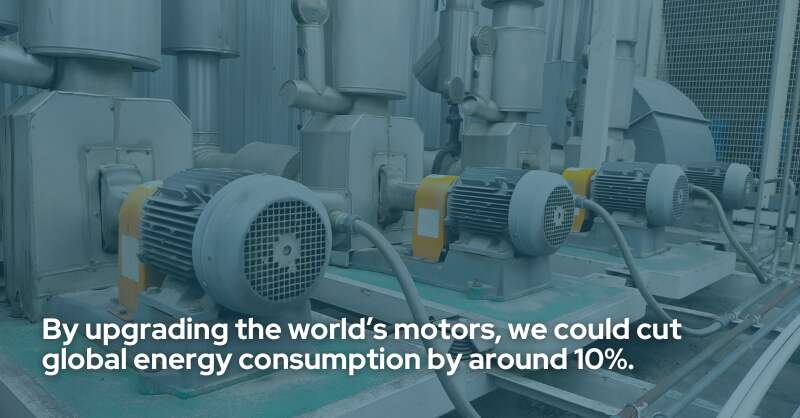
There is significant untapped potential to unlock more energy savings across light and heavy industries. Take the example of electric motors. They convert around 45% of the world’s electricity into motion for equipment from pumps and elevators to drivetrains for electrified transport, to fans and heating, ventilation, and air conditioning systems. But less than a quarter of the world’s electric motors are equipped with drives that control their speed. Adding a drive to a motor can reduce its power consumption by up to 25%. Our internal research shows that by upgrading the world’s motors, we could cut global energy consumption by around 10%.
Using variable-speed drives is one of 10 energy efficiency actions industrial leaders can take right now, according to the Energy Efficiency Movement Association in Switzerland. (Full disclosure: ABB and Alfa Laval were founding members of the Energy Efficiency Movement before organizing it as a non-profit association in 2024.) The business case for adopting these 10 actions is strong. The association estimates that global industries could generate $437 billion in annual savings by 2030 while reducing emissions by 11%.
The savings can boost profitability and be reinvested in innovation amid high costs, growing demand, and rising trade pressures. For firms with higher energy costs, such as aluminum, building materials, and pulp and paper, saving 10% in energy is equivalent to the profit achieved with an increase of 4% to 16% in sales, according to the IEA.
To maximize the financial impact, energy efficiency must be elevated from project-level initiatives to corporate strategy. Public-private collaboration will also enable success because upfront costs can be a significant barrier to implementing energy efficiency measures.
The good news is that Canada’s emissions reduction plan includes financial assistance to improve energy performance by making better use of energy-intensive assets. The incentive is part of a large investment the national government is making in energy efficiency programs under the 2016 Pan-Canadian Framework on Clean Growth and Climate.
The return on investment will be a win for our environment and the economy, according to Clean Energy Canada and Efficiency Canada. The organizations commissioned an economic analysis after the policy package was enacted that found that every $1 spent on energy-efficient programs generates $7 of gross domestic product. The growth in GDP comes from not only spending on upgrades but also from all the money households and businesses will save on energy over time—money that’s then reinvested in the local economy.
Electrification as the Engine of Change
In the energy transition, electricity has never been more precious. Replacing technologies or processes that use fossil fuels, like internal combustion engines and gas boilers, with electrically powered equivalents is one of the most important strategies for reducing one’s carbon footprint. The replacements, such as electric vehicles and heat pumps, are also typically more energy efficient.
Currently, over half of the energy used in Canadian industries comes from fossil fuels, while electricity accounts for only 35%. Increasing electricity consumption is an enormous business opportunity.
Canada already has one of the world’s cleanest electrical grids, with over 83% of our power coming from non-emitting sources like hydroelectricity. Businesses can strategically invest in electrifying their operations, knowing the underlying electricity source is clean. This allows them to reduce internal and external emissions more quickly and affordably, which can be a competitive advantage in global trade. Businesses in Canada can position themselves as preferred suppliers in international markets that are decarbonizing their supply chains. “Made with Clean Canadian Electricity” could become our new marketing slogan.
Leveraging Canada’s clean grid extends beyond branding to risk mitigation and finance. Reducing emissions helps companies attract capital from investors controlling trillions of dollars in assets who continue to integrate sustainability factors into their investment decisions, regardless of the political winds.
Electrification is also a hedge against the price volatility in global oil and natural gas markets. In provinces with abundant hydropower like Quebec and Manitoba, businesses benefit from low and stable electricity prices, leading to more predictable operational costs.
Electrification is more challenging in industrial processes that require high temperatures, such as paper and pulp and aluminum production. Good, old-fashioned Canadian innovation will be essential to creating low-carbon alternative fuels for energy-intensive manufacturing.
The Hydrogen Strategy for Canada, for example, supports opportunities for the domestic production and use of green hydrogen. Steelmaking, refining, and other heavy industrial processes use grey hydrogen, which is made from fossil fuels. One of the emerging Canadian players in the green hydrogen sector is Charbone Hydrogen, which is developing its first production facility near Montreal. Earlier this year, ABB agreed to become Charbone’s preferred supplier for standard electrical substations for the interconnection between production facilities and local utilities. Charbone has announced plans for the development of up to 15 modular plants across North America.
Automation’s Role in a Greener Future
The third approach to running leaner and cleaner is solutions that digitalize and automate operations. Most organizations have yet to reach their full potential in terms of digital transformation. In the business context, this means melding operational technology with informational technology, digitally connecting physical devices and equipment to each other and the cloud. Data can then be collected from the connected devices and equipment to provide visibility on asset health, resource, and energy management. Artificial intelligence and machine learning can analyze large volumes of data, leading to quicker and more accurate business insights and better decision-making.
With full visibility, organizations can better predict and schedule regular maintenance, limit unexpected downtime, and minimize additional site visits to save time and reduce emissions. Remote visibility is especially useful in Canada, where sites may be isolated locations, and sending out a technician can be expensive, especially in extreme weather.
Automation also enhances energy management by switching loads on or off without compromising productivity or performance. Better power control can be beneficial in places like Ontario, where electricity rates vary depending on time of use and demand.
The combination of efficiency, electrification, and automation is already driving major projects across Canada. One leading example that industrial carbonization is both possible and profitable is Dow’s petrochemical plant in Fort Saskatchewan, Alberta. The company is investing $6.5 billion to expand capacity at the facility while retrofitting the site’s existing assets to decarbonize ethylene production. Ethylene is often called the world’s most important chemical, as it is used to make food packaging, bottles, bags, and other plastic-based goods.
The revamped site will use clean hydrogen in the site’s furnaces, and carbon dioxide emissions will be captured and stored. Dow has also partnered with ABB to drive energy efficiency, automate processes, and use digital tools to optimize operations.
According to Dow, the site will be the world’s first net-zero Scope 1 and 2 emissions ethylene and derivatives complex. Dow’s investment also supports long-term profitability and job growth. The company said it expects the project to deliver $1 billion of operating profit growth per year over the economic cycle and create 400 to 500 jobs. Subsidies and incentives from federal, provincial, and local authorities support Dow’s targeted returns.
The path to a more sustainable and prosperous Canada is clear. It doesn’t require us to choose between economic growth and environmental stewardship; instead, it demands that we see them as two sides of the same coin. By embracing energy efficiency, electrification, and automation, we can fundamentally transform our industries, making them not only more effective and profitable but also more resilient and future-ready.
The work being done today, from powering green hydrogen facilities to enabling the journey to zero-emissions ethylene, is proof of this new reality. These are not just isolated projects. They are the building blocks of a new industrial paradigm in Canada. It is a future where businesses lead with innovation, building an economy that is cleaner, smarter, and stronger for generations to come.
About the Expert
-

Vince Pesce is Country Holding Officer for ABB Canada, where he oversees the company’s Canadian operations. He focuses on advancing electrification, automation, and energy efficiency across industries. His work centers on supporting industrial competitiveness, decarbonization, and the adoption of clean technologies within Canada’s evolving energy and manufacturing landscape.
See more
-
 Canada’s Water Advantage: A Strategic Economic Strength in a Volatile World
 Lorena Patterson
President & CEO
WaterPower Canada
Lorena Patterson
President & CEO
WaterPower Canada
-
 Fusion’s Decisive Decade and Why Canada Is Positioned to Lead
 Amitava Bhattacharjee
President & Chief Science Officer
Stellarex
Amitava Bhattacharjee
President & Chief Science Officer
Stellarex
-
 Canada’s Economic Future Runs on Electricity
 Vittoria Bellissimo
President & CEO
CanREA
Vittoria Bellissimo
President & CEO
CanREA
 Imran Noorani
Vice President of Policy
CanREA
Imran Noorani
Vice President of Policy
CanREA