
Canada’s Economic Future Runs on Electricity
With electricity demand set to skyrocket, Canada must build fast or risk falling behind. From Indigenous partnerships to the AI revolution, learn how wind, solar, and storage are becoming our greatest strategic advantages.


Canada’s economic future will be shaped by the electricity we build today. As the world shifts toward cleaner, more resilient, digitally powered economies, Canada is at a turning point. Global instability and strained US relations demand a new approach to economic resilience and energy security. Our ability to compete and deliver prosperity now depends on clean, reliable, affordable electricity available when and where Canadians need it.
Across the country, demand for electricity is rising faster than many expected, as households adopt new technologies, industries electrify, and emerging sectors like AI, data centres and advanced manufacturing take root. Electricity is no longer a background input; it is the backbone of the next generation of economic growth.
We also face geopolitical tensions, economic uncertainty, tariffs, supply chain disruptions, and land use and permitting complexity. Layer on the rapid rise of AI and accelerating demand for more power, and we have the challenge of our lifetimes: how do we build a clean, reliable, affordable electricity system under enormous pressure and uncertainty?
The federal government is working to grow Canada’s economy while pivoting to new trade partners. Economic growth and access to new markets will require more power. This power needs to come online quickly from low-emissions sources and provide tangible benefits to communities facing global shocks.
This International Day of Clean Energy is a moment to recognize both the urgency and the opportunity before us. Canada’s success will depend on governments, industry, Indigenous partners and communities working together to build the electricity system our future economy requires, before the demand arrives. If we do not, Canada risks falling behind.
Canada Needs More Clean Electricity, Fast
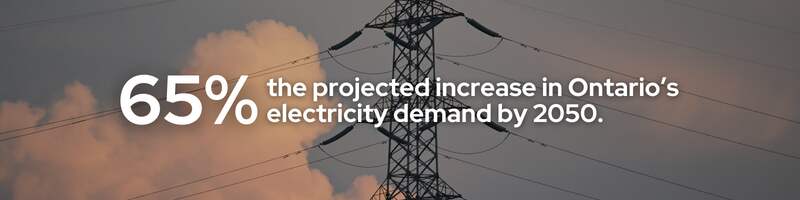
Most provinces are forecasting rapid electricity demand growth. Ontario, for example, expects a 65% increase by 2050, and Quebec is expecting demand to double over the same period. As industries electrify and households adopt new technologies, expectations for affordable, reliable power are rising. Canada’s pivot to a digital, electrified and globally competitive economy depends on electricity. These numbers tell a clear story: Canada must plan, approve and build new clean electricity before the demand arrives.
This is about more than keeping the lights on. Electricity now powers transportation, data, industry, housing and the digital economy. Pair this with expected growth in mining and low-carbon fuels and our net zero by 2050 commitments, and it’s clear that the electricity sector is central to Canada’s ability to attract investment.
Affordability starts with energy efficiency, conservation and load shifting, but where new supply is required, building ahead of demand is how we keep costs low. Cheap electricity is the electricity we plan properly, build early and integrate with community needs. Clean power today is affordable, reliable and fast to deploy, and it’s the best way to maintain competitive rates for families and businesses while meeting rising demand.
With More Clean Energy in Canada, Many Communities Can Win Together

The good news is that Canadians are with us. People increasingly support investing in infrastructure that grows the economy, improves quality of life and advances reconciliation.
Consider Glooscap Energy, named Indigenous Clean Energy Company of the Year by CanREA at our recent Electricity Transformation Canada conference. This Mi’kmaq-owned company from Nova Scotia is driving clean energy development through wind, solar and storage, while creating lasting economic and social benefits for its community.
Or consider that in British Columbia, BC Hydro’s 2024 Call for Power resulted in all 10 awarded projects having 49% to 51% Indigenous ownership. This is the model for Canada’s energy future: clean projects built in partnership with Indigenous communities, delivering prosperity and sustainability.
Clean Power: A Strategic Economic Advantage
Globally, the International Energy Agency estimates that energy investment rose to US$3.3 trillion in 2025, with $780 billion flowing into renewable power and another $479 billion into grids and storage.
For the past five years, Alberta led Canada’s clean energy growth, accounting for 80% of new installed capacity. Today, the story is national. As of December 2024, Canada’s total installed wind, solar and storage capacity exceeds 24 GW, with more than 17 GW of new procurement underway, and $31 billion of associated investment. We are tracking progress in our Procurement Calendar.
Canada’s Renewable Energy Market Outlook 2025 report, prepared by CanREA and Dunsky Energy + Climate Advisors, projects $143–$205 billion in investment, 250,000 to 350,000 job-years and up to 80% reductions in grid emissions intensity over the next decade. Canada now ranks 9th globally for installed wind energy, 20th for battery storage and 24th for solar capacity.
Wind, solar and energy storage are at the centre of this opportunity. Wind and solar are among the lowest-cost, fastest-to-deploy electricity supply options in the world, while storage is transforming how we manage electricity by making systems smarter, cleaner and more reliable. It allows us to save electricity for future use, smooth out peaks and integrate more renewable electricity without sacrificing reliability.
What We Need for Success
To capitalize on this moment, Canada must act decisively. Four priorities stand out:
- Stable and durable policy frameworks: Investors need consistent, supportive regulations and policies that provide attractive revenue opportunities. This includes the Clean Economy Investment Tax Credits and a long-term carbon pricing schedule.
- Community engagement: Success depends on collaboration with Indigenous partners, municipalities, landowners and local communities from the very beginning of projects.
- Coordinated supply chains: Secure, efficient supply chains are essential to deliver projects on time and at scale, and they must be considered in the new equation of balancing trade and industrial strategy.
- Skilled workforce: Canada must prepare and attract the workforce capable of building and operating the future grid, from construction trades to engineers, planners and technologists.
Building Canada, Project by Project
There is much talk these days about nation-building projects, and we submit that building out Canada’s electricity system is the overarching nation-building project of our time that unlocks all others. Every new wind project, solar array and storage facility is a building block of our future economy, and that future runs on electricity.
As the Public Policy Forum’s 2025 report Build Big Things puts it: “With a coordinated, cross-sector, multi-jurisdictional effort, Canada can turn opportunities into outcomes and develop the energy, critical minerals and infrastructure needed for a prosperous, sustainable and resilient future.”
An expanded, modernized grid, built ahead of demand, is table stakes for the next economy. Clean, affordable, reliable power is not only an environmental imperative; it is a strategic Canadian advantage.
By investing in wind, solar and storage, by partnering with Indigenous communities, and by committing to durable policies, Canada can deliver the electricity that will drive industries, communities and households for generations.
Our installed wind, solar and storage capacity has already grown by 46% in just five years, and the industry is ready to accelerate.
The time to build is now.
About the Experts
-

As the President and CEO of CanREA, Vittoria Bellissimo leads a member association focused on ensuring that wind energy, solar energy and energy storage play a central role in transforming Canada’s energy mix. Vittoria was previously the Executive Director of the Industrial Power Consumers Association of Alberta.
See more -

As CanREA’s Vice President of Policy, Imran Noorani steers advocacy strategies that drive the growth of renewable energy and energy storage across Canada, while providing strategic leadership to the policy team. Imran was previously the co-founder of Peak Power and held senior executive roles at the Ozz Group of Companies.
See more
-
 CCS Deployment: Don’t Take the “S” for Granted
 Neil Wildgust
President & CEO
Carbon Management Canada
Neil Wildgust
President & CEO
Carbon Management Canada
-
 Canada Excels at Climate Technology Innovation, but Struggles to Adopt It
 Tyler Hamilton
Senior Director of Climate
MaRS
Tyler Hamilton
Senior Director of Climate
MaRS
-
 Canada’s Clean Energy Opportunity: Powering Shared Prosperity
 Kwatuuma Cole Sayers
Executive Director
Clean Energy BC
Kwatuuma Cole Sayers
Executive Director
Clean Energy BC