
Government Spending Needs Systemic Alignment to Deliver Projects
Budget announcements make headlines, but the real challenge is building the systemic alignment needed to turn “billions committed” into “projects completed.”


Canada’s new infrastructure and defence spending commitments will need more than capital to move projects forward across jurisdictions.
While recent news about increased defence and infrastructure spending suggests momentum in the face of geopolitical challenges, success shouldn’t be measured by the size of the budget. National readiness should be gauged by how effectively urgent projects progress as hundreds of billions are committed to defence modernization, Arctic security, energy corridors and critical minerals.
Why Government Spending Alone Isn’t Enough to Deliver Projects
Capital alone won’t move projects forward across jurisdictions. The quality of governance, ownership and decision-making structures improves our capacity to implement major capital projects. Investing in complex multi-party alignment and participation is a prerequisite for designing these structures. And it’s often this work we overlook and undervalue.
Instead, readiness is still measured by the size of the budget rather than the strength of the alignment beneath it.
Early Structural Alignment Strengthens Government Spending Outcomes
Canada’s challenge is not a lack of capital. The challenge is that structural alignment with new ways of working is not defined early enough.
“Lasting, resilient alignment ensures that ownership, decision-making authority and risk are clearly defined and agreed to before capital is deployed.”
This kind of alignment does not happen easily in a country as vast and jurisdictionally layered as Canada. Projects routinely cross federal, provincial, territorial and Indigenous governments, along with regulators, industry, financiers, and communities, each operating with different mandates, timelines and incentives.
Lasting, resilient alignment ensures that ownership, decision-making authority and risk are clearly defined and agreed to before capital is deployed. Without this alignment, projects have a much higher rate of failure. This is a common challenge because parties faced with urgency feel pressure to rush foundational stages to keep everyone moving in the same direction and aligned when things aren’t going as predicted. This pressure reflects a broader systemic challenge in how complex, multi-party work is structured. Poorly designed alignment is an endemic issue. Poorly designed engagement is often the cause.
Alignment at this scale will not be achieved through more bilateral tables or “announceables”. The work ahead will require new processes to shape decision-making frameworks and ownership structures with deliberate risk allocation.
Pattern of Poor Oversight and Accountability
“Canada has followed a consistent pattern where capital is announced first, and governance, ownership and decision-making are sorted out later, under pressure.”
For decades, Canada has followed a consistent pattern where capital is announced first, and governance, ownership and decision-making are sorted out later, under pressure. One example: the Canadian Surface Combatant project, which is the largest single purchase in Canadian history, has been called a bottomless money pit with little accountability or oversight.
Projects become investable when ownership, decision-making authority and accountability are addressed alongside procurement and financing early enough in the process to support execution.
Some will argue that delays are the result of needing time to handle complexities. That ownership discussions are often postponed because defining them early is politically difficult. However, by defining ownership and authority at the outset, complex, multi-party projects can progress on time and on budget.
This has been our experience at Coeuraj working across government systems and community planning; when authority and ownership are clarified up front, projects move more efficiently.
Alternatively, when ownership and authority are forced back into the process later, projects often slow down or stop. Decision authority is left vague because teams hesitate to establish it up front. So, when friction inevitably emerges, enforcement and litigation become the default mechanisms of resolution.
Need to Build Ownership Early
“Building the right kind of Indigenous ownership at the outset generates more successful outcomes.”
Friction and delay tend to decrease when we are willing to get the hard stuff done earlier.
For instance, building the right kind of Indigenous ownership at the outset generates more successful outcomes. Authority becomes clearer, risk is addressed sooner, and the work shifts from people preparing to fight about the projects to them having a reason to make it succeed. This change includes creating the conditions for long-term economic participation, where communities generate own-source revenue within the structure of the project rather than being positioned outside of it through limited, short-term roles that do not carry forward beyond the life of the project.
As projects mobilize across governments, industries and communities, each operating with different mandates, incentives and time horizons, coordination is often emphasized without creating alignment. Engagement, whether through consultation, negotiation or partnership processes, is often relied on but does not establish alignment on its own.
Infrastructure must endure for a century while natural resource projects operate on multi-decade cycles. Whereas capital has defined return-on-investment horizons, and political cycles are even shorter. When these timelines are not aligned at the outset, instability is built into the project from the beginning.
Canada’s current governance architecture was not designed for this kind of alignment at scale.
If readiness continues to be defined by capital allocation alone, Canada will increase spending without increasing its ability to implement. Capital moving through unclear governance structures does not accelerate outcomes; it amplifies the friction. In a geopolitical environment where timelines matter, that delay becomes a strategic liability.
A Systemic Approach is Needed
Structural challenges can’t be solved with more process. They require a systemic approach designed to support complex, multi-party work, one that makes the underlying relationships, incentives and constraints visible so decisions can be made earlier, and alignment can be built deliberately. When applied in practice, this systems approach changes how projects are structured. It creates the conditions for alignment to hold over time and for outcomes such as own-source revenue to emerge.
The question is whether Canada builds that capability now or continues to pay for its absence later.
About the Experts
-
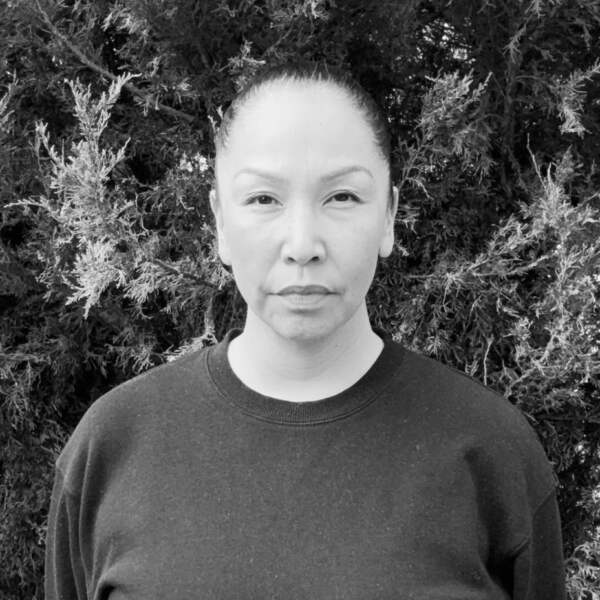
Elaine Alec, Practice Partner at Coeuraj, is syilx and secwépemc and brings disciplined listening, cross-cultural fluency, and systems awareness to her work across Indigenous governance, politics, community planning, land use, and economic development. She has founded and led companies focused on strengthening the internal and relational capacity required for durable decision-making. Elaine is the author of Calling My Spirit Back.
Coeuraj is a professional services firm focused on leadership development and organizational effectiveness. It works with clients to build capacity, strengthen strategy, and support long-term growth.
See more -

Tyl van Toorn, Co‑founder and Group CEO at Coeuraj, integrates collaborative design, high‑touch methodologies, and custom digital solutions to help business and government clients navigate complex change. He focuses on assembling new combinations of knowledge and capability to strengthen cross‑system communication, multi‑stakeholder alignment, and strategy design.
Coeuraj is a professional services firm focused on leadership development and organizational effectiveness. It works with clients to build capacity, strengthen strategy, and support long-term growth.
See more
-
 Why Intelligent Mobility is Essential for Resilient, Productive Canadian Cities
 Kurtis McBride
CEO
Miovision
Kurtis McBride
CEO
Miovision
-
 Tourism in Canada: A Cornerstone of Growth and Sustainable Transformation
 Amy Butcher
Vice President of Public Affairs
Tourism Industry Association of Canada
Amy Butcher
Vice President of Public Affairs
Tourism Industry Association of Canada
-
 Laying the Digital Rails for a Prosperous Canadian Future
 Douglas Heintzman
Chief Catalyst
Blockchain Research Institute
Douglas Heintzman
Chief Catalyst
Blockchain Research Institute