
Time to Get Serious: Cut Real Deals for Indigenous Economic Development Now
Canada has the tools to support Indigenous-led economic development—but without bold action to shift power and capital, real reconciliation will remain out of reach.

Every year on National Indigenous Peoples Day, Canadians gather to celebrate Indigenous cultures, languages, and histories. But after the speeches fade and the social media posts scroll by, one question remains: What are we actually doing to change the systems that hold back Indigenous economic growth and self-determination?
For too long, the immense potential of Canada’s Indigenous economy has been stifled by outdated approaches, bureaucratic hurdles, and a fundamental lack of respect for Indigenous rights and governance.
We are at a critical juncture. The tools we need to build a thriving, Indigenous-led economy are now within reach, but only if governments, industry, and Indigenous Nations find the courage to act differently, together.
We Now Have the Mechanisms. Let’s Use Them.

Ten or fifteen years ago, the ideas we’re talking about today, including Indigenous-led environmental assessments, true economic partnerships, and capital flowing into Indigenous hands, were rare. We didn’t have the regulatory flexibility, capital vehicles, or Indigenous institutional infrastructure to back up the vision.
But that’s changed. Indigenous Nations have been building their own governance systems, land codes, economic development corporations, and environmental protocols. Capital is beginning to flow, albeit unevenly. And in some regions, Indigenous-led environmental assessments (EA) are emerging as credible, culturally relevant, and technically sound processes.
What we need now is the political will to back these systems fully—with capital, authority, and streamlined pathways.
The Big Idea: Support Indigenous Governance for Economic Deals

If there’s one thing Canada must do now to future-proof both the economy and the environment, it’s this: support Indigenous governance in land and water management.
Not as an add-on to colonial regulatory systems, but as something better: an Indigenous led, culturally informed framework for development and conservation.
“If there’s one thing Canada must do now to future-proof both the economy and the environment, it’s this: support Indigenous governance in land and water management.”
That means:
- Shifting from federal and provincial control of projects on Indigenous lands to Indigenous oversight.
- Replacing municipal vetoes with Indigenous authority over Indigenous territories.
- Recognizing Indigenous-led EA systems as equivalent or superior to Crown processes.
This is not about cutting corners: it’s about cutting through bureaucracy that was never designed to serve Indigenous communities. We need well-regulated, timely processes, but they must be regulated by the Nations that steward the land.
We must reground ourselves in this truth: Indigenous governance is not a barrier to development—it’s the path forward.
“This is not about cutting corners: it’s about cutting through bureaucracy that was never designed to serve Indigenous communities. We need well-regulated, timely processes, but they must be regulated by the Nations that steward the land.”
And we must empower it.
Call to Action #1: Capitalize Indigenous Institutions to Facilitate Ownership
If we want Indigenous Nations to lead environmental and economic decision-making, they need the resources to do so.
“We need a major increase in capitalization for Indigenous-led institutions—environmental, legal, financial, and educational. This means sustainable funding from governments to build professional, non-political, Indigenous-controlled institutions.”
Too many Nations are trying to exercise jurisdiction without access to core funding or revenue tools. That’s not sustainable. And it’s not fair.
We need a major increase in capitalization for Indigenous-led institutions—environmental, legal, financial, and educational. This means sustainable funding from governments to build professional, non-political, Indigenous-controlled institutions.
It also means refreshing outdated funding models that force communities to “start from scratch” every time they want to grow or expand their capacity, or expand a successful economic development project. Capital should not be a gatekeeper, it should be a lever.
The foundation of meaningful economic deals must be Indigenous ownership of projects and a non-negotiable seat at the project management table. This isn’t just about equity; it’s about ensuring communities have direct oversight to prevent margins from being managed out and that financial benefits flow to Communities.
“If a community previously received specific funding as a remote community, and a new project brings road access that changes their funding matrix, the deal must guarantee that the royalties and economic benefits from the project far exceed any lost revenue.”
To make this real, Indigenous Nations need significant financial and management capacity. For instance, if a community previously received specific funding as a remote community, and a new project brings road access that changes their funding matrix, the deal must guarantee that the royalties and economic benefits from the project far exceed any lost revenue. This is about making projects so incredibly economically attractive, with full oversight, that they become undeniably beneficial for communities. We have seen repeatedly Indigenous Nations support projects when they are truly cut in on the deal and have the trust and capacity to engage.
Call to Action #2: Empower Indigenous Environmental Assessments
Environmental assessment has become one of the most complex, costly, and time-consuming parts of project development in Canada. And yet, in many cases, it leaves Indigenous communities feeling sidelined.
The solution is not to weaken oversight—it’s to shift it. Empower Indigenous Nations to lead EA processes on their lands.
“When Indigenous Nations lead EA processes, we don’t just get better social outcomes—we get better environmental outcomes for the people who are most impacted and more durable project approvals.”
That means:
- Investing in Indigenous EA capacity—from technical expertise to legal frameworks.
- Recognizing Indigenous EA regimes as authoritative, not advisory.
- Streamlining federal and provincial processes to defer to Indigenous leadership.
When Indigenous Nations lead EA processes, we don’t just get better social outcomes—we get better environmental outcomes for the people who are most impacted and more durable project approvals. Because when communities have faith in their own decision-making protocols, they own the outcomes.
Call to Action #3: Get Municipalities Out of the Way for Economic Growth
In too many regions, municipal governments are blocking or slowing Indigenous-led projects—from housing to clean energy to economic infrastructure. Often, this happens through zoning, permitting, or tax policies that weren’t designed with Indigenous jurisdiction in mind.
“Municipalities should not have veto power over Indigenous development on Indigenous land.”
Let’s be blunt: municipalities should not have veto power over Indigenous development on Indigenous land.
We need to:
- Reform inter-jurisdictional policies to replace municipal authority with Indigenous authority.
- Eliminate the ability of municipal systems to delay projects in Indigenous jurisdictions.
This doesn’t mean abandoning collaboration—but it does mean clarifying who gets to say “yes.” And on Indigenous land, that must be Indigenous governments.
Call to Action #4: Be Bold: Streamline and Accelerate Economic Deals
The biggest risk we face right now isn’t moving too fast, it’s moving too slowly.
Canada is dealing with housing shortages, energy demands, climate impacts, and demographic shifts. Indigenous Nations are ready to lead in all these areas—but they need partners who are willing to move at the speed of economic deals, not at the pace of bureaucracy.
Industry needs to be the first mover, pushing for certainty and demonstrating a willingness to cut share revenue with communities through royalty regimes. However, this cannot be done without government also stepping up its contribution. If the public pie is growing, communities must benefit proportionally.
“Canada is dealing with housing shortages, energy demands, climate impacts, and demographic shifts. Indigenous Nations are ready to lead in all these areas—but they need partners who are willing to move at the speed of economic deals, not at the pace of bureaucracy.”
Let’s Act Differently, Starting Now
Government, industry, and Indigenous Nations all need to think and act differently.
- Governments must release control, recognize Indigenous oversight and fund Indigenous governance capacity.
- Industry must build partnerships that respect Indigenous authority and come to the table with sufficient resources to fund productive negotiations leading to Indigenous ownership stakes.
- Indigenous communities must continue building strong, transparent, and culturally grounded systems that support the priorities of their members.
This is a moment of opportunity. We’re not starting from scratch anymore. The mechanisms are in place. The governance is growing. The capacity is real. What we need now is the courage to act differently—and the capital to back it up.
“Let’s stop expecting Indigenous communities to adapt to systems that inherently limit their self-determination. Instead, let’s build new ones—together.”
So, this National Indigenous Peoples Day, let’s stop expecting Indigenous communities to adapt to systems that inherently limit their self-determination. Instead, let’s build new ones—together.
About the Expert

JP Gladu is the Principal of Mokwateh and a leading voice on Indigenous economic development. He is a former President and CEO of the Canadian Council for Indigenous Business and Senior Fellow with the Macdonald-Laurier Institute.
-
 Money as Nutrients
 Teara Fraser
Founder and CEO
Iskwew Air
Teara Fraser
Founder and CEO
Iskwew Air
-
 “Canada Strong” Needs a Strong Indigenous Economy
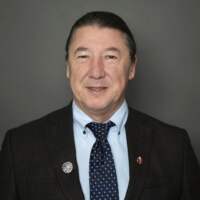 Senator PJ Prosper
Mi’kmaw lawyer
Nova Scotia
Senator PJ Prosper
Mi’kmaw lawyer
Nova Scotia
-
 Consent, Not Checkboxes: Energy Projects and Indigenous Rights in Canada
 John Cook
Senior VP & Portfolio Manager
Mackenzie Investments
John Cook
Senior VP & Portfolio Manager
Mackenzie Investments
 Raylene Whitford
Director
Canative Energy
Raylene Whitford
Director
Canative Energy