
Building Canada’s Future Economy Starts Before Kindergarten
Building a future-ready Canada starts with nurturing curiosity and empathy long before a child ever learns to code.

When people talk about Canada’s global strengths, they often mention natural resources, diversity, or innovation. But there’s another advantage – one that’s quieter, humbler, and perhaps even more powerful.
Our early learning system.
Across the country, educators are shaping the kind of citizens Canada will depend on for decades to come. I’m a firm believer that the future doesn’t begin in boardrooms or research labs; it begins in the places where children first learn to wonder.
Education in a Rapidly Changing World

As technology reshapes every corner of society, our approach to education must evolve just as boldly. Artificial intelligence and automation are already transforming how we live and work, and preparing the next generation to thrive alongside these tools means nurturing the human skills that make adaptation and innovation possible.
“To fully harness its promise, we need to equip young learners with the foundational human capacities that will allow them to navigate and shape an AI-influenced world.”
If we truly want to prepare Canada for a future defined by technology, we must start much earlier, not in university labs or high school classrooms, but in the early environments where imagination and curiosity first take root. Long before a child learns to code, they learn to imagine; before they can innovate, they must explore; and before they can lead, they must connect with others.
The transformative impact of AI is only beginning to take shape, and its potential to amplify human creativity and problem-solving remains largely untapped. To fully harness its promise, we need to equip young learners with the foundational human capacities that will allow them to navigate and shape an AI-influenced world.
Why the Earliest Years Matter Most
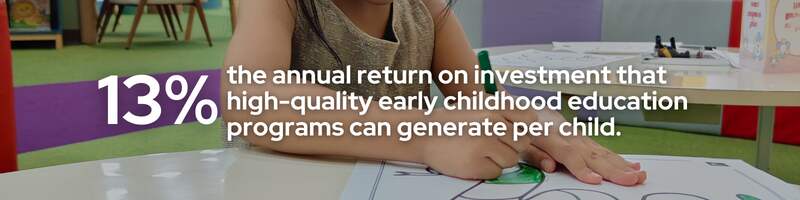
The abilities that will define Canada’s success in the age of AI aren’t learned later in life; they take shape in the earliest years. Imagination, adaptability, emotional intelligence, and critical thinking are formed during the brain’s most active stage of growth, known as the synaptic blooming period, when more than a million new neural connections are created every second. This window, open roughly from ages one to five, is when the foundations of learning are built; when curiosity becomes the engine of understanding and play becomes the framework for problem-solving.
“A future-ready economy begins in the early years, when children are literally wired to discover, question, and create.”
At CEFA Early Learning, our curriculum is designed around this scientific reality. But CEFA’s role extends beyond classrooms. We believe educators, families, and the broader learning community must work together to ensure future generations can contribute meaningfully to innovation, civic life, and social advancement.
By stimulating cognitive, emotional, and physical development during this critical period, we help children build the confidence, curiosity, and creativity that will one day drive Canada’s innovation economy – because a future-ready economy begins in the early years, when children are literally wired to discover, question, and create.
Where Canada is Now
“Early learning is often viewed as childcare: essential for working parents, but not yet fully recognized as the foundation of lifelong learning and human potential. “
Canada has made bold progress in supporting families through early learning and childcare initiatives. The federal government’s focus on affordability and access is a vital step forward that recognizes early education as both a social good and an economic necessity.
But the next frontier, and our greatest opportunity, is quality. It’s the real magic that happens inside classrooms every day, where educators spark curiosity, build confidence, and teach children to think critically in an increasingly AI-shaped world.
At present, early learning is often viewed as childcare: essential for working parents, but not yet fully recognized as the foundation of lifelong learning and human potential. Yet neuroscience shows that by age five, over 90% of brain growth has already occurred, shaping how children think, feel, and solve problems for the rest of their lives.
This creates a powerful opportunity to treat early learning not just as part of our education system, but as the foundation on which our future economy depends.
Unlocking Human Potential
“Preparing for an AI-driven world doesn’t mean teaching children to compete with machines. It means helping them develop the skills that make them irreplaceably human.”
Technology continues to transform how we live and work, creating opportunities we could only imagine a decade ago. But even as machines learn to analyze and adapt, they cannot replicate what makes us human: the ability to feel, imagine, empathize, and collaborate.
These are the qualities that drive innovation across every field, and they begin to form in the earliest years of life. When children are encouraged to ask questions, tell stories, and explore through play, they build the architecture that supports creativity and critical thinking. When they learn empathy and emotional regulation, they develop the foundation for teamwork, communication, and leadership: the same traits that allow people to work effectively in classrooms, labs, or any organization.
Children build early literacy and numeracy, but they also learn to express ideas through music, movement, and storytelling. They begin to understand technology not as an end, but as a tool for imagination.
Preparing for an AI-driven world doesn’t mean teaching children to compete with machines. It means helping them develop the skills that make them irreplaceably human.
Rethinking Education as Infrastructure
When we talk about building a competitive economy, we often focus on physical or digital infrastructure: roads, broadband, and research hubs. But the proper foundation of every strong economy is its human infrastructure – the minds, relationships, and environments that enable people to learn, collaborate, and innovate together.
Studies show that enriched early learning builds stronger problem-solving skills, higher graduation rates, and greater adaptability later in life. It isn’t just education; it’s one of the most cost-effective and high-impact investments a nation can make. Economist James Heckman found that early childhood education can yield returns of up to 13% per year, which stimulates benefits that ripple across generations.
Approaching early education as the first stage of Canada’s innovation ecosystem allows us to align investment in young children with national priorities, from closing the productivity gap to leading responsibly in the AI era.
Building the Foundation for Lifelong Learners and Innovators
Our approach at CEFA rests on three pillars that reflect what every child – and every country – needs to thrive in the future:
- Blooming Minds: Nurturing curiosity during the critical synaptic blooming period, when the brain is most receptive to learning.
- Purposeful Play: Turning curiosity into hands-on discovery, where play becomes a vehicle for creativity and problem-solving.
- Empowering Potential: Building confidence, empathy, and a sense of agency — the traits that fuel innovation and leadership.
These aren’t just educational concepts; they’re economic strategies that shape children into adults who can adapt, invent, and lead. The early years are the start of a talent pipeline where resilience and innovation take root long before they appear on a résumé.
What Canada Can Do Next
Building a future-ready Canada starts with strengthening early learning. Here’s where to begin:
- Invest in educators as innovation enablers. Early childhood educators are the builders of lifelong learning. By investing in their professional development – including developmental science, digital literacy, and child-led inquiry – we elevate early education to a national priority.
- Integrate early learning into Canada’s future skills and AI readiness agenda.
As technology evolves, our competitive advantage will rest in the human skills machines cannot replicate. Embedding creativity, empathy, and adaptability into early education will help Canada grow not just coders, but creators. - Encourage public-private collaboration. Partnerships between public systems and private innovators can bring new ideas, tools, and research to early learning while ensuring accessibility and quality for all families.
- Champion early education as nation-building. Just as we invest in clean energy or digital infrastructure, we must invest in the next generation of thinkers and problem-solvers.
A Shared Vision for the Future
“The world our children will inherit is being built right now – and its architects are already in our classrooms, asking “why,” imagining “what if,” and believing they can.”
Canada’s future will not be defined by machines, but by curious, empathetic, and imaginative minds. To lead in the age of AI, we must nurture those human capacities starting not at 18 or 8, but at one, when every new connection in a child’s brain represents potential for discovery, compassion, and creativity. With the rapid pace of technological change, preparing the next generation to harness innovation with ingenuity and confidence has never been more critical.
Canada’s early learning ecosystem is a quiet superpower shaping that future, one child at a time. If we treat it with the same urgency as infrastructure or innovation funding, we can build not only a stronger economy but a more creative and compassionate nation. When we invest in those earliest years, we’re not only preparing children for school; we’re preparing Canada for the future.
The world our children will inherit is being built right now – and its architects are already in our classrooms, asking “why,” imagining “what if,” and believing they can.
About the Expert
-

Arno Krug is CEO of CEFA Early Learning, Canada’s leading private early education provider. With over 25 years of experience in education and franchising, he is passionate about helping children reach their full potential through science-backed, holistic learning that nurtures curiosity, creativity, and character from the earliest years.
See more
-
 Canada’s Literacy Gap is Not Just an Education Issue; It’s an Economic One
 Carly Shuler
Co-Founder & CEO
Hoot Reading
Carly Shuler
Co-Founder & CEO
Hoot Reading
-
 From Curiosity to Career: We Must Start Early to Build the Future of Women in STEM
 Cindy Adams
Executive Director
Scientists in School
Cindy Adams
Executive Director
Scientists in School
-
 Canada’s Economic Future Depends on Investing in Education
 Annie Kidder
Co-Founder
People for Education
Annie Kidder
Co-Founder
People for Education