
Canada’s Economic Future Depends on Investing in Education

These days, headlines are dominated by Trump, trade wars, and growing anxiety about Canada’s economic future.
In response, we’ve seen plenty of “elbows up” rhetoric, and our new(ish) federal government has rolled out announcements about accelerating economic self-reliance through massive infrastructure projects, interprovincial trade unity, and ramped-up defence spending.
But there’s a glaring omission. While bricks, mortar, and steel matter, real resilience won’t come from infrastructure alone. If we want an economy that lasts—and a society that thrives—we need to look further upstream.
The Overlooked Power of Education
“In a time of economic volatility, lagging productivity, and trade destabilization, education is the most efficient way to ensure Canadians are prepared for the jobs of the future and to guarantee everyone a fair shot at success.”
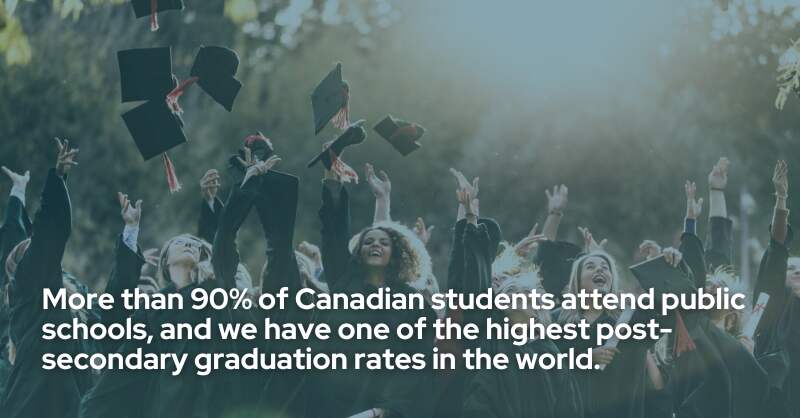
Canada has an extraordinary public asset that rarely makes the headlines: education. More than 90% of our students attend public schools, and we have one of the highest post-secondary graduation rates in the world. Yet education barely figures in our current political and economic strategies.
It is in our schools, colleges, and universities that we build the knowledge, skills, and adaptability that tomorrow’s economy demands. In a time of economic volatility, lagging productivity, and trade destabilization, education is the most efficient way to ensure Canadians are prepared for the jobs of the future and to guarantee everyone a fair shot at success.
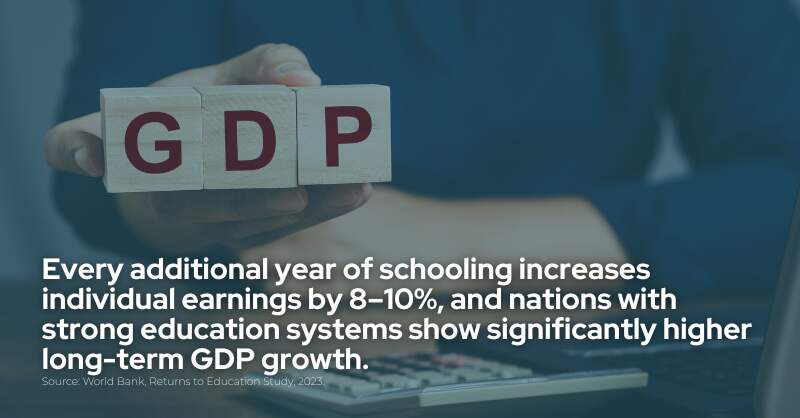
That means investing not just in roads and bridges, but in people: their skills, health, and capacity to adapt and innovate. Strong public education isn’t only a social good—it’s an economic imperative. Education raises incomes, boosts productivity, fuels innovation, and expands workforce participation.
Building Skills for a Resilient Future
To ensure that all students are equitably prepared for a rapidly changing economy, there is widespread agreement among employers, economists, and other experts that students must acquire broad, transferable skills that can be applied across various careers and industries. These include:
- Critical Thinking and Problem Solving: The ability to analyze information, evaluate evidence, and develop solutions is fundamental for innovation and progress. In a world where problems are rarely straightforward, students must be equipped to think critically, ask good questions, and approach challenges with creativity and logic.
- Communication and Collaboration: Strong oral, written, and digital communication skills, alongside the ability to work effectively in teams, are crucial in nearly every profession. Students must learn how to express ideas clearly, listen actively, negotiate respectfully, and collaborate with others—locally and globally—to solve problems and drive change.
- Digital Literacy: From understanding and responsibly using artificial intelligence (AI) to cybersecurity awareness, digital literacy is essential in today’s economy. Technology is central to most jobs, and students must be equipped to navigate and critically engage with the digital tools and systems shaping their world.
- Adaptability and Resilience: In an economy defined by constant change, students must develop the ability to adapt, learn continuously, and persist through uncertainty. These social-emotional skills help young people manage transitions, rebound from setbacks, and thrive in evolving career landscapes.
- Cultural and Global Competence: The ability to understand and appreciate diverse perspectives is key to building inclusive workplaces and communities. Students need opportunities to explore global issues, challenge stereotypes, and learn to collaborate across cultures with empathy, humility, and respect.
- Civic and Financial Literacy: Students should graduate with the knowledge and skills to participate fully in democratic life and manage their personal finances. This includes understanding government and civic responsibility, budgeting and saving, as well as how economic systems and public policy affect their everyday lives.
Education as Nation-Building
So the question for Canada’s leaders is this: will we keep focusing on short-term “announceables,” or will we finally treat education as the nation-building investment it is? Because if we want a truly resilient economy — one that is innovative, inclusive, and future-proof — it won’t be built only with concrete. It will be built in classrooms.
About the Expert
-
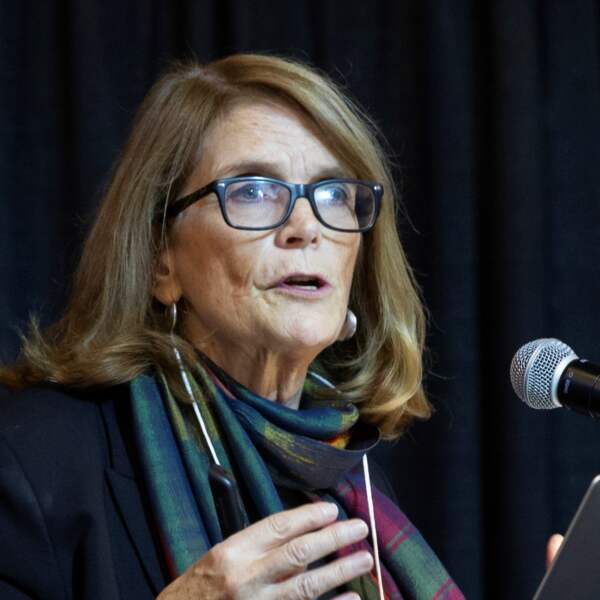
Annie Kidder is the former Executive Director and a founder of People for Education. She regularly provides advice to policymakers and government, and her writing on education has been published in a range of media. She is the recipient of numerous awards, including the Ontario Principals’ Council Outstanding Contribution to Education Award, the Canadian Teachers’ Federation Public Education Advocacy Award, and, in 2018, an honourary doctorate from York University.
See more
-
 Canada’s Literacy Gap is Not Just an Education Issue; It’s an Economic One
 Carly Shuler
Co-Founder & CEO
Hoot Reading
Carly Shuler
Co-Founder & CEO
Hoot Reading
-
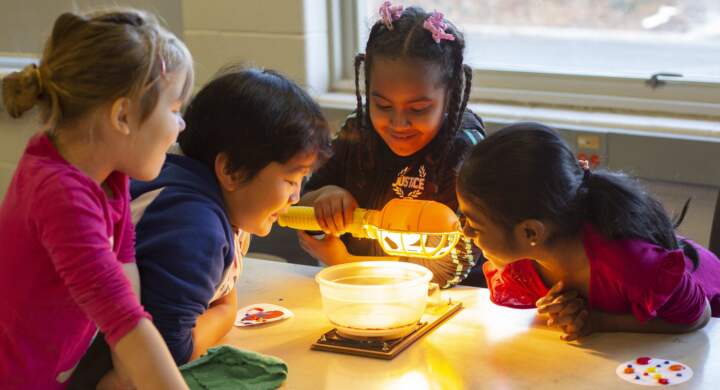 From Curiosity to Career: We Must Start Early to Build the Future of Women in STEM
 Cindy Adams
Executive Director
Scientists in School
Cindy Adams
Executive Director
Scientists in School
-
 Building Canada’s Future Economy Starts Before Kindergarten
 Arno Krug
CEO
CEFA Early Learning
Arno Krug
CEO
CEFA Early Learning