
The Voluntary Carbon Market is in Transition: Here’s What it Means for the Green Economy
The voluntary carbon market is at a crossroads—its future hinges on restoring trust, ensuring integrity, and positioning countries like Canada to lead in the next wave of high-quality carbon removals.

The multi-billion-dollar Voluntary Carbon Market (VCM), which promised to drive meaningful global climate action, has had its growing pains in recent years.
The market suffered significant declines in transaction volume of over 50% in 2022 and 2023. While the decline slowed to 25% in recent years, trust remains fragile. One high-profile example involves a former executive charged with fraud by US federal authorities, accused of falsifying data related to cookstove projects in rural Africa and Southeast Asia, to obtain carbon credits worth tens of millions of dollars.
The market’s future hinges on restoring trust and ensuring greater integrity.
The Institute for Sustainable Finance recently spoke with experts across the VCM value chain as part of a major research project in collaboration with CPA Canada and the International Federation of Accountants to explore how the market is evolving and where it is headed. Given how opaque and fragmented the market still is, these insider perspectives were instrumental to shaping our research. Here’s what we learned:
Buyers’ Changing Preferences
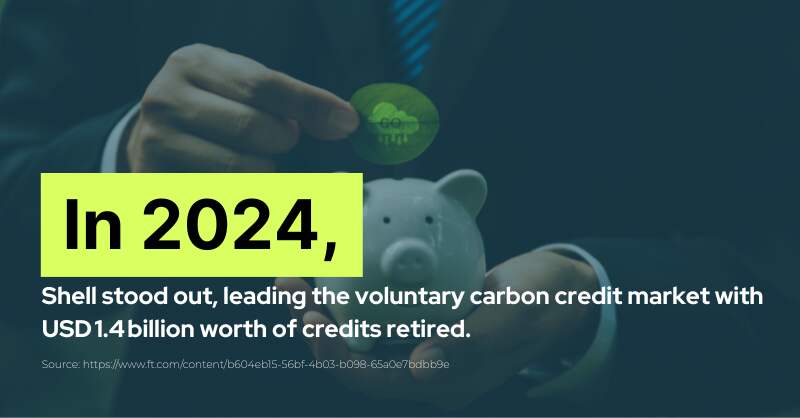
Quality is king. That’s the consistent message from corporate buyers—many of these are multinational companies with publicly stated climate and sustainability commitments.
“Buyers are developing internal frameworks to guide credit procurement, often anchored in principles like the Oxford Offsetting Principles or benchmarked against evolving quality labels such as the Core Carbon Principles (CCPs).”
Across our interviews with market participants, it became clear that, for many, the days of checking a box are over. Instead, buyers are developing internal frameworks to guide credit procurement, often anchored in principles like the Oxford Offsetting Principles or benchmarked against evolving quality labels such as the Core Carbon Principles (CCPs). In recent years, this shift has led to a preference for direct purchases, which allow for more in-depth due diligence. This also entails steering clear of exchanges and standardized contracts, which many buyers associate with opaque or lower-quality credits. However, some noted that standardized CCP contracts, first launched by Xpansiv, could help rebuild trust in exchange-based trading.
“Some buyers are also eyeing projects under government-regulated systems (credits generated based on these protocols are typically used for compliance)—seeing them as reputationally safer amid rising scrutiny.”
Demand is increasingly shifting toward carbon removals, both nature-based and engineered projects, as buyers look for projects that promise durable benefits. While buyers are drawn to nature-based removal credits for their cost-effectiveness, ample supply, and the added co-benefits (e.g., protecting biodiversity, supporting climate change adaptation), engineered removals such as direct air capture are slowly gaining traction. A few major tech companies are leading the way, but high prices remain a barrier for wider market participation. A Canadian financial institution shared its perspective with us: “The engineered credits will remain a small amount in terms of the number of credits we procure, although it will eat up a good chunk of the budget.” For pricing insights, I highly recommend reading the latest survey results published by the CDR.fyi team early in 2025.
Interestingly, some buyers are also eyeing projects under government-regulated systems (credits generated based on these protocols are typically used for compliance)—seeing them as reputationally safer amid rising scrutiny. In addition to the existing federal offset protocols, Environment and Climate Change Canada (ECCC) recently published the preliminary draft federal offset protocol for Direct Air Carbon Dioxide Capture and Geological Storage (DACCS), which has just completed its public comment period. Although still in development, this is, in general, viewed as a signal of government support, helping to boost buyer confidence and encouraging investment in high-quality carbon removals.
What’s Next for VCM?
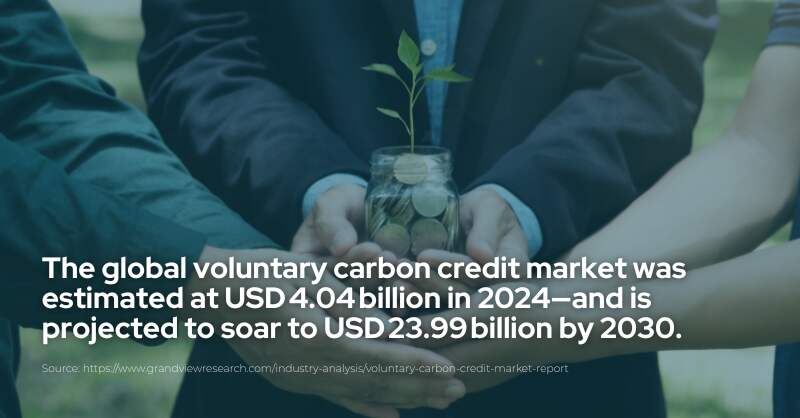
Looking ahead, we also outlined a few predictions for where the market is headed, highlighting both the tailwinds and headwinds. Here are four I am particularly excited about:
“Many market participants called for more regulation and clearer policy signals—essentially, a rulebook to follow.”
- Quasi-governance bodies and regulatory intervention to provide guidance and clarity: Surprisingly, many market participants called for more regulation and clearer policy signals—essentially, a rulebook to follow. While the market is voluntary, some clarity is needed to help address integrity issues, promote good market practices and boost market confidence. The ongoing work from quasi-governance bodies (e.g., ICVCM’s CCP) acts as a tailwind, enhancing market standards. And we expect more countries to step up their engagement with the VCM, shaping its development through policy signals (e.g., the U.K. government’s proposed policy and governance framework), protocols, and potential integration with compliance systems (more below). For example, in the EU, the demand side is likely to be reshaped by the regulatory effort to crack down on greenwashing (i.e., the EU Green Claims Directive) and to create a voluntary framework to certify high-quality carbon removals.
- Enhanced target-setting and disclosure requirements: Regarding target-setting and disclosure, efforts from the Science-Based Targets Initiative, (SBTi) and the Voluntary Carbon Markets Integrity Initiative (VCMI) are ongoing to provide clarity and guidance. The possible recognition of VCM credits for companies to offset Scope 3 could create significant tailwinds by increasing demand. Clear disclosure requirements are generally interpreted as positive for quality projects. However, they may have a mixed impact on the market if they end up leading to unintended “greenhushing”.
- Some convergence between voluntary and domestic compliance carbon markets: Domestic compliance markets could create demand for high-quality credits. Several jurisdictions have integrated VCM credits into their compliance schemes, such as a cap-and-trade market. For example, Singapore allows the use of high-quality international carbon credits to offset up to 5% of taxable emissions from 2024 under its carbon tax regime. The convergence of voluntary and domestic compliance markets offers companies flexibility to meet their compliance obligations. Setting a cap on the use of carbon credits ensures that businesses remain focused on reducing emissions within their own operations and supply chains first. This trend of recognizing high-quality VCM credits in compliance schemes will likely gain momentum, especially after Article 6 of the Paris Agreement becomes fully operational.
- Full operationalization of CORSIA and Article 6: Both mechanisms can potentially send a strong demand signal for the market. The Carbon Offsetting and Reduction Scheme for International Aviation (CORSIA) requires airlines to offset emissions exceeding their baseline levels by purchasing carbon credits. It is currently in the voluntary phase for all participating countries and will enter the mandatory phase in 2027. At the COP29 climate summit in Azerbaijan, delegates reached a consensus on Article 6 of the Paris Agreement. Once countries ramp up efforts to meet their Nationally Determined Contributions (NDCs), the demand for high-quality credits backed by corresponding adjustments is expected to grow. There are still uncertainties regarding how much demand CORSIA and Article 6 could drive when they are still in the early stages. Depending on their implementation, potential challenges related to accounting for emissions reductions may arise, undermining the market integrity.
At a national level, countries are embarking on divergent paths. For example, the US (federal level) and China, the world’s two largest emitters, are adopting almost polar-opposite approaches to climate policies and clean tech support under their current administration. This adds uncertainty to both the supply and demand sides of the VCM.
“This could be a real double win for Canada— unlocking economic benefits while advancing climate goals, especially as global demand for durable, high-quality removals is poised to grow substantially in the coming decades.”
The Future of the Voluntary Carbon Market in Canada
For Canada, some argue that the country is well-positioned to lead specifically in carbon removals given its abundant natural resources, clean electricity grid, and other strategic advantages. I’m cautiously optimistic, but I believe this could be a real double win for Canada— unlocking economic benefits while advancing climate goals, especially as global demand for durable, high-quality removals is poised to grow substantially in the coming decades.
About the Expert
-

Yingzhi Tang is Senior Research Associate at the Institute for Sustainable Finance (ISF) at Smith School of Business, Queen’s University. In this role, she leads research on key areas, such as Canada’s sustainable labelled bond market, transition finance, impact investing, and voluntary carbon markets.
See more
-
 CCS Deployment: Don’t Take the “S” for Granted
 Neil Wildgust
President & CEO
Carbon Management Canada
Neil Wildgust
President & CEO
Carbon Management Canada
-
 From Extraction to Subtraction: Carbon Removal is Canada’s Next Big Opportunity
 Na’im Merchant
Executive Director
Carbon Removal Canada
Na’im Merchant
Executive Director
Carbon Removal Canada
-
 Canada’s Decarbonization Challenge: An Economic Path Forward
 Alex Todorovic
CEO and Co-founder
Arbor
Alex Todorovic
CEO and Co-founder
Arbor