
Canada’s Decarbonization Challenge: An Economic Path Forward
Canada’s path to economic competitiveness depends on fixing its carbon data gap—turning accurate, trusted emissions measurement into a powerful driver for decarbonization, investment, and global market leadership.

Let’s be direct.
Canada is in an economic race, and the finish line is decarbonization. This isn’t just about the environment; it’s about our country’s future competitiveness.
The stakes are immense. The World Economic Forum estimates that over 50% of the world’s GDP is moderately or highly dependent on nature.
Our economic stability is directly tied to a stable climate.
“The problem is, too many Canadian companies are trying to run this race with a blindfold on. The single biggest thing holding back effective decarbonization is a lack of good data.”
As a founder in climate tech, I’ve seen that the companies that win are the ones that treat this seriously. They aren’t just talking; they’re making real, measurable progress.
The problem is, too many Canadian companies are trying to run this race with a blindfold on. The single biggest thing holding back effective decarbonization is a lack of good data.
We can’t afford to get this wrong. Clear and trusted carbon data is the new currency for trade and investment. With global ESG assets projected to hit $40 trillion by 2030, according to Bloomberg, companies that can prove their progress will have access to a massive pool of capital.
Those who can’t will be left behind.
Where Canada Stands Now: A Mixed System
To understand how to move forward, we have to know where we are. The conversation around Canada’s climate policy is changing. It’s moving from consumer taxes toward a stronger model of industrial carbon pricing. This approach, using systems like the Output-Based Pricing System (OBPS), puts the compliance burden on heavy industry. It rewrites the rules for how companies must operate.
“In Europe, the new Corporate Sustainability Reporting Directive (CSRD) means that almost 50,000 companies now face mandatory reporting. This is the new reality of doing business internationally.”
But a look at the bigger picture shows we are not ready. The new Canadian Sustainability Standards Board (CSSB) has created voluntary reporting standards. They are a good start, but they are voluntary. This leaves most Canadian companies in a confusing spot, especially while global standards are moving quickly.
In Europe, the new Corporate Sustainability Reporting Directive (CSRD) means that almost 50,000 companies now face mandatory reporting. This is the new reality of doing business internationally.
The Problem and the Opportunity

Why do so many corporate decarbonization efforts stall? The answer is the data gap.
The biggest blind spot is the supply chain.
Most of a company’s emissions, typically exceeding 80%, are classified as Scope 3 emissions. They come from suppliers, transportation, and customers. Without accurately measuring these, any decarbonization plan is based on guesswork. You can’t reduce what you can’t see.
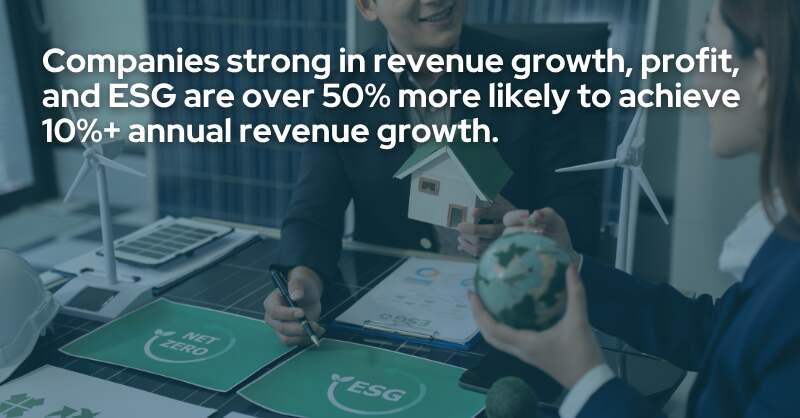
Solving this data problem creates Canada’s biggest economic opportunity. The business case is clear. A McKinsey report found that “triple outperformers“, companies strong in revenue growth, profit, and ESG, were over 50% more likely to achieve 10%+ annual revenue growth.
Good data and a real decarbonization strategy lead to better business results.
“Our clean energy grid gives us an advantage, but only if we have the verifiable data to prove it. Good carbon accounting turns risk into opportunity.”
This is especially true with the EU’s new carbon border tax (CBAM) coming in 2026. Canadian makers of products like steel and aluminum can win here.
Our clean energy grid gives us an advantage, but only if we have the verifiable data to prove it. Good carbon accounting turns risk into opportunity.
What We Must Do: A Plan for Canada’s Decarbonization
As a founder, I know that turning a significant challenge into an opportunity requires a clear plan. Canada’s national decarbonization strategy is no different.
1. For Policymakers: Create a Clear National Plan
The federal government must lead with clear and steady rules for everyone.
- Make Reporting Standard: Change the new disclosure standards from voluntary to required. Start with large companies and then phase in smaller ones.
- Harmonize Rules: Work with provinces to create one set of measurement rules for the country. A patchwork system creates unnecessary costs and confusion.
- Help with Tech Costs: Offer tax credits or grants to help smaller companies buy modern carbon accounting platforms. This directly addresses the cost barrier.
“Change the new disclosure standards from voluntary to required. Start with large companies and then phase in smaller ones.”
2. For Business Leaders: Make Carbon a Core Business Metric
CEOs must lead the charge on data.
- Invest in Real Data: Go beyond the annual report. Invest in platforms that give you real-time carbon data for each product you make. This is how you make smart decisions.
- Help Your Supply Chain: Your carbon footprint includes your suppliers. Use your influence to help them get the tools and support they need to measure their own emissions.
- Link Pay to Performance: Add climate goals to your team’s compensation. When people are rewarded for something, it gets done.
“Add climate goals to your team’s compensation. When people are rewarded for something, it gets done.”
3. For Industry Groups and Banks: Work Together
Single companies can’t do this alone.
- Create Industry Roadmaps: Groups should create clear plans for their sectors with standard methods for measuring emissions.
- Increase Green Loans: Banks must offer more loans tied to real decarbonization work, backed by solid data.
- Champion Education: These groups must lead in teaching the business community about modern carbon management.
Moving Canada Forward
A strong, low-carbon Canadian economy is within our reach. At Arbor, our job is to make this process easier. Our platform automates the measurement of emissions for an entire company, from its own operations (Scope 1, 2, and 3 emissions) to a single product. We provide the tools that change complex data into simple, actionable insights.
Winning the decarbonization race is possible. But it requires fixing the underlying data foundation. With clear rules and the right tools, Canada can be a leader in the new economy.
“Winning the decarbonization race is possible. But it requires fixing the underlying data foundation.”
The time for small steps is over.
About the Expert
-

With a foundation in computer science and a well of experience in entrepreneurship, Alex Todorovic has evolved into a dynamic leader within the tech industry. As a founder of Arbor, Alex is pioneering a platform that empowers businesses to accurately measure and manage their supply chain carbon footprints, driving their sustainability strategies and reporting efforts..
See more
-
 The Future of Sustainable Business: Turning Risk into Resilience
 Marena Winstanley
Managing Director
Smart Prosperity Institute
Marena Winstanley
Managing Director
Smart Prosperity Institute
 Aaron Pardy
Senior Research Associate, Energy and Materials
Smart Prosperity Institute
Aaron Pardy
Senior Research Associate, Energy and Materials
Smart Prosperity Institute
-
 How the Canadian Construction Sector Can Lead the Low-Carbon Transition
 Jolene McLaughlin
VP, Climate & Sustainability
EllisDon
Jolene McLaughlin
VP, Climate & Sustainability
EllisDon
-
 Why Steven Guilbeault’s Resignation Must Reignite National Climate Action
 David Miller
Managing Director
C40 Cities
David Miller
Managing Director
C40 Cities
 Valerie Plante
Former Mayor
City of Montreal
Valerie Plante
Former Mayor
City of Montreal