
The Hunt for Talent in Canada’s Electricity Sector

Has anyone ever played the Connections game from The New York Times? It gives you several seemingly random items and you have to figure out the connection.
Here’s a little game along those lines: What connects an Executive Vice President who led efforts to restore power to a Caribbean island, a Communications Manager who was the face and the voice during Hurricane Fiona, a Supervisor of Distribution Lines who helped establish a resource sharing system used during severe outages, a Stakeholder Relations Manager who got a whole province to talk about the energy needs in the future, a telecom engineer who specializes in the use of cellular networks, and broadband and a biologist who uses technology to help wildlife avoid electrocution?
The answer is: these are all people who work in the electricity sector.
The People Behind the Electricity Sector
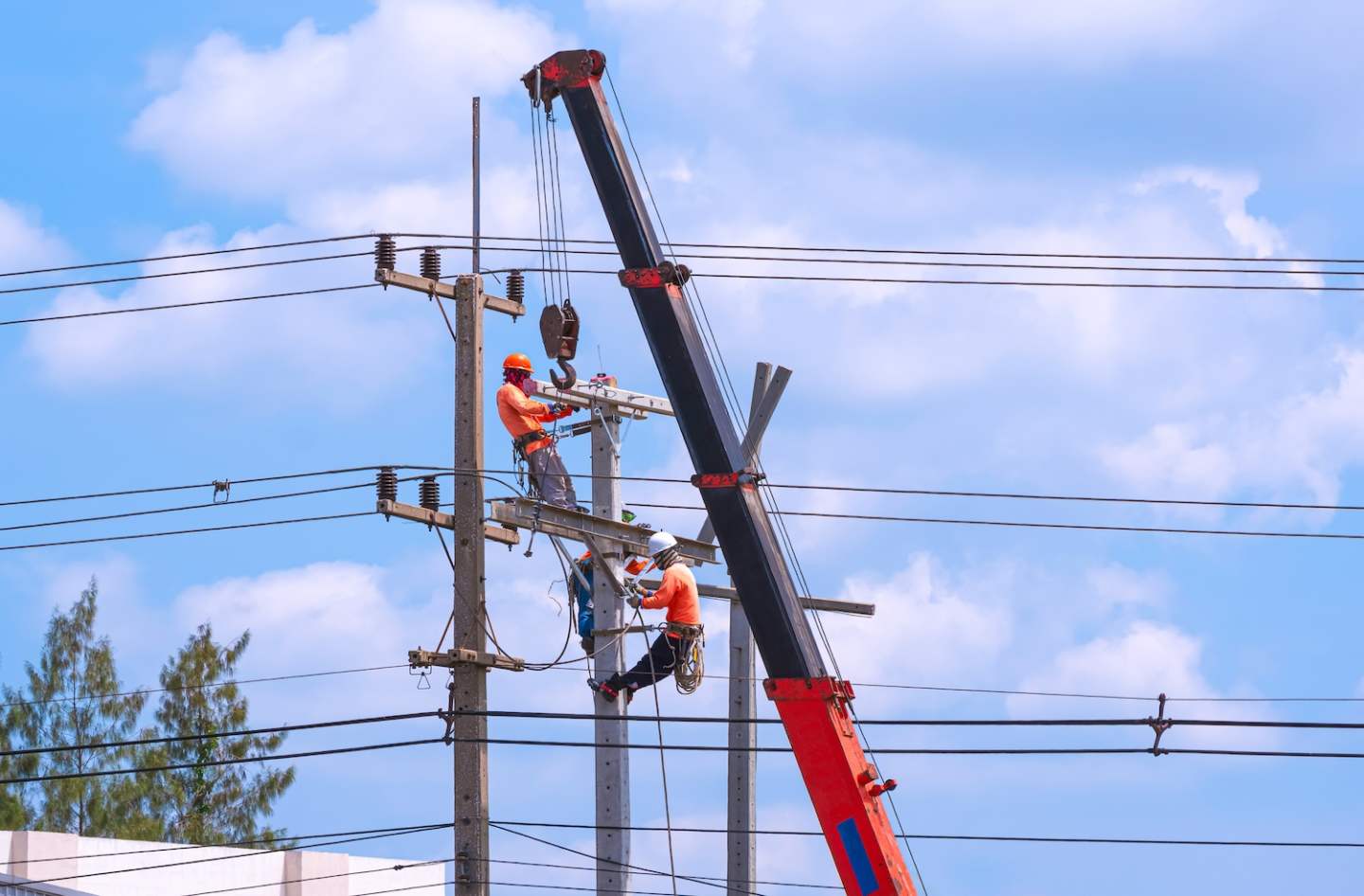
More than that, they’re the recipients of Electricity Canada’s very first Faces of the Industry Award. These awards were given out to six people from across Canada after a grassroots nomination process and selection by an independent panel based on the candidate’s leadership, innovation and the overall impact of their work on the electricity sector.
The winners of this year’s Faces of the Industry include:
- Gary Smith, Executive Vice President of Innovation at Fortis Inc., has 40 years of experience in the business
- Lara Ludwig, who works in Stakeholder Relations at SaskPower and, with her team, helped engage about 60,000 people to assist SaskPower in determining what to do next in terms of the energy transition
- Kim Griffin, Maritime Electric Company’s spokesperson, who has been a strong advocate for electricity customers
- Keyra Hawley, a self-proclaimed “bird nerd” who works at ATCO as an Environmental Specialist, who makes sure that power lines are safe for wildlife and in turn, for people
- Rick Putman, who is something of a legend in our circles and has worked for Hydro One for decades. He’s one of the architects behind getting neighbouring electricity companies to assist each other during emergencies.
- Barmak Khosravi, a network engineer from Hydro-Quebec, who innovated in the telecommunications aspect of the electricity sector
“The electricity sector isn’t made up of companies, it is made up of people.”
Our Faces of the Industry award came out of a simple idea: the electricity sector isn’t made up of companies, it is made up of people. These award winners represent all the aspects of one of the most integrated sectors of business in Canada. Making the lights go anywhere requires talented people in every possible area.
Unfortunately, it’s a sector that will need more workers as talented as these people… and very soon.
The Electricity Sector’s Talent Crisis

One of the most contentious aspects of the government of Canada’s draft Canadian Electricity Regulations is the fact that it wants to complete decarbonization by 2035. There are many concerns about this, but one important one is that according to the World Economic Forum, by 2030—five years before the government’s deadline—one in six people in the world will be of retirement age.
This has been a slowly building crisis. Even before the pandemic, hiring qualified candidates was becoming a significant problem for electricity companies. The electricity industry employed just over 93,000 workers in 2023, according to the Canadian Centre for Energy Information. However, the demand for powerline workers and other specialized workers will grow significantly as the industry invests in electrification and addresses the growth in electricity demand.
“Half of the core occupations the sector relies on—such as engineers, technicians and technologists, trades, managers and supervisors— will experience shortages at a national level in the medium term.”
Despite recent growth in jobs in the Canadian electricity sector, a 2023 Electricity Human Resources Canada report on the labour market estimates that half of the core occupations the sector relies on—such as engineers, technicians and technologists, trades, managers and supervisors— will experience shortages at a national level in the medium term. Consequently, it may be challenging for the electricity sector to recruit for these in-demand jobs.
The Federal government, in its past two budgets, has made commitments to improving this, but there is more to be done on a strategic level. These would include:
- Improving labour mobility through better alignment of federal and provincial occupational standards
- Removing barriers for international students
- Increasing youth employment opportunities and supporting apprenticeship training
- Supporting Indigenous workers
- Removing barriers to foreign credential recognition
As our Faces of the Industry awards demonstrate, Canada’s electricity workforce is knowledgeable, innovative, and talented. We need to keep it that way.
-
 Canada Must Heed the Message of Brain Drain in Engineering
 David Zingg
Distinguished Professor of Computational Aerodynamics and Sustainable Aviation
University of Toronto Institute for Aerospace Studies
David Zingg
Distinguished Professor of Computational Aerodynamics and Sustainable Aviation
University of Toronto Institute for Aerospace Studies
-
 Designing Ontario’s Future Workforce: Innovation Starts with Talent
 Tara J. Remedios
Director of Talent
Ontario Vehicle Innovation Network
Tara J. Remedios
Director of Talent
Ontario Vehicle Innovation Network
-
 Securing Canada’s Digital Future Starts with Talent
 Hyelim Juliana Kim
National Sector Lead, Cybersecurity
Mitacs
Hyelim Juliana Kim
National Sector Lead, Cybersecurity
Mitacs
 Dr. Stephen Lucas
CEO
Mitacs
Dr. Stephen Lucas
CEO
Mitacs