
Designing Ontario’s Future Workforce: Innovation Starts with Talent
Ontario’s innovation economy won’t thrive without rethinking how we develop talent—treating workforce strategy as a catalyst for innovation, not a reaction to it.

As innovation reshapes industries across Canada, it’s clear: we don’t have a talent shortage, we have a systems gap.
Technology is evolving faster than education can catch up, and faster than traditional HR strategies can adapt. Across the automotive, mobility, and tech sectors, we’re not just seeing new jobs emerge; we’re watching entire skillsets get redefined. And yet, the approach to workforce development has often lagged.
If we want to future-proof Ontario’s economy, we need to stop treating talent strategy as an afterthought. Led by the Ontario Centre of Innovation (OCI) and supported by the Government of Ontario, the Ontario Vehicle Innovation Network (OVIN) has flipped the model, treating workforce development as a driver of innovation, not a reaction to it. And what we’re seeing is this: when we treat people development as seriously as product development, we start building the conditions where innovation can truly scale.
From the Classroom to the Worksite: Building the Talent Journey
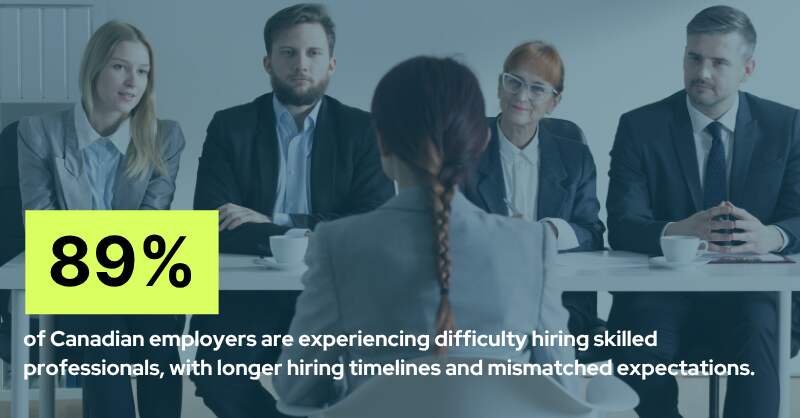
Ontario’s innovation economy can’t afford to wait until graduation to engage the workforce of tomorrow. That’s why OVIN created the Automotive Innovation Challenge (AIC), an initiative I led my team to deliver, to close the gap between learning and doing.
The AIC starts on campus, where postsecondary students are immersed in solving real industry challenges. They work directly with Ontario-based employers through innovation sprints and mentorship experiences, learning how to think, adapt, and build like professionals.
But that’s only the beginning. Students also participate in project-based placements with companies working on emerging vehicle technologies, from electrification to autonomy. These aren’t internships, they’re launchpads. They prepare students to contribute meaningfully from day one. And for employers, they offer a glimpse into the potential of early-stage talent when given the right environment.
“This is what the future of learning looks like: applied, embedded, and co-created with industry.”
This model reflects how OVIN connects talent to opportunity, linking academic knowledge with applied innovation in Ontario’s fastest-growing sectors.
This is what the future of learning looks like: applied, embedded, and co-created with industry.
Digital Learning That Meets Workers Where They Are
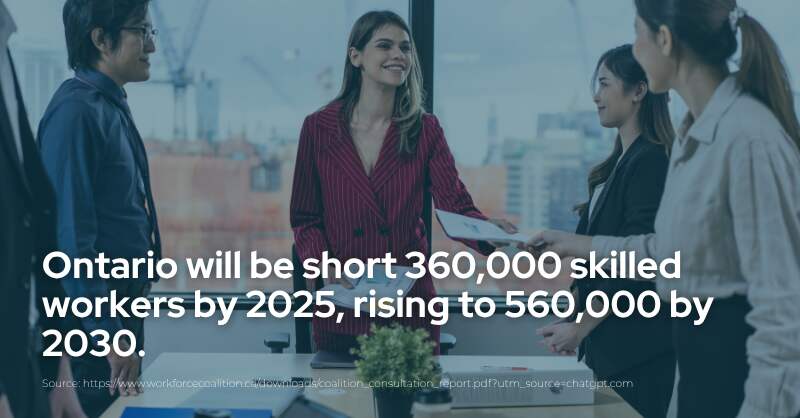
Innovation doesn’t wait for a semester to start, and today’s workers can’t afford to. That’s why we launched OVIN Learn, a digital training platform offering on-demand micro-credentials built in partnership with employers and postsecondary institutions.
“This isn’t just about upskilling. It’s about democratizing access to the innovation economy.”
OVIN Learn gives learners—from students to mid-career professionals—a way to build relevant, high-impact skills that match real labour market needs. These are short, focused credentials in high-growth areas like EV systems, data analytics, and advanced manufacturing. And because they’re flexible, they meet workers where they are. On their schedules, on their terms.
This isn’t just about upskilling. It’s about democratizing access to the innovation economy. It’s about giving every Ontarian a chance to thrive in a tech-enabled future.
Aligning Talent Systems: A Collaborative Blueprint
Building a competitive talent pipeline takes more than good programming; it takes coordination. That’s why we worked tirelessly to bring together leaders from industry, postsecondary institutions, and government to form OVIN’s Workforce Talent Strategy Task Force.
“When education systems, employers, and innovation networks align around shared talent goals, we stop reacting to skills gaps and start designing against them.”
Together, we’re addressing one of the biggest friction points in the ecosystem: the disconnect between what’s taught and what’s needed. These aren’t high-level policy chats. We’re engaging in real curriculum discussions that help ensure Ontario’s learning models reflect the realities of a transforming sector.
When education systems, employers, and innovation networks align around shared talent goals, we stop reacting to skills gaps and start designing against them.
The Talent Economy is the Innovation Economy
If we want to lead in emerging technologies, we must lead in how we grow, support, and evolve our workforce.
That means moving faster, building with purpose, and refusing to settle for outdated approaches to training, hiring, and retention. It means creating space for continuous learning, purposeful inclusion, and genuine collaboration between sectors.
This work isn’t theoretical. At OVIN, it’s what we do every day, and we’re already seeing the results: more learners embedded in innovation, more alignment between skills and job outcomes, and more companies building talent advantage into their business models.
Ontario doesn’t just have the potential to lead the world in mobility innovation; we have the talent to do it. But only if we keep designing systems that work for people, not just for pipelines.
The future of work is already here. The real question is: are our systems built to meet it?
About the Expert
-

Tara J. Remedios is the Director of Talent at the Ontario Vehicle Innovation Network (OVIN). She leads a team that designs and delivers high-impact initiatives that bridge education, industry, and government to build Ontario’s innovation-ready workforce. Her work is grounded in inclusion, agility, and long-term systems thinking—creating the conditions for people and businesses to thrive. Tara brings a track record of excellence from organizations such as KPMG, Rogers, and EY, where she led talent engagement, upskilling, and organizational development strategies.
See more
-
 Canada Must Heed the Message of Brain Drain in Engineering
 David Zingg
Distinguished Professor of Computational Aerodynamics and Sustainable Aviation
University of Toronto Institute for Aerospace Studies
David Zingg
Distinguished Professor of Computational Aerodynamics and Sustainable Aviation
University of Toronto Institute for Aerospace Studies
-
 Securing Canada’s Digital Future Starts with Talent
 Hyelim Juliana Kim
National Sector Lead, Cybersecurity
Mitacs
Hyelim Juliana Kim
National Sector Lead, Cybersecurity
Mitacs
 Dr. Stephen Lucas
CEO
Mitacs
Dr. Stephen Lucas
CEO
Mitacs
-
 Beyond Tariffs: Canada’s Chance to Lead in the Global Talent Race
 Daniel Hengeveld
VP of Investment Attraction
Toronto Global
Daniel Hengeveld
VP of Investment Attraction
Toronto Global