
The Future of Family Farms: Canada’s Opportunity for Growth


Canadian farms are fundamental to our nation’s economy, prosperity, and independence. There are an estimated 190,000 farms in Canada. They employ over 250,000 people in rural communities and support an agri-food system that employs over two million people, or one in nine Canadians. The agri-food system generates around 7% of Canadian GDP ($140 billion). Most farm produce is exported: Canada dominates global wheat, canola, mustard, flaxseed, lentils, peas, and maple product markets. Agriculture and food product exports amount to $90 billion a year, supporting our trade balance with the rest of the world and the strength of our currency. Canadian farms also supply the food we eat. Farmers promote environmental sustainability as they are stewards of biodiverse ecosystems, home to thousands of species.
“Nearly all farms in Canada are still owned and operated by families. These families, often multi-generational, are among the most efficient operators in the world.”
Canadians should be proud that their country is a leader in agriculture. Canada benefits from abundant land and water resources, access to international markets, strong research and development, and a global reputation as a trusted supplier of safe, top-quality food. But many Canadians do not know that nearly all farms in Canada are still owned and operated by families. These families, often multi-generational, are among the most efficient operators in the world. They are local owners and managers, ensuring the best decisions are made on the ground. They invest in the local communities where they live. Family businesses are the foundation of one of Canada’s most successful industries.
For Canadian family farms to continue winning in globally competitive markets they need to meet three challenges. They need to:
- Grow to accommodate the next generation of farmers and benefit from economies of scale.
- Continue investing in increasingly sophisticated and expensive technology, equipment, and infrastructure.
- Increase the total size and productivity of Canadian farmland by improving land.
Family Farms Need to Expand

By expanding their land base, families can accommodate multiple members of the next generation returning to the farm. The aging of Canadian farmers is not a new phenomenon and follows general population trends. The median age of farm operators is around 60 years old and has been steadily increasing over the years. Many farmers are approaching retirement and planning for succession. These farmers are likely to sell their farms to neighbours with multiple children who want to farm. Canada has a large cohort of younger farmers who want to farm. We are likely to see a large-scale transition with farms changing hands from farmers in their 60s and 70s to younger farmers in 30s and 40s. Some of these younger farmers will inherit farmland from the parents. Others need capital to buy farmland from neighbours.
“Capital expenditure is challenging for smaller farms where the fixed costs of investing in equipment and infrastructure are disproportionally higher relative to income and the land base.”
Family farms also need to grow because larger farms are more competitive and efficient. Capital expenditure is challenging for smaller farms where the fixed costs of investing in equipment and infrastructure are disproportionally higher relative to income and the land base. A 500-acre farm needs a planter, sprayer, and harvester just as much as a 1,000-acre farm. Larger farms can afford to spend the capital required on current equipment, which is larger, and the infrastructure necessary to optimize productivity. Some operating costs do not increase proportionally with the size of family farms such as labour costs and utilities.
Family Farms Should Continue Investing in the Latest Farming Practices

Canadian crop productivity increases by 2% to 4% on average each year, driven by the incremental adoption of new technology, farm inputs, and practices. For Canadian family farms to compete in the future, they must continue investing in and adopting new technology and practices. Canadian farmers are already good at this. The list of new applications is long. New seed varieties produce crops that generate higher yields and are more resistant to pathogens and adverse weather. Farmers are investing in precision agriculture, including new sprayers and planters that use variable technology to apply different amounts of fertilizer and seeds in different areas. Smart tractors gather data on farm productivity and fertilizer use and are often equipped with auto-steer and AI-driven, sensor monitoring technologies. In many cases, farmers are not purchasing the most expensive, cutting-edge technologies but are buying and benefiting from second, third, or fourth generation equipment that can boost productivity. The pace of innovation is accelerating and equipment is becoming more expensive because it is more advanced, larger, and there is more demand globally.
“Canadian crop productivity increases by 2% to 4% on average each year, driven by the incremental adoption of new technology, farm inputs, and practices.”
Canadian family farms are mass adopters of regenerative farming methods such as low-till or no-till farming, crop rotations, and mixed crop and cattle grazing. They should continue to adopt regenerative farming and expand its use where agronomically possible. These methods increase crop yields, reduce the risk of plant disease, and make farms more resilient to adverse weather conditions.
Land Improvements Can Increase Total Size and Productivity
Canada has hundreds of thousands of acres of formerly farmed land, which fell into disuse over time. A lot of this land was previously timbered or used for recreational activities such as hunting. This land could be used more productively as fertile cropland. Canada also has abundant dryland that could be converted into irrigated land. Both the process of restoring retired farmland and converting dryland to irrigated are “land improvement” activities because they increase the productivity and profitability of the land. Restoring retired farmland is hard to develop expertise in and to finance but there has been progress. Area One Farms, a Canadian investment manger, is doing land improvement and has restored over 40,000 acres of retired farmland. Alberta and Saskatchewan have hundreds of thousands of acres with irrigation potential that farmers and the government are starting to develop. This irrigation needs additional capital from farmers, investors, and political support.
Governments and Companies Should Expand Agricultural Research and Fund Crop Insurance
Canadian agricultural innovations can be found on farms around the world, from grain augers first run in Manitoba to a whole new variety of crop, canola, invented by Prairie scientists. The Agricultural Institute of Canada, an advocacy group, estimates that every dollar invested in agricultural research is estimated to produce $10 to $20 in returns. Canadian governments and companies must capitalize on these returns by expanding research and development capabilities. Federal, provincial, and territorial governments are spending $3.5 billion over the 5-year period from 2023 to 2028 on agricultural programs and activities, a 25% increase on the previous budget, and a step in the right direction.
“Every dollar invested in agricultural research is estimated to produce $10 to $20 in returns.”
Crop insurance is an important tool that family farms have used to safeguard their crop production. It is government-subsidized, which reduces the financial burden on family farms. By reducing the volatility of farm incomes, crop insurance contributes to more stable rural economies and, by extension, to national food security.
Private Capital Can Support Family Farms
Private capital can play an important role in helping farming families finance new investment in technology, expand the size of their farms, manage successions, and improve land. Like many family businesses, family farms are capital constrained. Canadian agriculture needs growth capital to ensure its long-term competitiveness.
“Farm loan to value ratios range from 30% to 50%, well below residential mortgage levels, meaning farmers need to put up the bulk of the capital to buy farmland.”
Lenders already play an admirable role in helping finance farmers across Canada. Farm Credit Canada, a state lender, has lent $8 billion to over 80,000 farmers. Each of the five largest banks in the country operate extensive networks in the Prairies that provide mortgages to farmers secured against the value of the land. But lenders can only go so far in financing farms. Farm loan to value ratios range from 30% to 50%, well below residential mortgage levels, meaning farmers need to put up the bulk of the capital to buy farmland. Lenders cannot fund land improvement.
Canadian investors must step in with equity to help fill the gap. We have found that the best way they can do this is by partnering with farmers through joint ventures to buy new land and improve land together. This partnership approach ensures that farmers are expanding their land base and operating bigger farms to benefit from economies of scale. Just as importantly, they own more farmland, and therefore benefit from farmland’s appreciation over time. They become private equity partners and are empowered to grow their farms through expansions and land improvement.
These equity partnerships are companies where the farm partner is both the CEO and a joint investor. This means they still make farming decisions such as what crop to plant, how much fertilizer to use, and when to seed or harvest. One of the most important features of partnerships is that they provide farm partners with the ability to buy-out the portion of the joint ventures they don’t own. The goal of partnerships is to ensure farmers can own all the farmland in the joint venture, buying-out investors over time. Partnerships provide a path to land ownership for the famers and their children.
Equity partnerships are very different to the prevailing sale-and-leaseback or cash rental models. In those models, investors buy the family farm’s land and then rent it back to the farmers. Although farmers continue to operate farms, they no longer own the farmland, depriving them of a valuable source of wealth as farmland appreciates over time. They can usually never afford to buy back the land from investors even if that option existed.
The partnership model generates strong ESG outcomes by creating value that benefits both farmers and their communities. In some cases, investors can provide capital to help family farms that are in financial difficulty. Mentorship opportunities exist where older, more experienced farmers can provide guidance and support to their less experienced counterparts. Area One has established a mentorship network where farm partners share expertise and best practices.
The Future of Canadian Farming Lies in Partnership
The largest insurance companies in Canada manage close to $3 trillion of assets. Canadian pension plans manage $2 trillion, including $40 billion sitting as cash. These institutional investors have ample capacity to invest in Canadian family farms and would benefit significantly from exposure to an attractive alternative real asset class. They already have significant experience investing in similar asset classes such as real estate and infrastructure. Like those asset classes, farmland provides investors with stable risk-adjusted returns, the ability to hedge against inflation, and low correlation with traditional asset classes.
“The partnership model forms a symbiotic relationship between investors and farming families, emphasizing collaboration and mutual growth, and marking a socially responsible departure from more typical sale-and-leaseback models.”
The future of Canadian farming lies with investors, farmers and governments working together as partners to support the growth of family farms, investment in new technology, and land improvement. The partnership model forms a symbiotic relationship between investors and farming families, emphasizing collaboration and mutual growth, and marking a socially responsible departure from more typical sale-and-leaseback models. The more investors, like Area One, that can empower farmers with capital and a path to land ownership, the better. The more governments continue to support family farms, the greater the benefits for all of us. For Canada to win, we must bridge the gap between agriculture, private capital, and government.
-
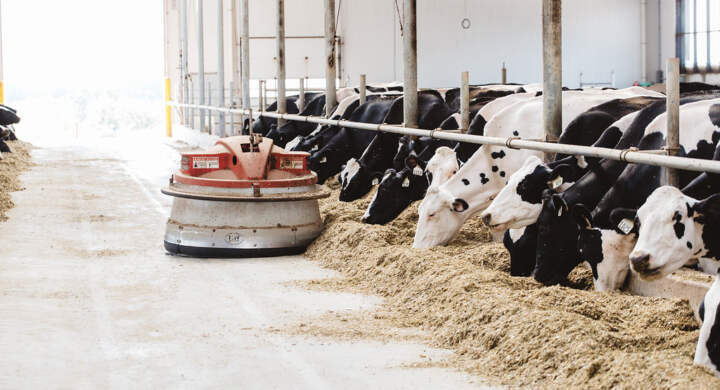 Dairy That Delivers: Why Supply Management Works for a Modern Canada
 David Wiens
Dairy farmer & President
Dairy Farmers of Canada
David Wiens
Dairy farmer & President
Dairy Farmers of Canada
-
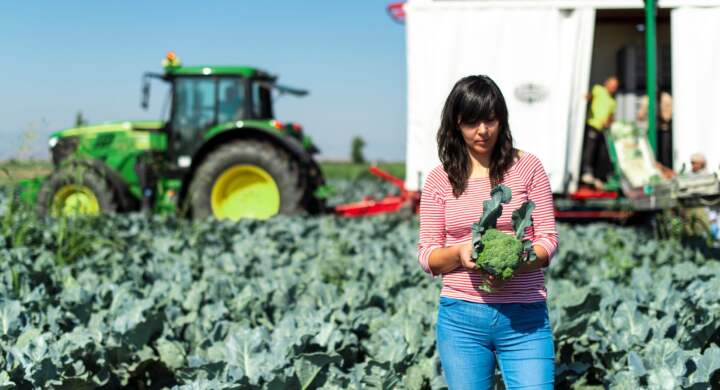 Getting Sustainable Finance for Agri-food Right is How Canada Feeds the World
 Amr Addas
Senior Director, Sustainable Finance and Insights
Farm Credit Canada
Amr Addas
Senior Director, Sustainable Finance and Insights
Farm Credit Canada
 Barbara Swartzentruber
Senior Advisor
Canadian Alliance for Net-Zero Agri-food
Barbara Swartzentruber
Senior Advisor
Canadian Alliance for Net-Zero Agri-food
 David Hughes
President & CEO
Generate Canada
David Hughes
President & CEO
Generate Canada
-
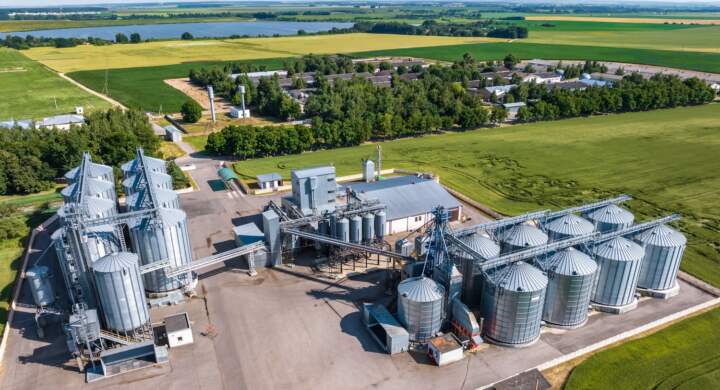 From Farm to Market: Canada’s Economic Playbook
 Kyle Larkin
Executive Director
Grain Growers of Canada
Kyle Larkin
Executive Director
Grain Growers of Canada