
The Future of Defence in Canada: Let’s Translate Vision Into Capability
Canada’s defence challenge isn’t just about spending more—it’s about turning growing budgets into real operational capability through faster procurement, better execution, and stronger partnerships.


As Canada invests in modernizing its defence capabilities, the central question is no longer how much we spend, but how we ensure those investments translate into operational outcomes. Success will depend on more than budget increases; it requires speed, coordination, and most importantly, execution.
This moment demands the same urgency and collaboration that underpin the current ambition to build a resilient, diversified economy. Prime Minister Carney’s push, reflected in Bill C-5, shows what can happen when industrial policy, economic vision, and delivery align. The same focus must apply to defence.
The Procurement and Delivery Challenge
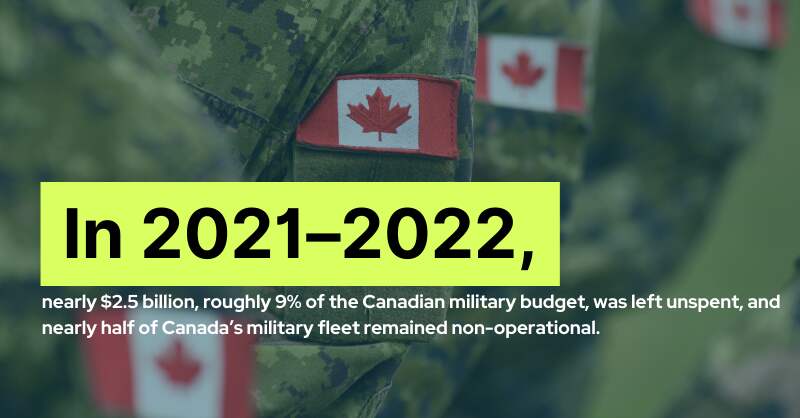
In 2021–2022, nearly $2.5 billion, roughly 9% of the Canadian military budget, was left unspent. The funding existed, but procurement stalled and projects lagged. And nearly half of Canada’s military fleet remained non-operational. The issue isn’t commitment; it’s the capacity to deliver.
With global tensions rising and NATO targets looming, Canada has a great opportunity to accelerate progress. It needs partners who understand the landscape, who are already embedded in the ecosystem, and who can deliver now. Airbus is one of those partners.
Canada’s Airbus Military Assets
For more than 40 years, Airbus has been operating in and with Canada, not just exporting into the country, but building within it. Our aircraft, helicopters, and space technologies are in use today, supported by thousands of Canadian workers and hundreds of Canadian suppliers.
- The CC-295 Kingfisher search and rescue aircraft, adapted for Canada’s unique geography and climate, has recently entered service and already performed rescue missions with the Royal Canadian Air Force. The program includes full training and logistics support based in Comox, BC, and an industrial footprint that supports Canadian jobs.
- Three CC-330 Huskies are now in service with the Royal Canadian Air Force and will later be converted into a Multi-Role Tanker Transport. In 2027, the first new Multi Role Tanker Transport will be delivered to Canada to support strategic missions such as air-to-air refuelling and medical evacuation.
- In Fort Erie, Ontario, Airbus Helicopters manufactures, services, and supports rotary-wing aircraft used by nearly 230 law enforcement, medical evacuation teams, and infrastructure operators across the country. These helicopters are in use every day, supporting life-saving operations.
- In Fort Erie, we are also actively preparing to deliver 19 H135 training helicopters to the Royal Canadian Air Force starting in early 2026, a key part of Canada’s Future Aircrew Training (FAcT) program. These locally completed aircraft will play a vital role in shaping the next generation of Canadian military pilots, further demonstrating our capacity to translate vision into critical operational capabilities.
“In 2027, the first new Multi Role Tanker Transport will be delivered to Canada to support strategic missions such as air-to-air refuelling and medical evacuation.”
Airbus also contributes to Canada’s space capabilities, having helped deliver secure communications and surveillance systems critical to NORAD, NATO, and future missions.
These programs are the result of a strong collaboration with Canadian companies and SMEs, researchers, and public agencies. Because building national defence capability takes time, trust, and a long-term presence.
Building Capability Through Strategy and Reform
As the federal Minister of Industry rightly noted, Canada’s new Defence Industrial Strategy must go beyond rebuilding the aerospace and shipbuilding sectors. It must address a more fundamental challenge: the ability to translate vision into capability. That means modernizing military procurement, streamlining processes, and ensuring the Canadian Armed Forces can put resources to work effectively and without delay.
“Canada’s new Defence Industrial Strategy must go beyond rebuilding the aerospace and shipbuilding sectors. It must address a more fundamental challenge: the ability to translate vision into capability.”
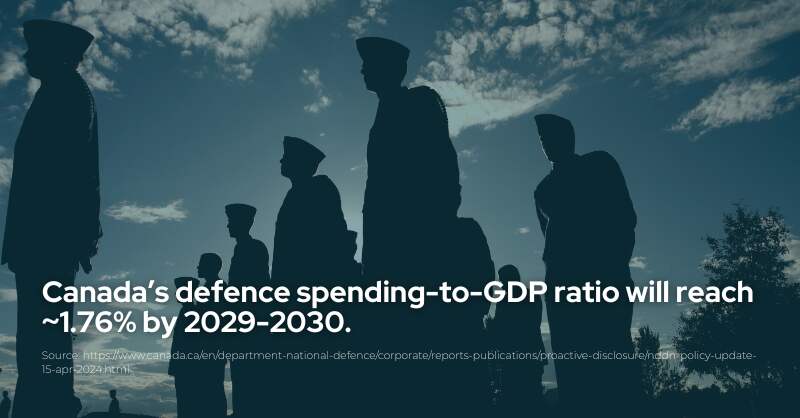
Reaching 2% of GDP this year in defence spending and going beyond to reach 5% in 2035 is a welcome target. But without structural improvements, even increased funding will fall short. This is the paradox: The money is there. What’s missing is the machinery to deploy it effectively.
This is why the right partnerships matter.
Partnerships That Deliver
Airbus is a global company with a more than 40-year Canadian footprint. We are an integral part of the Canadian industrial fabric. We operate across multiple provinces, in both official languages, with a strong track record of delivery through changing governments and shifting priorities. We’ve trained the highly skilled workforce, built a robust infrastructure, and delivered with Canadians, for Canadians.
“Canada has the opportunity to anchor more of its aerospace and defence capacity at home through partnerships that are already working.”
The Prime Minister recently described Canada as “the most European of the non-European countries.” That may be true diplomatically, but in industrial terms, Canada has the opportunity to anchor more of its aerospace and defence capacity at home through partnerships that are already working.
Defence and security partners like Airbus are ready. In this critical moment, the challenge is not to reinvent everything. It’s to build on what already works and address the execution challenge head-on and ensure that defence funding leads to real, operational outcomes across air, land, and space.
About the Experts
-

Jean-François grew up in Montreal, Quebec with his five siblings. He joined the Canadian Armed Forces in 1990 and graduated from the Collège militaire royal in Saint-Jean, QC in 1995. Following his graduation from the Canadian Forces Air Navigation School (CFANS), he served on two separate occasions with 442 (Transport & Rescue) Squadron in Comox, BC; as an instructor at CFANS in Winnipeg, MB; and with 413 (Transport & Rescue) Squadron in Greenwood, NS.
See more -

Dwayne Charette was appointed President of Airbus Helicopters Canada on August 1st 2019. Prior to his appointment he held the position of Chief Operating Officer. As President, Mr. Charette’s responsibility was expanded to include all facets of the helicopter business in Canada and is the accountable executive for the Canadian helicopter division in Canada. Mr. Charette began his career with Airbus Helicopters in 2003.
See more
-
 Canada’s Defence Shift: From Spending Commitments to Strategic Capability
 Kristen Leroux
VP & Regional Executive, Canada & Latin America
Lockheed Martin
Kristen Leroux
VP & Regional Executive, Canada & Latin America
Lockheed Martin
 David Perry
President & CEO
Canadian Global Affairs Institute
David Perry
President & CEO
Canadian Global Affairs Institute
-
 How Allied Collaboration Can Turn Canada’s Defence Investment Into Long-Term Opportunity
Kristen Leroux
VP & Regional Executive, Canada & Latin America
Lockheed Martin
How Allied Collaboration Can Turn Canada’s Defence Investment Into Long-Term Opportunity
Kristen Leroux
VP & Regional Executive, Canada & Latin America
Lockheed Martin
-
 Strengthening Canada’s Industrial Sovereignty and Defence Diplomacy
 Jean-Christophe Gallagher
Executive Vice President
Bombardier Defense
Jean-Christophe Gallagher
Executive Vice President
Bombardier Defense
 Philippe Bourbeau
Professor and Co-Director
International Institute of Economic Diplomacy at HEC Montreal
Philippe Bourbeau
Professor and Co-Director
International Institute of Economic Diplomacy at HEC Montreal