
The Future of Canada’s Northern Economy: What Must Be Done Now

The Canadian North is the strangest of economic spaces. The vast region, making up most of Canada’s land mass, has a great deal of untapped potential, a handful of commercially viable resource projects, and a reliance on government spending that is unmatched in the rest of the country. Statistically, the region has high incomes that are offset, particularly in the territorial North, but exceptional costs of living, widespread Indigenous poverty, and some beneficial personal taxation arrangements.
There is no obvious path forward to widespread prosperity and commercial opportunity. This is largely because there are two distinctive norths (and many sub-regions), with different economic histories and distinctive future prospects.
Two Distinct Norths: Territorial vs. Provincial

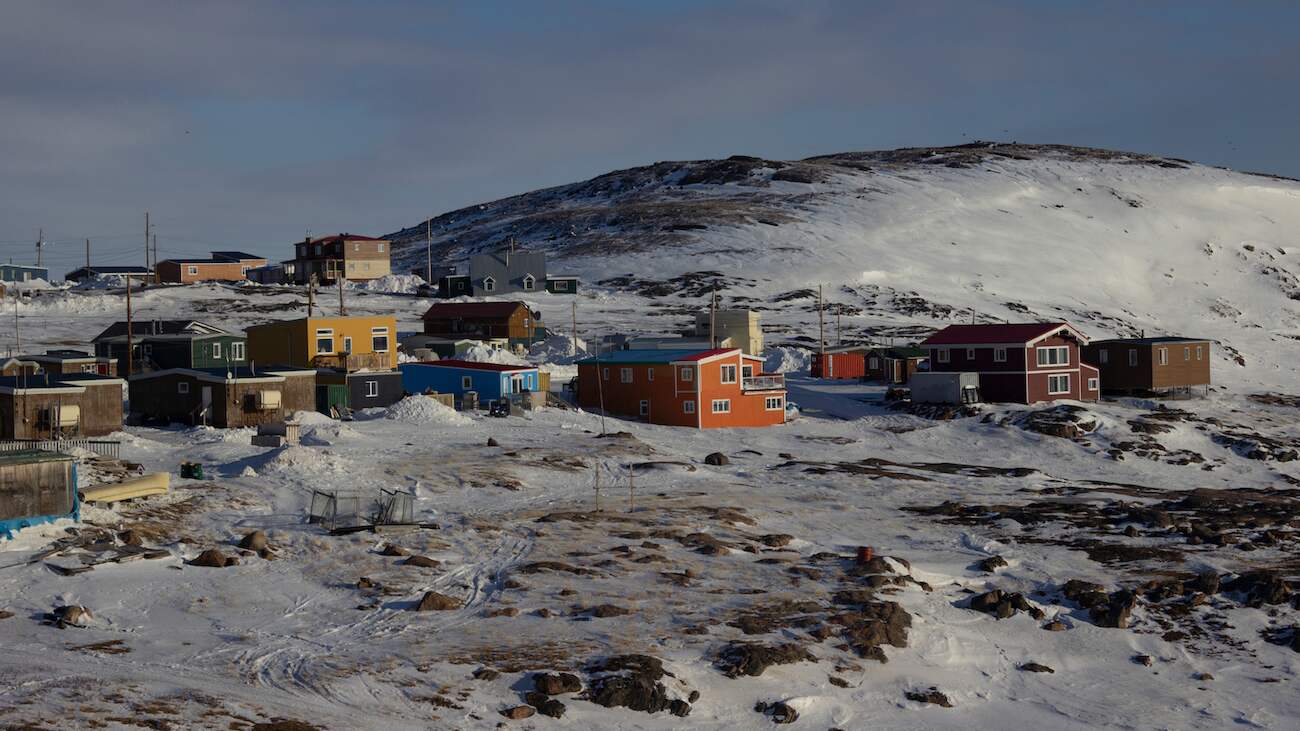
The Territorial North has often—but not always—disappointed its promoters. The exceptions are economically noteworthy—the Klondike Gold Rush in the late 19th century, gold and diamond mines in the Northwest Territories, oil at Norman Wells, NWT, and the huge iron ore deposit on Baffin Island. But the list of cancelled and partially developed projects is much larger and economically worrisome.
The provincial North, the large sub-Arctic expanse from Labrador to northern British Columbia, is economically more successful. In sharp contrast to the Arctic, this region is one of the country’s economic engines. There are significant gaps; northern Ontario is one of the poorest areas in the country. The wealth of northern Manitoba and northern Saskatchewan is not widely shared with the First Nations and Metis communities in the area. In northern Quebec and northern Alberta, in contrast, resource developments and Indigenous people have found common ground and are sharing the region’s wealth more extensively than in the past.
Resource Wealth and Infrastructure Disparities
The Provincial North holds remarkable hydroelectric operations in BC, Manitoba, Quebec and Labrador that power much of North America’s urban and industrial development. The massive wealth of the Alberta oil sands is almost matched by the uranium mines in northern Saskatchewan and natural gas deposits in western Alberta and northeastern British Columbia. Add in world-class smelters, particularly for aluminum, and extensive forestry operations and a profile emerges of a well-developed sub-Arctic economy that unpins general Canadian prosperity.
The economic division between the two Norths—the rich and generally well-developed provincial north and the sporadically developed and government-dependent Arctic—is, understandably, reflected in the regional infrastructure. Much but not all the provincial North is well-served with roads, electrification, the Internet, air travel, health care and other services. The Arctic has numerous fly-in communities, a serious housing crisis, significant deficiencies in education and training, major shortfalls in health care and social services, and the highest cost of living in Canada. In short, the Arctic has few preconditions for successful and sustainable economic development.
“The economic division between the two Norths—the rich and generally well-developed provincial north and the sporadically developed and government-dependent Arctic—is, understandably, reflected in the regional infrastructure.”
The economic results across the North are predictable. The resource sector relies on a highly mobile workforce that typically operates on a fly-in, fly-out basis from northern camps. The personal benefits and flows generally flow to the south. In the Arctic, the public sector economy, including a rapidly expanding Indigenous government sector, brings high wages, greater stability and a reliance on the Government of Canada. The provincial North, in contrast, relies primarily on private sector development, including multi-billion-dollar investments in pipelines, hydroelectric systems, and other infrastructure. Private businesses outside of the resource sector struggle to find commercial traction, relying on a generous system of subsidies and an economy-flattening reliance on government grants that squelch entrepreneurial activity.
The Nordic countries provide important lessons for the economic development of northern Canada. The Nordic nations have a commitment to uniformity of public services and infrastructure that is not evident across most of the Canadian North. Similarly, the Nordic social service net provides a solid foundation for personal and community development that has produced a prosperous and generally egalitarian society. Northern Sweden, Northern Finland and Northern Norway have excellent infrastructure that is significantly better than that in the provincial North and well in advance of the Arctic facilities.
Social Challenges Undermining Economic Development
The poverty and despair that is far too common across the Canadian Far North are revealed in overcrowded homes, high levels of substance abuse, incarceration, teenage pregnancy and other social pathologies associated with poverty. Most people do not share in the prosperity and lifestyles of the civil servants who dominate the regional order. Poverty undercuts education performance and contributes to deficiencies in the workforce that undercut economic development and deter investment.
The high costs of transportation, energy and skilled labour further hamper the viability of northern developments. Governments have become suspicious and cautious about northern projects, and foreign capital has been reluctant to support Arctic projects due to the fragility of northern social license and the high potential for public scrutiny and criticism in the international press. The net result is that companies typically pursue only extremely valuable properties and then, typically, high grade the resource as best they can. This approach maximizes company returns on the projects that are undertaken, but limits local employment and economic impact.
“Most people do not share in the prosperity and lifestyles of the civil servants who dominate the regional order. Poverty undercuts education performance and contributes to deficiencies in the workforce that undercut economic development and deter investment.”
Emerging Economic Opportunities
The economic future of the North is, in these circumstances, uncertain. Climate change is altering the fundamentals of working on the land, adding to costs and interfering with the reliability of business operations across the Arctic. Complicated multi-level governance and approval processes—federal, provincial, territorial and Indigenous—are extended by the interventions of non-governmental environmental organizations and Indigenous harvesters that have made it difficult to secure consent and ensure Indigenous engagement on major projects. It is not easy—but nor is it impossible—to complete resource development in the North, but the combination of high costs and long time frames deters many potential investors.
Pathways toward a stronger economy exist and are emerging. Arctic and northern tourism possess considerable potential, with growing interest in adventure experiences (including hunting and fishing), wilderness journeys, cold weather and northern lights experiences, and outings with Indigenous guides are becoming increasingly popular. Summer visits are driven in part by surging temperatures in southern areas that unleashed growing interest in “cool tourism.” Environmental stewardship has also become a significant economic force in many communities as Indigenous groups gain significant control over Indigenous protected and conserved areas and national parks. Commercial fishing has expanded into the Eastern Arctic, and climate change may strengthen this sector. Indigenous art remains an important income-producing but niche industry, particularly among the Inuit. Entrepreneurship holds potential, if only because the brand of the North remains strong internationally, but at present, most “private” businesses in the North work directly for and with the federal, territorial and/or Indigenous governments.
“It is not easy—but nor is it impossible—to complete resource development in the North, but the combination of high costs and long time frames deters many potential investors.”
Infrastructure as a Catalyst for Growth
Major or, more accurately, massive government investments in regional infrastructure in the coming years should create a construction boom, albeit mostly for southern workers and companies, and for a more prolonged but smaller economic expansion as companies and people capitalize on the expanded road, rail, electrical system, Internet, airfields and other facilities that will attract flow on investment and commercial activity. Properly-located roads, rail and electricity will broaden the northern economy, but it is difficult to imagine the density of Arctic settlement matching that in the Nordic countries.
“When the complications of long winters, with snow and cold often from September to May in sub-Arctic areas and longer in the Far North, darkness, and dangerous winds are added to the equation, the limits on social and economic development become obvious.”
The reality—a harsh one—is that northern commercial opportunity is specialized and limited. Unlike many southern areas, northern settlements will be sporadic and inconsistent. It is best to imagine the Far North as an archipelago rather than as a continental land mass. Widely dispersed resource sites, separated by vast expanses with limited economic potential, will operate largely out of work camps rather than towns, with most of the workers and their families living down South. When the complications of long winters, with snow and cold often from September to May in sub-Arctic areas and longer in the Far North, darkness, and dangerous winds are added to the equation, the limits on social and economic development become obvious.
Limited Imagination, Harsh Realities
In the final analysis, the Canadian Provincial and Territorial Norths are entangled in the webs of geography, climate, government policy and national attitudes toward the North. Unlike the Nordic countries, where the embrace of winter is more comprehensive, Canadians huddle along the now-perilous safety of the Canada-USA border, with well over half of all Canadians living South of the 49th parallel. The northern three-quarters of the nation has a tiny population, with the three territories having a population of about half that of Saskatoon, Saskatchewan and the entire Provincial North with roughly the same number of people as Calgary, Alberta.
The current preoccupation with Arctic sovereignty and northern defence sparked by Russian aggressiveness and Chinese expansionism could, in the second half of the 2020s, produce a short-term surge in federal investment in the region and potentially a period of significant economic growth. The gap between northern and southern circumstances is extremely wide and largely beyond the fiscal and political capacity of Canada. The Provincial North will do much better, building off the much-needed surge in critical minerals production and will become, more than at present, a key spark to national prosperity.
The Arctic can, in the future, do better economically than it has in recent decades. Major infrastructure investments, particularly in the Provincial North, will enhance Canadian wealth. And the re-empowerment of Indigenous peoples will be the cornerstone of a return to stability and opportunity for the First Nations, Inuit and Metis people. Geography, climate and the southern and urban orientation of the country are major brakes on northern economic development. In the end, the North cannot escape from the twin constraints of the country’s limited northern imagination and the realities of Canada’s winter and vast distances.
-
 Government Spending Needs Systemic Alignment to Deliver Projects
 Elaine Alec
Practice Partner
Coeuraj
Elaine Alec
Practice Partner
Coeuraj
 Tyl van Toorn
Co-Founder & Group CEO
Coeuraj
Tyl van Toorn
Co-Founder & Group CEO
Coeuraj
-
 Why Intelligent Mobility is Essential for Resilient, Productive Canadian Cities
 Kurtis McBride
CEO
Miovision
Kurtis McBride
CEO
Miovision
-
 Tourism in Canada: A Cornerstone of Growth and Sustainable Transformation
 Amy Butcher
Vice President of Public Affairs
Tourism Industry Association of Canada
Amy Butcher
Vice President of Public Affairs
Tourism Industry Association of Canada