
Rethinking Climate Policy: Why British Columbia Needs a Territorial Development Approach
British Columbia must move beyond climate policy as an environmental checkbox and instead embrace a territorial development approach that integrates economic, social, and regional goals to meet its targets and build a resilient future.

British Columbia (BC) has long been celebrated as a climate action leader in North America, pioneering major environmental policies such as the first broad-based carbon tax on the continent. However, landmark status alone does not guarantee progress. Despite years of substantial investment and bold commitments, BC remains off track to meet its climate targets. The Government of British Columbia has initiated an independent review of its CleanBC plan—its flagship climate policy framework, presenting an opportunity to rethink how climate policy is designed and delivered in the province. To forge real progress, BC must move beyond seeing climate policy as just an environmental imperative and embrace it as a central driver of territorial development—an integrated approach that fuses environmental, economic, and social goals at the regional level.
The Problem: A Stalled Climate Agenda and Growing Disparities
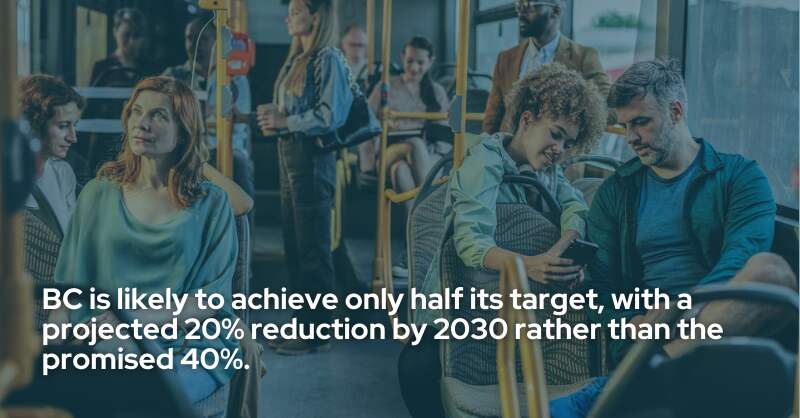
BC’s CleanBC strategy promised to reduce greenhouse gas (GHG) emissions 40% below 2007 levels by 2030. But emissions have remained stubbornly flat since 2007, even after the province invested $3.5 billion in CleanBC programming since 2018. Official projections now suggest BC is likely to achieve only half its target, with a projected 20% reduction by 2030 rather than the promised 40%. Numerous barriers stand in the way: stagnant or rising emissions in key sectors, underreporting of major sources, policy gaps, delayed implementation, expansion of fossil fuels (especially liquefied natural gas), and an ever-growing population that strains infrastructure and energy demand.
“Climate-related disasters such as heat waves, wildfires, and floods now cost the province billions each year, yet many communities—especially rural and remote—remain ill-equipped to respond.”
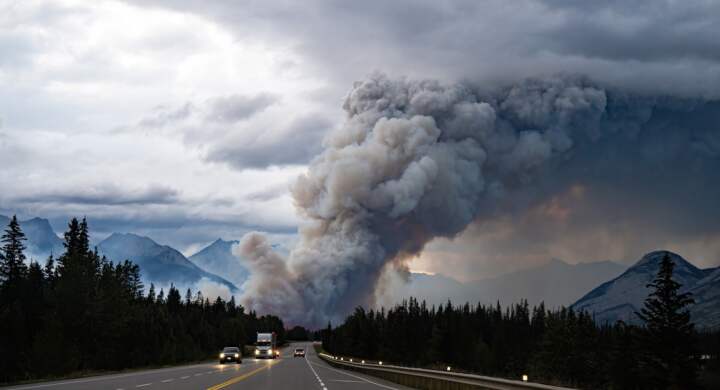
The gravity of this challenge cannot be overstated. At a time when climate measures are under economic, social, and political scrutiny, public fatigue and uncertainty threaten the very core of BC’s climate agenda. Meanwhile, the cost of inaction grows: climate-related disasters such as heat waves, wildfires, and floods now cost the province billions each year, yet many communities—especially rural and remote—remain ill-equipped to respond.
Beyond “Green” for Its Own Sake: The Territorial Development Case
What’s missing is a recognition: climate policy is de facto regional development policy. The traditional mindset, which treats environmental targets as the primary goal and regional development as a desirable by-product, is both analytically flawed and practically self-defeating. When governments target emissions through taxes, regulations, and incentives, they irreversibly reshape regional economies, investment patterns, and community well-being. In a province as diverse as BC, with vast disparities in geography, economic structure, and social capital, a one-size-fits-all approach simply won’t work.
If climate action is to be effective, durable, and inclusive, it must be woven into the fabric of territorial development—addressing the unique assets, vulnerabilities, and aspirations of each of BC’s distinct regions. Only then can BC reduce deep-seated territorial disparities, foster broad social acceptance, and build a resilient economy for all.
“If climate action is to be effective, durable, and inclusive, it must be woven into the fabric of territorial development.”
The Uneven Geography of Emissions and Risk
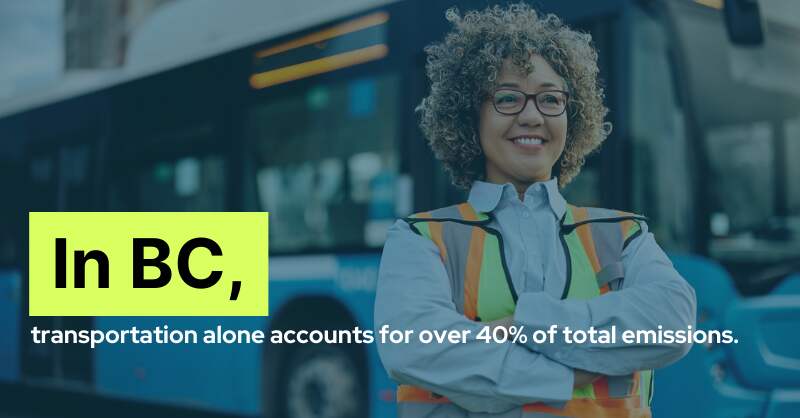
BC’s GHG emission profile—and its risks—are anything but uniform. Transportation alone accounts for over 40% of total emissions, followed by industrial sectors like oil and gas extraction. The economic heartland—the Mainland South-West—is dominated by knowledge and service industries and stands to benefit from the low-carbon transition, given its well-diversified economy and access to innovation. Meanwhile, regions such as the North East, Cariboo, and North Coast remain largely reliant on resource extraction like mining, oil, gas, and forestry. Compliance with stricter environmental policies disproportionately burdens remote and resource-based regions, amplifying costs, limiting diversification, and elevating the risk of economic disruption.
“Compliance with stricter environmental policies disproportionately burdens remote and resource-based regions.”
Urban and service-oriented areas enjoy greater resilience, fueled by infrastructure, market access, and diversified workforces. By contrast, rural and northern regions have higher per-capita emissions, fewer alternative industries, and are more exposed to both economic shocks and climate hazards such as fire, drought, and flooding. This reality is compounded by longstanding core-periphery dynamics: while the Mainland/Southwest produces about 70% of provincial GDP, many interior regions languish under volatile commodity cycles and a legacy of colonial land dispossession, with policy interventions often failing to account for higher costs and unique local needs.
Territorial Cohesion and Competitiveness: The Strategic Twin Pillars
Europe offers two instructive concepts—territorial cohesion and territorial competitiveness—that BC can adapt to its unique institutional and geographic context. Territorial cohesion focuses on reducing regional imbalances, fostering cross-community cooperation, advancing environmental sustainability, and promoting a network of vibrant regional centers rather than relying solely on Vancouver or Victoria. Territorial competitiveness, meanwhile, is about enabling regions to build on their strengths to compete in the global economy, distinguishing local assets and capabilities rather than pushing a homogenized strategy.
When integrated, these pillars transform climate policy into a vehicle for both levelling the playing field and unlocking locally driven growth. By recognizing that market forces tend to concentrate activity in urban centers and that this naturally accelerates disparities, cohesive climate policies can encourage innovation and economic dynamism across all regions rather than placing rural and Indigenous communities at an ongoing disadvantage.
Governance Gaps and the Need for Integration
A recurring weakness within BC’s climate strategy lies in its governance structure. Provincial ministries, federal agencies such as PacifiCan, First Nations governments, and regional districts frequently operate in silos. Sector-based targets prevail, while climate and regional development goals seldom converge in meaningful ways. The absence of coordinated frameworks means policy measures often fail to account for “place”—overlooking the on-the-ground realities of workers, local governments, businesses, and institutions.
“Provincial ministries, federal agencies such as PacifiCan, First Nations governments, and regional districts frequently operate in silos.”
Notably, BC’s climate legislation does not mandate specific support mechanisms for workers, communities, and industries most affected by the shift to a low-carbon economy. Neglecting these differences worsens alienation and deepens the rural-urban divide—a longstanding, and increasingly politically fraught, reality across Canada.
“First Nations, long at the forefront of integrated stewardship and economic innovation, must be fully empowered as equal partners.”
Stronger integration is needed. Provincial and federal economic development agencies must weave climate objectives into the heart of regional diversification investments, with entities like PacifiCan and the BC ministries of municipal affairs and economic development aligning more closely with the Climate Action Secretariat. Formal mechanisms are required to ensure regional development plans undergo a “climate lens” analysis.
First Nations, long at the forefront of integrated stewardship and economic innovation, must be fully empowered as equal partners. The BC First Nations Climate Strategy and Action Plan provides a template for how climate action, reconciliation, and territorial development can advance hand-in-hand, leveraging Indigenous knowledge and governance.
Place Matters: The Importance of Regional Institutions
BC’s regional districts—27 in total—and their unique governance structures offer a powerful but often underutilized lever for integrating climate and development goals. These districts already craft 20-year Regional Growth Strategies that touch sectors critical to both economic resilience and climate action: housing, transportation, parks and natural resources, infrastructure, and more. Yet, the extent to which these plans actively embed climate considerations varies widely.
Enhancing capacity in lower-density, institutionally “thin” rural and northern regions is imperative. Here, partnerships, shared services, and pooled resources become essential, countering the disadvantages of scale and isolation. Crucially, policy design should shift from a model that forces communities to compete for funds towards one that encourages collaborative, joint investments across rural, urban, and First Nations communities.
Regional economic trusts in BC—the Columbia Basin Trust, Northern Development Initiative Trust, Island Coastal Economic Trust, and Economic Trust of the Southern Interior—collectively manage more than $300 million and lead on local investment in clean tech, community resilience, and green infrastructure. By amplifying collaboration and sharing strategy, these trusts could drive collective progress on regional climate and economic adaptation.
Managing Transition: Proactive, Participatory, and Just
The pathway to net zero will entail many different types of transitions, each tied closely to place. Some communities will host new, clean industries—such as hydrogen or fuel cell innovations—requiring targeted innovation and infrastructure. Others will undergo deep transformation of legacy sectors, demanding capital for decarbonization and support for workers. Still others will face the phasing out of major industries with little prospect of equivalent replacement—a scenario that has devastated rural towns in Canada before.
“Transition management is more than harm reduction; it is also about seizing opportunity—ensuring that every dollar invested in green infrastructure, retraining, and innovation builds new capacity, social infrastructure, and community resilience.”
A “just transition” means actively managing these transformations: providing proactive planning where possible, and reactive support where change is abrupt and unavoidable. Transition management is more than harm reduction; it is also about seizing opportunity—ensuring that every dollar invested in green infrastructure, retraining, and innovation builds new capacity, social infrastructure, and community resilience.
Participation is vital. Transition arenas, where governments, industry, labour, Indigenous leaders, local institutions, and communities collaborate to identify problems and design solutions, must become best practice. The European Union’s Territorial Just Transition Plans offer a framework for how multi-level governance and public engagement can anchor just, place-based climate action. BC is a leader in transition support, with a dedicated Community Transition Services team, but the scope and ambition of these interventions could expand and become integral to regional development processes.
A Call for Integrated, Place-Based Climate Action
The stakes for BC are immense. The failure to address territorial disparities risks entrenching a two-track province—one dynamic and prosperous along the Pacific corridor, the other left behind in social, economic, and environmental terms. The solution is not a series of disconnected sectoral or emergency programs, but a “whole-of-territory” approach that builds on regional strengths, addresses vulnerabilities, and systematically closes gaps.
This means:
- Embedding climate criteria into regional development funding and planning.
- Strengthening cross-ministerial, cross-jurisdictional, and First Nations-led governance.
- Expanding community benefit programs and participatory planning.
- Supporting locally grounded experimentation, learning, and adaptation, particularly in the most at-risk regions.
- Investing in measurement and accountability frameworks that track both climate and social outcomes, allowing for continuous adjustment and long-term, evidence-informed policy.
Framing climate action as territorial development is not just a rhetorical exercise. It is a necessary transformation that brings environmental ambition to life by rooting it in regions, communities, and day-to-day realities. It demands moving past silos, investing in social cohesion, and building new narratives of shared opportunity and resilience. This is important for any region in Canada.
“What’s needed is a reconceptualization—one that places “place” at the heart of climate policy, launches broad-based development from climate investments, and ensures no community is left behind.”
BC already has the institutional seeds of this approach. It can draw on strong regional actors, Indigenous leadership, forward-thinking trusts, and vibrant local innovation. What’s needed is a reconceptualization—one that places “place” at the heart of climate policy, launches broad-based development from climate investments, and ensures no community is left behind.
This is not the work of governments alone. As researchers, educators, business leaders, and citizens, we all have a role in shaping narratives and building trust. Progress happens at the speed of trust, built on collaboration and vision, grounded in a recognition of difference and common purpose.
A true climate leader for the 21st century must show how to blend economic, social, and environmental ambition—territory by territory, region by region. Let BC be that leader: a model of fair, deeply rooted, and effective climate action for all.
Research for this editorial was supported by the Pacific Institute for Climate Solutions.
About the Expert
-

Tamara Krawchenko is an Associate Professor at the University of Victoria, Associate Director of the Institute for Integrated Energy Systems, and a Research Lead with the Accelerating Community Energy Transformation initiative. As an expert in regional development and comparative public policy, she advises governments across Canada and internationally, shaping policy on rural economies, industrial strategy, and community energy transformation.
The University of Victoria is a public research university in British Columbia, Canada, offering undergraduate and graduate education across diverse disciplines. The Institute for Integrated Energy Systems conducts research on sustainable energy solutions and systems integration, while supporting interdisciplinary collaboration among researchers, students and partners focused on addressing complex energy challenges.
See more
-
 Climate-Driven Financial Vulnerability is a Vicious Cycle. How Do We Reverse It?
 Chad Park
VP, Sustainability & Citizenship
Co-operators
Chad Park
VP, Sustainability & Citizenship
Co-operators
 Eloise Duncan
Founder and CEO
Financial Resilience Institute
Eloise Duncan
Founder and CEO
Financial Resilience Institute
 David Hughes
President & CEO
Generate Canada
David Hughes
President & CEO
Generate Canada
-
 Why Steven Guilbeault’s Resignation Must Reignite National Climate Action
 David Miller
Managing Director
C40 Cities
David Miller
Managing Director
C40 Cities
 Valerie Plante
Former Mayor
City of Montreal
Valerie Plante
Former Mayor
City of Montreal
-
 Canada Must Lead the Next Era of Responsible Metals and Deep-Sea Mining
 Gerard Barron
Chairman & CEO
The Metals Company
Gerard Barron
Chairman & CEO
The Metals Company