
Reimagining Canada’s Agri-Food Investments: How to Deliver a Sustainable Economy

Canada is one of the largest food exporters in the world. We provide safe and nutritious food to feed a growing world in the face of natural and man-made challenges, including the pandemic, climate change, limited resources, trade wars, geopolitical conflicts and others. Our agriculture and agri-food system is resilient, providing one out of nine jobs in Canada and contributing $150B, or 7%, of the country’s gross domestic product in 2023.
In addition to being a leading food exporter, Canada is also a sustainable producer of food. A 2023 study we commissioned at the Global Institute for Food Security (GIFS) at the University of Saskatchewan (USask) examined the carbon footprint of agricultural production of key Canadian crops, including canola, wheat, lentils and field peas, and compared these results to some of our competitors. The results show that through genetics, crop rotation, nutrient stewardship and other sustainable strategies embraced by producers, our agricultural commodities from Canada are some of the least carbon-intensive in the world.
Innovation and sustainable farming practices have been central to this success, including the widespread employment of reduced tillage, the adoption of herbicide-tolerant canola, the application of a robust crop-rotation system and the production of nitrogen-fixing pulse crops. These innovations, applied in varying degrees across the country, have given Canada a competitive advantage in our agri-food sector.
As we mark Canada’s Agriculture Day this year, we should take the time to celebrate the strengths of our sector and everyone across the entire value chain committed to its success.
As we celebrate, we are also mindful of the factors that brought us the successes we see today, including innovation and an intentional focus. While it may not be glaringly obvious, a 2023 report by Farm Credit Canada (FCC) has sounded the alarm on Canada’s declining agriculture productivity growth, and we must all pay attention to resolve this challenge with the same intentional focus we have successfully employed.
Declining Agricultural Productivity
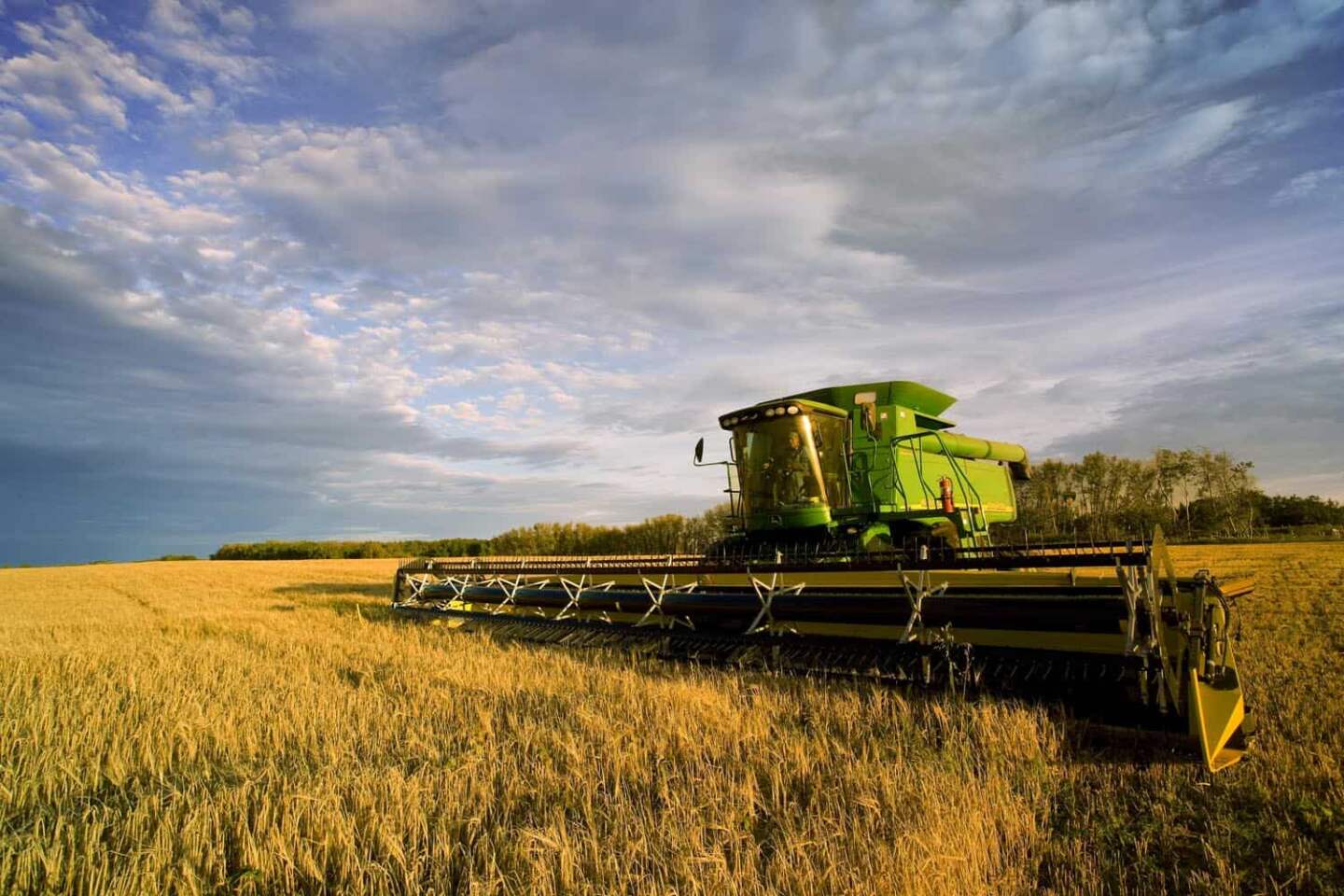
According to FCC, Canada’s agriculture productivity growth has declined since 2011 and is projected to decline further this decade. While this slowing productivity is not peculiar to agriculture or to Canada, it represents a food security challenge when we consider that the global population is projected to reach 10 billion people by 2050. To meet our growing world’s demand for food, we need to grow productivity rates, in Canada and across the world.
“While this slowing productivity is not peculiar to agriculture or to Canada, it represents a food security challenge when we consider that the global population is projected to reach 10 billion people by 2050.”
FCC has identified innovation as one of the solutions to address the productivity challenge, and I believe this is an accurate assessment. Innovation has brought us this far, leaving us as a model for other regions to learn from; however, we cannot rely on yesterday’s tools and technologies to solve today’s and tomorrow’s problems. We need continuous innovation as well as an environment that supports and enables us to ensure our agriculture and agri-food sector can rise to the challenge of feeding the world sustainably.
Innovation in Canada
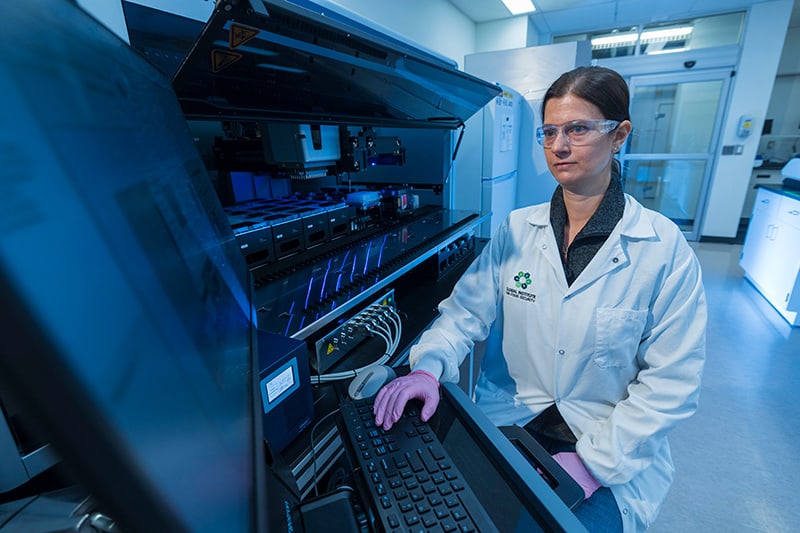
According to the Global Innovation Index 2024, Canada is ranked as the 14th most innovative economy out of 133 world economies assessed. In addition, the country ranks 8th in innovation inputs (elements that enable innovative activities) and 20th in innovation outputs (the results of innovative activities).
“While Canada is one of the top 10 countries of the world investing in factors that should lead to innovation, it is not deriving a corresponding return on those investments.”
This means while Canada is one of the top 10 countries of the world investing in factors that should lead to innovation, it is not deriving a corresponding return on those investments.
Innovation represents a market solution that builds upon inventions. Though often used interchangeably, the terms are different. Inventions happen first and could be ideas, methods or new discoveries. Innovations use inventions to deliver solutions to the market as well as deliver commercial value.
Canada needs to overcome the challenge of translating inventions to innovation—this is where the real value that transforms economies resides. Our innovation pipeline has a knowledge ecosystem that generates ideas and inventions—where discovery research takes place.
Further down the pipeline is where technology development occurs. This region is also known colloquially as “the valley of death,” or as has been said, where inventions go to die. Unfortunately, several inventions are unable to scale sufficiently and make it through this phase to the end of the pipeline—the business ecosystem—characterized by market-impacting innovative solutions and commercial products. Breakthroughs in agriculture research, breeding, crop engineering and more are not making it through the length of the innovation pipeline to deliver value to the market.
Reimagining How We Work in Agriculture and Agri-Food
We need to reimagine how we work as well as how we invest in the entire innovation pipeline to drive invention to innovation. A few recommendations are:
- Create an enabling regulatory environment: The FCC report identifies a $30 billion opportunity over 10 years to rekindle Canada’s productivity growth. The report highlights innovation and technology as a pathway to achieving this. This will be impossible without an enabling regulatory framework that is science-based. We need policies and regulations that follow science and are flexible, adaptable and predictable.
“Canada needs a national strategy on innovation, executed through a strong, cohesive network. Partnerships are key for a successful strategy, and it is important to have effective partnerships that align diverse interests with identified national goals.”
- Create a national strategy on innovation: Canada needs a national strategy on innovation, executed through a strong, cohesive network. Partnerships are key for a successful strategy, and it is important to have effective partnerships that align diverse interests with identified national goals, ensuring success for each stakeholder and at a national level.
- Invest, invest, invest: I’ve repeated this word to emphasize the need for investments from government and industry in the sector but also along the three sections of the innovation pipeline— where discoveries are made, where development takes place and where innovation is delivered to market. We are currently investing in the discovery phase or knowledge ecosystem, and as the 2024 GII shows, Canada ranks top 10 here. However, we also need to invest in the development phase and at the lower end of the pipeline to successfully transport an invention all the way to where it can deliver a solution and meet market needs.
- Employ a whole systems perspective: Innovation is a team sport, and to be successful, all players have to work together. This includes governments and regulators, industry, researchers, producers and other stakeholders. Through collaboration and coordination, we can accelerate new technologies that align with market needs.
- Embrace strategic collaboration: This is similar to the preceding point; however, it’s worthwhile reiterating the need to operate outside of the silos we have built across agri-food. When we embrace new partnership models, we spur further innovations as we bring different viewpoints together to tackle a challenge and create an innovation that will be embraced by the market. An example is the FCC Accelerated Breeding Program at GIFS, which is bringing different players in the crop and livestock value chain together through a unique consortium model to shorten the breeding cycle of crops and livestock valuable to Canada. The program uses innovations such as genomic selection, speed breeding and modelling. It will accelerate innovation in agriculture, driving productivity, competitiveness and sustainability for Canadian farmers and agri-food stakeholders. Founded by industry, government and academia, the very essence of GIFS is to bring stakeholders from across the entire value chain together to transform inventions into innovations and deliver solutions for sustainable food production.
- Think strategic partnerships: It’s time to look beyond the partnerships we have already built to explore other relationships where there can be mutual value and benefits derived. Canada has what the world needs and there are numerous markets across the world that are looking to benefit from our innovative solutions, methods, models and our sustainably produced food. Let’s build these partnerships.
These measures will support the transformation of Canada’s innovation track record. They will help ensure we are making the most effective investments that position us for greater success, improving our innovation outcomes and agriculture productivity and contributing to the growth, competitiveness and resilience of our national economy—in the face of natural and man-made challenges, including climate change, trade wars and pandemics.
“Canada has what the world needs and there are numerous markets across the world that are looking to benefit from our innovative solutions, methods, models and our sustainably produced food. Let’s build these partnerships.”
As a leading producer of food and an agriculture and agri-food powerhouse with a successful track record, we owe it to our economy, our country and the growing world to deliver on this.
-
 Innovation is Key to the Future of Agriculture
 Bill Greuel
Deputy Minister of Agriculture
Government of Saskatchewan
Bill Greuel
Deputy Minister of Agriculture
Government of Saskatchewan
-
 Planning for Canada’s Agriculture and Food Future
 Robert Hunter
CEO
Protein Industries Canada
Robert Hunter
CEO
Protein Industries Canada
-
 Beyond Celebration: Recognizing Agriculture as Canada’s Strategic Asset
 Tyler McCann
Managing Director
Canadian Agri-Food Policy Institute
Tyler McCann
Managing Director
Canadian Agri-Food Policy Institute