
Protecting the Skies Together: Canada’s Leadership on Global Aviation Safety

Every day, millions of people around the world trust that when they step onto an aircraft, they will land safely at their chosen destination. It is a trust built on decades of international collaboration, standards, and a shared global commitment to keeping the skies safe. On December 7—International Civil Aviation Day—Canada is reminded of its unique role, and of its responsibility, in shaping that global aviation system.
The Origins of Modern International Civil Aviation
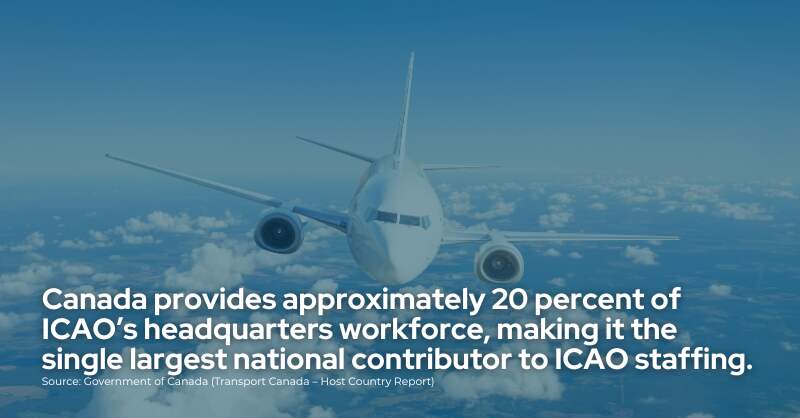
Just over eight decades ago, in December 1944, the world was still in the throes of World War II. Military operations had created a vast, global network of air routes, airfields, and support infrastructure, but there was little standardization or information-sharing, meaning that international civil aviation—at least as we know it today—barely existed.
A number of countries, though, were already looking and planning ahead, and in late 1944, 54 of them, including Canada, sent delegates to Chicago, Illinois. Over the course of 37 days, they drew up and agreed to a framework that laid the foundation for peaceful global air navigation. Their primary objective? The development of international civil aviation “in a safe and orderly manner.”
“Canada’s influence in global aviation rests on three pillars: our role in shaping international standards, our leadership in building global capacity, and our unwavering belief that aviation safety is a shared responsibility.”
They also created what we know today as ICAO, or the International Civil Aviation Organization, a United Nations agency—headquartered in Montreal—that works toward a “safe, secure and sustainable international civil aviation system that connects the world for the benefit of all nations and people.”
Today, that initial group of signatories has grown to include 193 countries. Canada is proud to be ICAO’s host nation, a founding member, and one of its most active participants. Our commitment is not symbolic. It is practical, technical, and deeply rooted in Canadian expertise. Canada’s influence in global aviation rests on three pillars: our role in shaping international standards, our leadership in building global capacity, and our unwavering belief that aviation safety is a shared responsibility.
1. Canada Plays a Vital Role in Developing Aviation Safety Standards
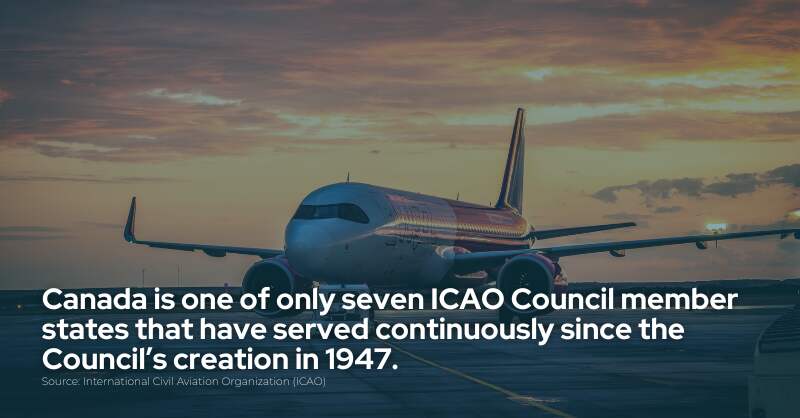
Since its inception 81 years ago, ICAO has established more than 12,000 international standards and recommended practices. These standards are the backbone of international aviation and address topics as wide-ranging as personnel licensing, rules for transporting dangerous cargo, specifications for the design and operation of airports and helipads, and noise and emissions standards. Canadian experts contribute to ICAO technical panels, working groups, and committees that address everything from runway safety to cyber threats, from fatigue management to emerging innovations like drones and advanced air mobility.
Moreover, Canada’s own regulatory practices are recognized as among the world’s strongest. Our certification procedures, for instance, are models for other nations. We bring this experience to the international stage not only to strengthen global standards, but to ensure they remain responsive to a rapidly changing world.
2. Canada Invests in Capacity-Building
“Through the sharing of technical assistance programs and more, we are helping to ensure that aircraft, airlines, and airports around the world can meet the same high standards that Canadians expect here at home.”
Safety experts know that any system is only as strong as its weakest link. A single safety gap anywhere along the chain affects all passengers, everywhere. That’s why Canada supports initiatives like “No Country Left Behind,” which helps other countries, especially developing states, strengthen their own aviation oversight systems.
How do we do this? By collaborating with international organizations, and by sending personnel to provide training, to share our best practices, and to help countries build institutional capacity. Through the sharing of technical assistance programs, supporting accident investigation systems, or helping civil aviation authorities elsewhere adopt modern safety management practices, we are helping to ensure that aircraft, airlines, and airports around the world can meet the same high standards that Canadians expect here at home.
3. Canada Champions the Principle That Aviation Safety is a Collective Responsibility.
“As urban air mobility becomes a reality and autonomous operations rapidly advance, harmonized international rules will be critical.”
No country can secure its skies alone, not in a world as interconnected as ours has become. Global aviation faces global challenges. These include concerns about cybersecurity, as well as the need to adapt to the challenges posed by artificial intelligence, whether that be in terms of regulations, data security, or ethics. Further challenges are posed by the increasing number and complexity of global conflicts, and the expected rise in passenger demand for flights versus an increased need to decarbonize in response to escalating climate change.
Canada works closely with international partners to address these challenges. We participate in global information-sharing networks, collaborate on research and security protocols, and contribute to international efforts to safely integrate new technologies like uncrewed aircraft systems. As urban air mobility becomes a reality and autonomous operations rapidly advance, harmonized international rules will be critical. Canada’s leadership helps ensure these technologies are deployed safely, sustainably, and in ways that benefit everyone.
Perhaps the best-known example of our collective responsibility for aviation safety is the Safer Skies Initiative, launched by Canada in 2020 following the downing of Ukraine International Airlines Flight PS752. That tragedy killed 176 people, many of whom had ties to Canada.
At its core, Safer Skies seeks to build a formal, international framework for identifying, assessing, and mitigating the risks that armed conflicts pose to civilian aviation. Through the creation of the Safer Skies Consultative Committee, Transport Canada has established a multilateral forum to share intelligence, define risk assessments, develop guidance, and adopt best practices on when airspace should be closed or restricted. The initiative also organizes the Safer Skies Forum, the first international forum exclusively devoted to civil aviation safety over conflict zones.
By bringing together experts from dozens of countries and international organizations, and by building a shared and systematic approach—rather than ad-hoc, nation-by-nation responses—we are striving to prevent future tragedies, protect passengers and crews, and preserve the safety and integrity of global air travel.
Looking Ahead
As Minister of Transport, I am committed to ensuring Canada remains a constructive, influential voice in the global aviation community. International Civil Aviation Day is a reminder of all that we have achieved, yes, but also of what lies ahead. I firmly believe that Canada is ready to meet the moment, and that we will continue to champion an aviation system that prioritizes safety above all, values collaboration over competition, and embraces innovation without compromising on the trust passengers place in us.
About the Expert
-
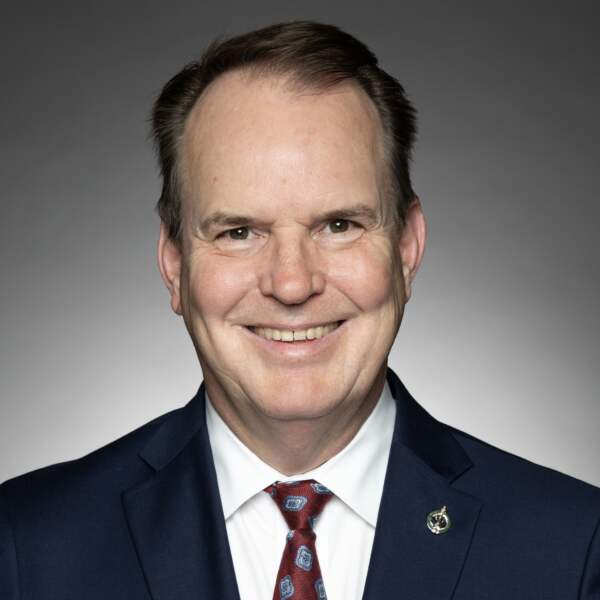
Steven MacKinnon is Canada’s Minister of Transport. He was first elected in 2015 as the Member of Parliament for Gatineau (Québec) and was re-elected in 2019, 2021 and 2025. He was also recently named Leader of the Government in the House of Commons. Mr. MacKinnon also previously served as Minister of Labour and Seniors, Minister of Employment, Workforce Development and Labour, and Minister of Jobs and Families. He also served as Chief Government Whip and as Parliamentary Secretary to the Minister of Public Services and Procurement. Prior to his election, Mr. MacKinnon was Senior Vice President at a global public affairs consultancy, where he was a practice director for mergers, acquisitions, and financial communications. He has been involved in national and international transactions worth hundreds of billions of dollars, with Bloomberg recognizing his practice as Canada’s leading mergers & acquisitions advisory.
See more
-
 Canada’s Future Is Airborne—Let’s Build It to Last
 Tracy Medve
President & CEO
KF Aerospace
Tracy Medve
President & CEO
KF Aerospace
-
 Aerospace is Essential to Building the Strongest Economy in the G7
 Mike Mueller
President & CEO
Aerospace Industries Association of Canada
Mike Mueller
President & CEO
Aerospace Industries Association of Canada
-
 How Aviation Powers Progress and Economies
 Maria Della Posta
President
Pratt & Whitney Canada
Maria Della Posta
President
Pratt & Whitney Canada