
Aerospace is Essential to Building the Strongest Economy in the G7
When Canada invests in aerospace, it strengthens our economy, our sovereignty and our ability to compete globally. This is not a narrow industrial policy—it is nation-building.

Few sectors offer Canada a clearer route to more exports, more innovation and more high-value jobs than aerospace.
The federal government has set an ambitious target: make Canada the strongest economy in the G7. Achieving this goal will depend on coordinated, long-term investment in strategic sectors that build industrial capacity, support high-value jobs, drive innovation and promote exports.
Canada’s aerospace industry is uniquely positioned to deliver on all of these fronts. What’s needed now is continued political leadership and a clear industrial strategy to ensure this world-class sector continues to be a major engine of the economy, as industry and government work together to build the strongest economy in the G7.
The Talent to Meet the Growth Opportunity
With aircraft fleets around the world aging and global demand for new aircraft surging, Canada faces a generational opportunity to strengthen our aerospace sector while creating high-value jobs across the country.
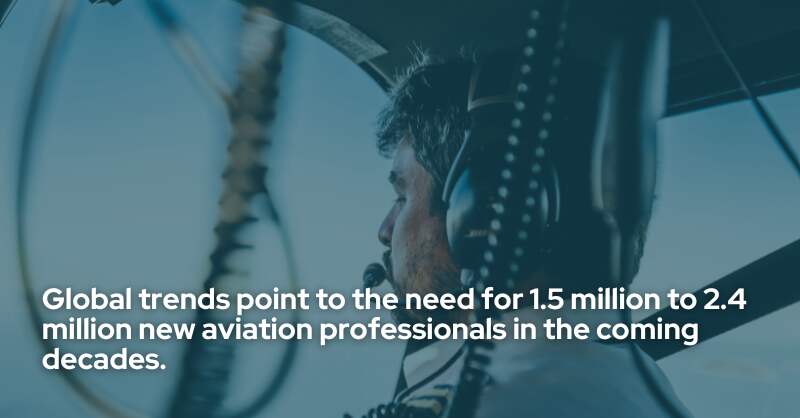
Recent outlooks from Boeing and CAE suggest this is not a temporary moment, but a long-term shift. These forecasts point to the need for 1.5 million to 2.4 million new aviation professionals in the coming decades, including hundreds of thousands of new maintenance technicians.
For Canada, this represents both a challenge and a strategic opportunity—to train talent at scale, support both civil and defence pipelines and strengthen our role as a global leader.
The Inseparability of the Civil and Defence Sectors
Canada remains one of only a handful of countries with end-to-end capability across the full lifecycle of an aircraft, from design and development to manufacturing, certification and MRO (maintenance, repair and overhaul). We are also a recognized world leader in training and simulation. These strengths support both civil and defence markets, powered by common technologies, infrastructure and talent.
When it comes to aerospace, civil and defence cannot be viewed as separate industries. They function as one integrated ecosystem with shared infrastructure, supply chains and a highly skilled workforce. Both civil and defence generate the technologies, testing environments, talent, and increased industrial capacity that create spillover benefits for exports and workforce development that contribute to both the civil and defence sides of the industry. Dual-use innovation strengthens both our economic competitiveness and our national security.
Canada must move quickly to keep pace with competitors that are securing their share of the future global market. Without decisive action to grow training capacity, strengthen workforce pipelines and support advanced technologies, Canada risks falling behind.
Turning Government Commitments Into Capability
“Canada still lacks a long-term aerospace industrial strategy aligned with national security priorities. “
Budget 2025 signalled an important shift in how the government views aerospace. Removing aircraft from the Luxury Tax—a policy that was killing domestic manufacturing jobs—was a significant win for manufacturing and aerospace supply chains in Canada. Modernizing SR&ED and increasing defence spending also reflect a growing recognition that aerospace is essential to economic growth, supply chain resiliency and national capability.
Additional measures, like transitioning from the Strategic Innovation Fund (SIF) to the new Strategic Response Fund (SRF) and targeted investment mechanisms like BOREALIS, also signal an opportunity for industry if aerospace is identified within these programs as strategic. While these measures are meaningful, they must be matched with a focused industrial strategy that provides clear demand signals for industry. Canada still lacks a long-term aerospace industrial strategy aligned with national security priorities.
Necessity for a Defence and Aerospace Industrial Strategy
“To achieve its goal of becoming the strongest economy in the G7, the Government of Canada must move from dialogue to delivery.”
Harnessing these tools requires intentional design, political leadership and ongoing collaboration between industry and government. Aerospace must be recognized as a national priority within these programs—not just another sector. When structured to move quickly, engage industry early and tolerate risk, these programs can unlock Canada’s full aerospace potential and support both economic and national security goals.
To achieve its goal of becoming the strongest economy in the G7, the Government of Canada must move from dialogue to delivery. That means releasing the Defence Industrial Strategy, developing a dedicated aerospace industrial strategy, and ensuring aerospace remains a priority within upcoming innovation and R&D programs. Government must also engage industry earlier and adopt a new mindset focused on speed, smart risk-taking and clear accountability. When it comes to procurement, both for defence and dual-use items, we need to collectively pursue a strategy that accelerates commercialization, strengthens domestic supply chains and signals confidence in technologies developed in Canada to boost exports.
No Success Without Close Collaboration With Industry
“When Canada invests in aerospace, it strengthens our economy, our sovereignty and our ability to compete globally. This is not a narrow industrial policy—it is nation-building.”
None of this can be achieved without collaboration between government and industry. Forums like the Canadian Aerospace Summit and the Transport Canada Certification and Delegates Workshop show what is possible when collaboration is sustained and intentional. This level of engagement must now be institutionalized through an industrial strategy. The forthcoming DIS will be an important signal for how the government intends to align priorities, build capacity and collaborate with industry in the months ahead.
When Canada invests in aerospace, it strengthens our economy, our sovereignty and our ability to compete globally. This is not a narrow industrial policy—it is nation-building.
About the Expert
-

Mike Mueller is President & Chief Executive Officer of the Aerospace Industries Association of Canada (AIAC), having held senior leadership roles there since 2016 and becoming CEO in 2021. Prior to AIAC, he served in senior positions within the federal government, working on industry and policy matters relating to aerospace and defence.
See more
-
 Canada’s Future Is Airborne—Let’s Build It to Last
 Tracy Medve
President & CEO
KF Aerospace
Tracy Medve
President & CEO
KF Aerospace
-
 Protecting the Skies Together: Canada’s Leadership on Global Aviation Safety
 Steven MacKinnon
Minister of Transport
Government of Canada
Steven MacKinnon
Minister of Transport
Government of Canada
-
 How Aviation Powers Progress and Economies
 Maria Della Posta
President
Pratt & Whitney Canada
Maria Della Posta
President
Pratt & Whitney Canada