
The Future of Work Starts With Investing in Today’s Talent
Canada’s tech talent gap is widening even as layoffs rise. To stay competitive, the country must urgently invest in reskilling, hands-on learning, and industry collaboration to future-proof its workforce.

The future of work in Canada isn’t being decided in corporate boardrooms. It’s unfolding in classrooms, startups, and small businesses across the country. Every day, employers are balancing the same equation: too much to do, too little capacity, and no simple way to find and afford the right talent to keep projects moving.
For startups, solopreneurs, and small and medium-sized enterprises—the true backbone of Canada’s economy, comprising more than 90% of all businesses—that equation has become increasingly difficult to solve. These employers are striving to drive innovation, job creation, and local growth, but many lack the resources to scale effectively. Rising wages, inflation, and fierce competition for skilled workers have made business success harder than ever.
Simultaneously, Canada is facing a significant youth unemployment challenge. Young Canadians between the ages of 15 and 24 are experiencing the highest unemployment rates in a generation, while those who are employed have often found that their skills outpace their jobs.
The Power of Work-Integrated Learning

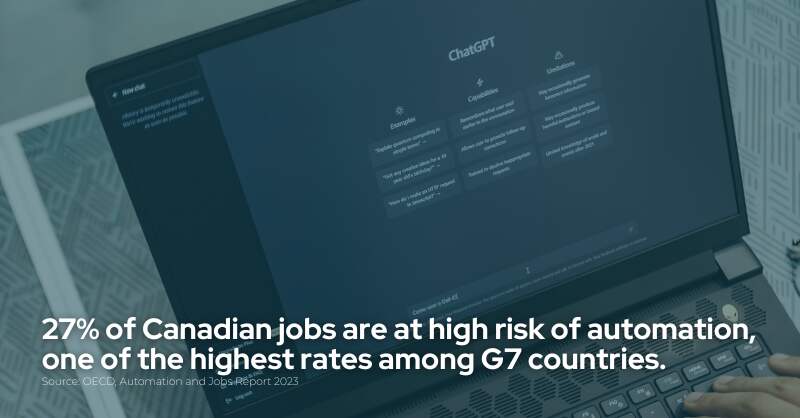
“With AI threatening to shed jobs at large companies, disrupt more than one-fourth of Canadian jobs within the decade, and require half of all roles to acquire new skills, now is the time to make long-term investments in future talent needs.”
Work-integrated learning, where employers are connected directly with postsecondary students to tackle real business challenges, is the solution that Canada should deliver at scale. While large corporations will always be able to attract talent, the nation’s small and mid-sized businesses need a way to grow without adding red tape or breaking budgets.
Experiential learning gives them increased access to skilled student support for critical projects at a fraction of traditional labour costs. With AI threatening to shed jobs at large companies, disrupt more than one-fourth of Canadian jobs within the decade, and require half of all roles to acquire new skills, now is the time to make long-term investments in future talent needs.
Work-integrated learning bridges the gap between education and employment, giving students the chance to apply their learned skills to real-world projects. These experiences build confidence, practical expertise, and professional networks—the social capital needed to prepare students to contribute meaningfully from their first day in their careers after graduation. Whether it’s an early-stage startup looking for marketing support or a growing small business testing new product ideas, these collaborations offer real business outcomes for employers and transformative learning for students.
The answer isn’t just more spending on WIL, but rather, smarter spending—investments that directly link skills development to business impact. Work-integrated learning programs, powered by digital infrastructure, allow employers to find, hire, and pay skilled students without red tape.
Collaborative Partnerships to Ease Talent Acquisition
“We need to create a national infrastructure that connects our nation’s businesses with postsecondary students. “
To ensure that our youth are building job-ready skillsets and that businesses of all sizes and across all sectors can tap into this talent, we need to create a national infrastructure that connects our nation’s businesses with postsecondary students.
This matchmaking is already happening at scale. Through Riipen’s partnership with Economic and Social Development Canada, the Level UP program has seen more than 36,000 learners enhance their skills through live employer-sponsored projects since 2021. Participating employers have noted significant increases in productivity, efficiency, and capacity building, while students have gained greater employability and career clarity.
The recently launched FuturePath program builds on this success. This co-investment program, through which employers provide half of the stipend for a 10-to-300-hour virtual project, is enabling small businesses to grow and innovate without bureaucratic friction—a factor that consistently impedes employers from tapping into new talent. Specifically, FuturePath handles the independent contractor relationship, T4A paperwork, billing, and government reporting so that small and micro businesses can build their impact and deepen their contributions to the wider economy.
Building Scalable Talent Infrastructure
The key to scaling work-integrated learning efforts is programming that builds on-ramps to support small businesses and off-ramps once these organizations become self-sufficient in acquiring talent. Joint investment by the government and corporate funders into a digital talent pipeline that powers these experiences can build a sustainable, responsible, and equitable Canada Strong.
There is a strong appetite amongst Canadian small businesses to invest directly in work-integrated learning, provided a national talent marketplace can facilitate easy access to much-needed skill sets. By inviting employers to invest alongside the government, private spending ensures that programming is directly tied to real business needs.
“A student in Sudbury can help a Vancouver tech startup automate workflows, or a recent graduate in Halifax can develop marketing content for a firm in Regina.”
By offering these programs nationwide on a web-based platform, geographic barriers are lowered and access overall is democratized so that diverse learners across the country and those based in remote and rural communities can connect to opportunities, and organizations can tap into talent in all corners of the country. That means a student in Sudbury can help a Vancouver tech startup automate workflows, or a recent graduate in Halifax can develop marketing content for a firm in Regina. This is how we build a future workforce that enables all regions and communities across Canada to engage in the economy.
Investing in Canada’s Talent Future
“When small businesses grow, productivity grows, and so does Canada’s economy. “
For Canada to lead in the future economy, we must view talent infrastructure with the same importance as transportation or digital infrastructure—as a foundation for national growth. This means the government should commit to multi-year investments in scalable, tech-enabled WIL programs like SWPP, I-WIL, and FuturePath; large corporations expanding co-investment in small-business-focused talent pipelines; and SMEs embracing these programs now to access funding, tools, and ready-to-work students.
When small businesses grow, productivity grows, and so does Canada’s economy. Together, let’s invest in the innovation, resilience, and long-term success of our people and our nation.
About the Expert
-

Dana Stephenson is the Co-Founder and CEO of Riipen. Dana launched Riipen with a vision to end underemployment by ensuring that every learner can access authentic experiential learning opportunities to gain experience, skills, and career clarity to be better prepared to enter the workforce upon graduation.
See more
-
 The Future of Skills in the Trades
 Brynn Bourke
Executive Director
BC Building Trades
Brynn Bourke
Executive Director
BC Building Trades
 Noel Baldwin
Executive Director
Future Skills Centre
Noel Baldwin
Executive Director
Future Skills Centre
-
 Getting Canadians Ready for the Future of Skills
 Stefano Scarpetta
Director of the Employment, Labour and Social Affairs Directorate
OECD
Stefano Scarpetta
Director of the Employment, Labour and Social Affairs Directorate
OECD
 Lynette Plett
Associate Vice President of Strategic Engagement
University College of the North (UCN)
Noel Baldwin
Executive Director
Future Skills Centre
Lynette Plett
Associate Vice President of Strategic Engagement
University College of the North (UCN)
Noel Baldwin
Executive Director
Future Skills Centre
-
 The Importance of Durable Skills for the Future Economy
 Caitlin MacGregor
Co-Founder and CEO
Plum
Caitlin MacGregor
Co-Founder and CEO
Plum