
Can Industrial Hemp Accelerate Canada’s Green Economy?

Spring is only a few months away, so this seems like an appropriate time to talk about how and what we grow in this country.
Specifically, we should talk about how our agriculture and horticulture sectors can help our nation and the world combat climate change. The good news: Cleantech innovations within the agriculture sector are on the brink of radically transforming the way we tend the earth and reap its benefits.
Making Agriculture Cleaner
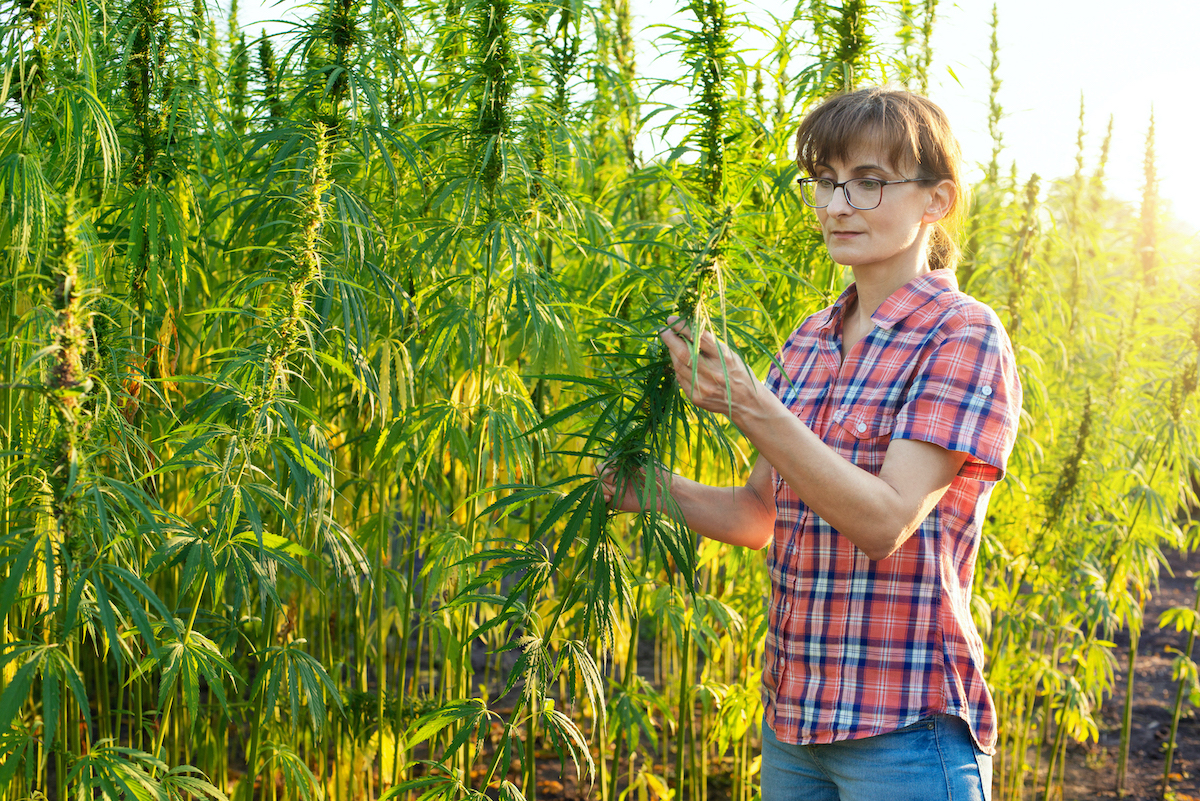
Agriculture is a major contributor to the Canadian economy. In 2021, field crop agriculture and horticulture accounted for a combined $40 billion in revenue and employed more than 110,000 people. Canadian crops reach markets in the US, China, Japan, the UK, and beyond. As the global population surges, it is more important than ever that we continue to feed ourselves and the world with our high-quality exports, like wheat and canola.
“In 2021, field crop agriculture and horticulture accounted for a combined $40 billion in revenue and employed more than 110,000 people.”
However, increased agricultural productivity can come at an environmental price, and as we expand the sector we have to find ways to not just flatten but dramatically lower our impact on the planet. We have to ensure that increasing our agricultural output does not also increase our carbon footprint. The main culprits in this regard are pesticides, herbicides, fertilizers, fuel required in running farm machinery, and direct soil emissions.
The good news is that we have lots of new cleantech innovations in play in Canadian crop agriculture. For example, the rapidly evolving practice of precision agriculture allows us to use such tools as geospatial information, drones, IoT sensors, and targeted irrigation and fertilization to maximize natural resources.
In agriculture, though, cleantech is not just about the machinery and processes we use, it is also about the plants we choose to grow and how we use them. I want to talk about a leading cleantech innovation application within field crop agriculture. More specifically, I want to talk about the growth of industrial hemp, which may be considered the earth’s own cleantech system for sequestering carbon, enriching the soil, decreasing our use of water, pesticides and herbicides, and supporting more sustainable farming practices.
Hemp: The Earth’s Original Cleantech

In 2021, Canadian farmers planted around 60,000 acres of industrial hemp, and I’d like to see that number increase exponentially. Sometimes referred to as a “miracle plant,” hemp is 100% biodegradable, recyclable, and reusable. It can be grown in practically any climate or soil conditions, and is robust and quick growing (second only to bamboo), which maximizes land use and reduces the need for herbicides. Hemp’s roots penetrate the soil within 6 weeks of being planted and can extend eight feet below the surface. These deep roots use ground water and break up compact soil, providing aeration and allowing nutrients to enter the soil. Aeration helps control topsoil erosion, which ultimately reduces water pollution. In addition, hemp is a natural repellent of pests, thereby limiting the amount of pesticides and fungicides used. Limiting the amount of chemicals used reduces air pollution and improves soil conditions, allowing the same soil to be used for years.
“Hemp absorbs more carbon from the atmosphere during its growth than is emitted by the equipment used to harvest, process and transport it.”
And, importantly, the production of industrial hemp is carbon negative – that means that hemp absorbs more carbon from the atmosphere during its growth than is emitted by the equipment used to harvest, process and transport it. According to Cambridge University researchers, hemp can capture atmospheric carbon twice as effectively as forests, while providing carbon-negative biomaterials. Hemp absorbs between eight to 15 tonnes of CO2 per 2.5 acres of cultivation, while forests typically capture two to six tonnes, depending on climatic region and the type of trees.
25,000 Uses for Industrial Hemp (So Far)
But what can be done with hemp, if we go ahead and grow more of it? As it turns out, hemp is one of humanity’s oldest and most useful crops – it’s been cultivated for at least 10,000 years – yes, you read that right.
“Hemp can be used to replace or strengthen a wide variety of much less sustainable materials, including asbestos, cotton, plastic, steel and fibreglass.”
Rope, clothing, sails, and oil: Many of mankind’s most essential products have been made from hemp. Today, it’s used in more than 25,000 commercial and industrial products globally. Hemp can be used to replace or strengthen a wide variety of much less sustainable materials, including asbestos, cotton, plastic, steel and fibreglass. Hemp is versatile, trustworthy, and strong. It is the all-natural answer to the demands of the global economy. According to a report by Grand View Research, the global industrial hemp market size was estimated at USD 4.13 billion in 2021 and is expected to grow at a compound annual growth rate (CAGR) of 16.8% from 2022 to 2030.
As one of the largest producers and exporters of industrial hemp, Canada is well-positioned to take advantage of the world’s growing interest in hemp. According to the Canadian Hemp Trade Association, Canada’s total hemp production is forecast to increase from 39,000 to 244,000 tonnes a year by 2030. Hemp straw will lead this growth, reaching 125,000 tonnes a year by 2030. Hemp biomass and chaff production are forecast to increase by around 5,000 tonnes a year.
The Challenges and Opportunities for Industrial Hemp
There are some challenges and barriers lying ahead, however, primarily in logistics and legislation. Different countries have regulations and laws restricting the use of hemp and hemp-derived products and may require stringent testing and/or certification of the hemp they will allow to enter the country. For example, many importing nations require that industrial hemp undergo some combination of testing for THC levels, pesticides, and other contaminants. Many require licensing and certificates of origin. And then there’s the obvious challenge: Growing more hemp means we’ll need more farm acreage. That means we’ll have to get good at persuading farmers that growing hemp as a cash crop makes sense. Increasingly, that will come down to linking hemp with the sustainability market.
And then, of course, there’s the decades-old confusion between hemp and cannabis. To be clear, while hemp is part of the cannabis family, it contains none of the psychoactive THC found in marijuana.
“We need to build a compelling case to convince growers and consumers that hemp is key to building a strong green economy.”
Despite all this, I think that Canada’s hemp-related market opportunities far outweigh the challenges. Canadian hemp already enjoys a reputation for superior quality. In a promising development, in our biggest export market, the United States, hempcrete has just been added to the residential building code, paving the way for legal use in 2024. Experts predict that commercial use will be right around the corner. This development has helped the hemp industry as a whole gain more recognition and encourages the free flow of knowledge surrounding the virtues and properties of hemp.
To definitively win the space, however, Canada has some work to do. Canada needs to increase the financial support the still-young hemp industry receives from governments at all levels. We need to build a compelling case to convince growers and consumers that hemp is key to building a strong green economy. And we still need to lobby for legislation that decouples industrial hemp from cannabis. The rewards? A stronger Canadian economy and a revitalized planet. With our increasing climate crisis, the time is right to bring hemp to a global market.
-
 Canada Excels at Climate Technology Innovation, but Struggles to Adopt It
 Tyler Hamilton
Senior Director of Climate
MaRS
Tyler Hamilton
Senior Director of Climate
MaRS
-
 Carbon Tech is Ours to Win if We Back What Works
 Mike Kelland
Co‑Founder, Chief Executive Officer, and Board Member
Planetary Technologies
Mike Kelland
Co‑Founder, Chief Executive Officer, and Board Member
Planetary Technologies
-
 Canada’s Cleantech Moment: 3 Actions to Lead the Global Sustainable Materials Race
 Mohammad Doostmohammadi
Founder, Director, and CEO
pH7 Technologies
Mohammad Doostmohammadi
Founder, Director, and CEO
pH7 Technologies