
Embracing Innovation: The Future of Canadian Manufacturing

Canadian manufacturers tend to play it safe when it comes to implementing new technologies and making bold moves against their competitors. If they continue down the path of least resistance, they run the risk of overlooking key advancement opportunities, falling behind in the global production landscape, and making themselves more vulnerable to changing geopolitical circumstances.
“Between 1961 and 2005, manufacturing saw a drop from 24% to 16% in total GDP contribution, and in the past decade, it has dropped even further; it now accounts for only 10% of our total GDP.”
Canadian manufacturing’s contribution to the country’s overall GDP has been steadily declining since the 1980s. Between 1961 and 2005, manufacturing saw a drop from 24% to 16% in total GDP contribution, and in the past decade, it has dropped even further; it now accounts for only 10% of our total GDP. On a global level, Canadian manufacturers have struggled to retain a stable position against countries with lower labour costs and more aggressive investment strategies.
To regain a strategic foothold in the global market and bolster themselves against the unpredictability of current trade markets. Canadian manufacturers should be looking to fast-track the adoption of what has been coined “Industry 4.0 technologies“— an umbrella term that includes the likes of artificial intelligence (AI), robotics, and additive manufacturing (AM). By shifting focus towards the implementation of these tools, Canadian companies can become experts in advanced manufacturing, disrupting the status quo to secure a more competitive future.
“Canada faces a number of economic challenges, but we know our country’s potential is limitless. We need our businesses to be bold and daring in their pursuit of success in order to convert that potential into future prosperity and overcome the current state of Canada’s economy.”
– Deloitte, The Future Belongs to the Bold
The Risk of Playing It Safe in Canadian Manufacturing
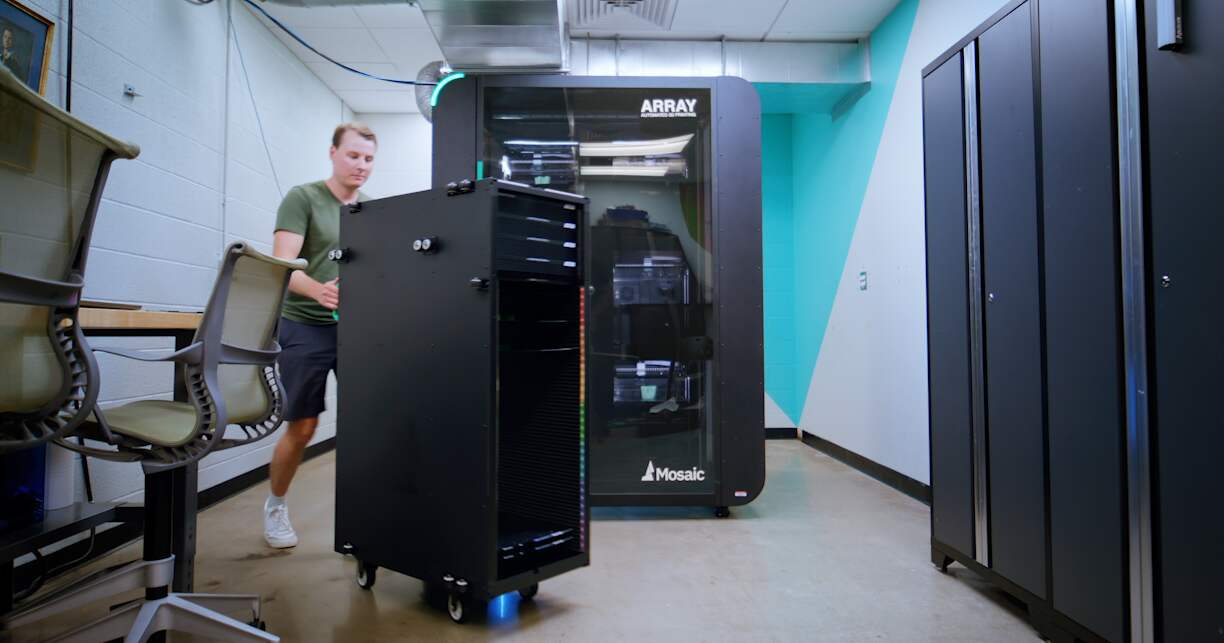
Failure to adapt to the current state of global manufacturing will mean missing out on the opportunity to build a more resilient, future-ready sector. Consumer demand continues to increase both in scope and expectation and since the onset of the Covid-19 pandemic, manufacturers have been grappling with persistent disruptions to their supply chains. If our manufacturers do not grow to address these concerns, Canadians will have no choice but to rely on other countries to supply them with the products they need, resulting in continued stagnation for the manufacturing sector and increased costs for the Canadian public.
A recent survey by Canadian Manufacturers & Exporters (CME) revealed that 90% of Canadian manufacturers are facing supply chain challenges, with more than 60% describing the impact of these disruptions as either major or severe. The survey also found that supply chain issues have resulted in a collective loss of approximately $10.5 billion in sales as well as nearly $1 billion in increased production costs for companies in the Canadian manufacturing sector. Offshoring once provided Canadian manufacturers with some financial relief, but it is clear that the fragility of global supply chains is now costing us. It is no longer in the country’s best interest to rely on outside sources to mitigate the cost of production.
“If our manufacturers do not grow to address these concerns, Canadians will look to other countries to supply them with the products they need, and the sector will continue its decline.”
Embracing Industry 4.0: The Path to Advanced Manufacturing
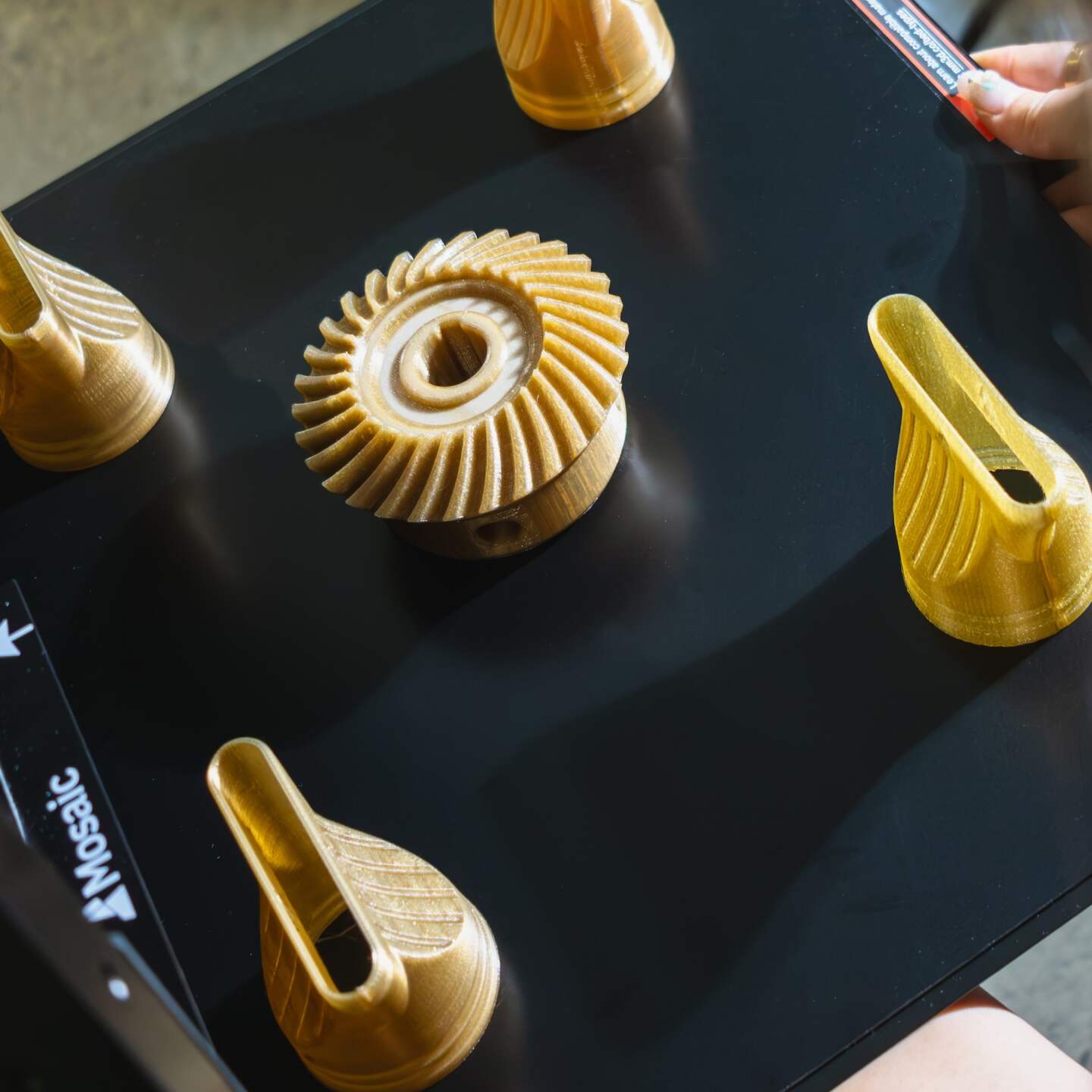
While Canada can’t compete with countries like China on conventional, low-cost manufacturing, we have a distinct advantage in the realm of advanced manufacturing. The key challenge is to identify and invest in the right tools—the technologies that will enable Canada to transition and become a leader in next-generation manufacturing. Mosaic’s Array transforms polymer part production by delivering a scalable, automated, and localized manufacturing solution. The ability to produce on-demand parts offers several key benefits, including:
- Reduced reliance on large physical inventories, which are exorbitantly expensive and inherently wasteful. For instance, when parts become obsolete, surplus stock often ends up in landfills.
- Enhanced production flexibility by enabling parts to be made the same day a design is finalized, with no setup time or tooling costs.
- Minimized dependence on external vendors and vulnerable shipping networks with parts manufactured directly at the location where they are needed.
“Additive manufacturing, in particular, unlocks the ability to produce parts directly at the point of need, allowing manufacturers to bypass the complicated and potentially cost-prohibitive process of sourcing from external vendors.”
In light of President Trump’s reelection, discussions around reshoring have reached new levels of relevance.
Though plans to implement a 25% tariff on goods coming from Canada and Mexico are presently on hold, the threat of a trade war still looms —a daunting notion for manufacturers who rely on foreign-made parts to sustain their production. While Industry 4.0 technologies come with their own set of challenges—primarily, they require an initial investment in both equipment and training—they provide immeasurable value by enabling more adaptive and self-sustaining manufacturing. Additive manufacturing, in particular, unlocks the ability to produce parts directly at the point of need, allowing manufacturers to bypass the complicated and potentially cost-prohibitive process of sourcing parts from cross-border vendors.
While the road to advanced manufacturing may seem steep, the opportunity for Canadian businesses is immense. By embracing innovation, we can redefine Canada’s manufacturing landscape and carve out a competitive edge in high-tech-enabled, self-sustaining production. At present, the U.S. manufacturing sector accounts for approximately 18% of global manufacturing contributions, while the Canadian manufacturing sector only provides 1% of global manufacturing contributions. This disparity, coupled with the current geopolitical environment, presents a powerful opportunity for Canada to boost its GDP, strengthen its position in the global market, and protect itself against unpredictable markets.
The Future of Supply Chain 2.0 in Canadian Manufacturing
If Canadian manufacturers wish to regain a foothold in the global manufacturing landscape, they need to embrace technologies that enable automation, localization, and digitization. In doing so, they can streamline production, reduce waste, and cut our reliance on tenuous supply chains and unstable trading conditions, which will ultimately lower costs and improve profitability.
“If Canadian manufacturers wish to regain a foothold in the global manufacturing landscape, they need to embrace technologies that enable automation, localization, and digitization.”
“At the turn of the last century, Laurier and a generation of Canadian statesmen understood that Canada was at a turning point…The global green transition calls for an industrial transformation comparable in scale only to the Industrial Revolution itself—and Canada is blessed with the talented people, the natural resources and the manufacturing base needed to drive that transformation.”
– Chrystia Freeland, Deputy Prime Minister, Department of Finance Canada
The future of manufacturing in North America is already beginning to move towards a “Supply Chain 2.0” model. Canadian manufacturers have the ability to help lead this shift, but it will require a change in mindset and a willingness to invest. We have the tools that are required to reimagine the future of manufacturing in Canada, but we must be bold enough to embrace them.
-
 How Aviation Powers Progress and Economies
 Maria Della Posta
President
Pratt & Whitney Canada
Maria Della Posta
President
Pratt & Whitney Canada
-
 Domestic by Design: Why Canada Needs to Buy and Upgrade Canadian Resources
 Apoorv Sinha
Co-Founder and CEO
Carbon Upcycling
Apoorv Sinha
Co-Founder and CEO
Carbon Upcycling
-
 How to Strengthen Canadian Food and Beverage Manufacturing
 Kristina Farrell
Chief Executive Officer
Food and Beverage Canada (FBC-ABC)
Kristina Farrell
Chief Executive Officer
Food and Beverage Canada (FBC-ABC)