
Domestic by Design: Why Canada Needs to Buy and Upgrade Canadian Resources

For far too long, Canada has underutilized its vast natural resources in infrastructure development. We have been fine with exporting raw materials and letting other countries, mostly the US, refine these products before then buying back these higher-value products.
In 2023, Canada exported almost $150 billion of raw minerals, mostly metals, while we imported over $280 billion of manufactured goods from the US alone. Canada’s resource-based industry is not that different from Ghana’s or the Ivory Coast’s, which produce precious raw cocoa, only to have the profit margins be absorbed by Switzerland or France ultimately branding the chocolates global customers consume.
“In 2023, Canada exported almost $150 billion of raw minerals, mostly metals, while we imported over $280 billion of manufactured goods from the US alone.”
From lumber to steel, it’s time Canada moves up the value chain or risk being left behind in the global economic race.
Economic and Environmental Imperatives for Change

The tariffs announced on Feb 1st by the US will force Canada to confront our dependency on the US manufacturing situation with even more urgency than how we reacted to the price increases and inflation caused by import dependencies in the COVID pandemic just four years ago. Canada is at an economic crossroads that could define its standing for the rest of the 21st century. Canada needs to decide if it wants to be the Japan or Taiwan of high-end manufacturing or continue just being a raw mineral provider for other high-end economies across the world.
“Pandemic-related port delays to the 2021 BC port strike cost $10 billion in trade disruptions to Canadians and ultimately led to us sourcing goods from jurisdictions with drastically lower environmental standards (For example, in steel production, emitting 2.5x more CO₂ per tonne of steel than Canadian mills).”
Canada’s reliance on global supply chains proved disastrous during recent crises and is in direct conflict with Canadian values on the economy and climate. Pandemic-related port delays to the 2021 BC port strike cost $10 billion in trade disruptions to Canadians and ultimately led to us sourcing goods from jurisdictions with drastically lower environmental standards (For example, in steel production, emitting 2.5x more CO₂ per tonne of steel than Canadian mills). We constantly buy steel, cement and energy from international parties instead of prioritizing Canadian interdependence, contradicting not just environmental goals but economic prosperity and growth for other Canadians.
The Economic Case for Domestic Manufacturing
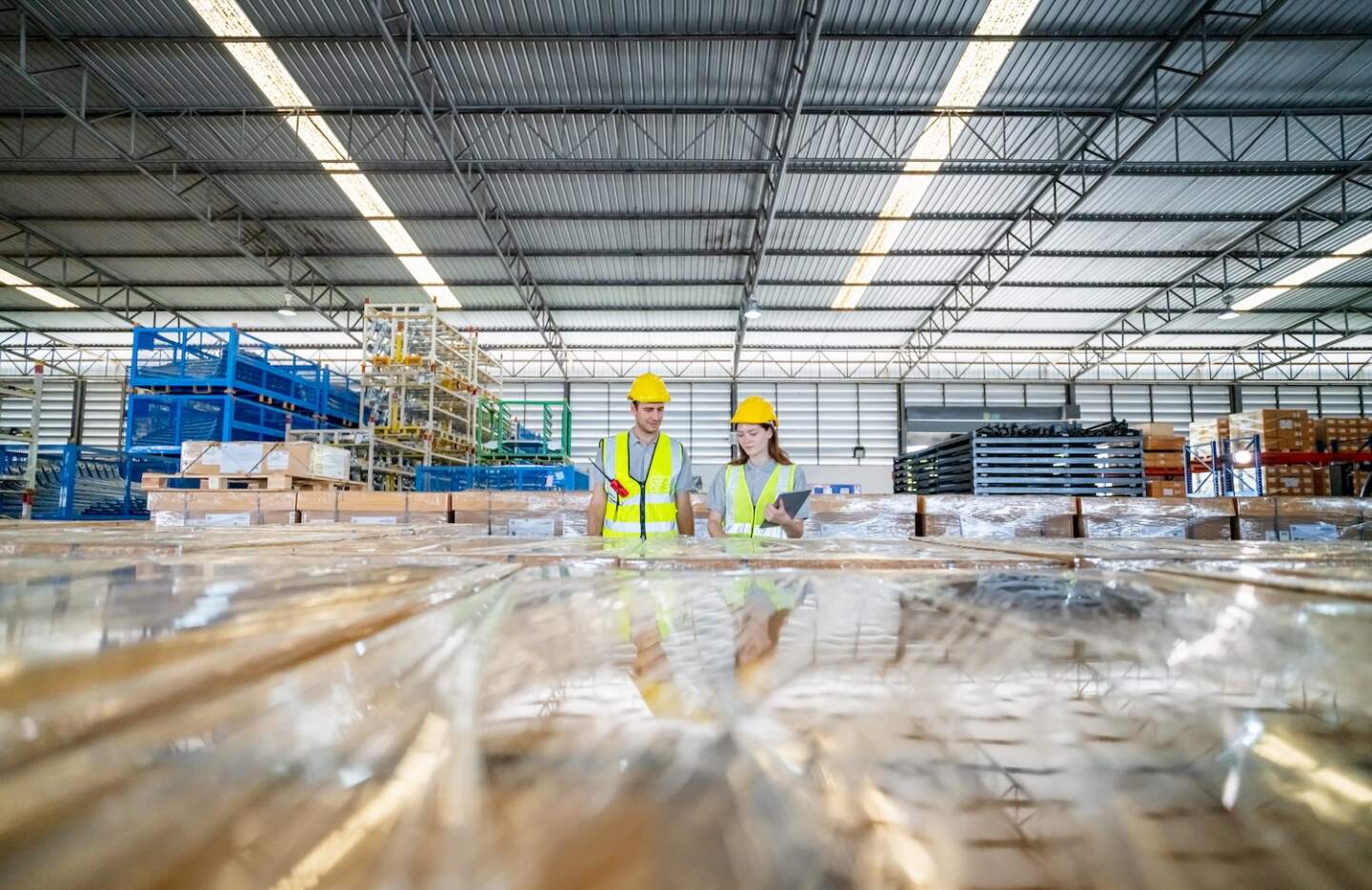
Domestic sourcing can offer significant, tangible benefits for Canadians in every province. Manufacturing already supports 1.7 million direct jobs across Canada and generates CAD $200 billion annually. We already provide raw materials used across the world for manufacturing high-value products. By using Canadian resources and upgrading them locally, Canada could supercharge its industrial base and its economy.
Canada has already shown that it can do this in other industries cleaner and set high standards for the world. But we continue to choose to let others incorporate the value in the supply chain instead of capturing it ourselves.
“Quebec produces the world’s greenest aluminum (94% hydro-powered), yet only 35% gets value-added processing domestically before export.”
For example, Quebec produces the world’s greenest aluminum (94% hydro-powered), yet only 35% gets value-added processing domestically before export. Canada supplies 30% of global potash but manufactures just 12% of advanced crop nutrition products locally. While leading in lumber exports (21% global market share), we import 65% of engineered wood products used in domestic construction.
A Blueprint for Canadian Manufacturing Sovereignty
To become the Japan of manufacturing, we need an ambitious plan, one the likes of which the Federation has actually undergone before. Minister Wilkinson has noted that building modern infrastructure requires “the scale and vision of the transcontinental railroad era.” Here are some things we can do today to take on the most important mission of our generation:
Incentivize Circular Innovation
Rather than just taxing imports through measures like the Clean Fuel Regulations, we can empower Canadian industry. Instruments like the Canada Growth Fund and the Canada Infrastructure Bank could incentivize “Made in Canada” products. Expanding tax credits for projects using ≥75% Canadian materials would materially incentivize multinational and blue-chip Canadian companies alike to build and manufacture in Canada. We could mandate “Buy Domestic” provisions in all federally funded infrastructure projects exceeding $10 million and accelerate waste-to-resource initiatives like Alberta’s Bitumen Beyond Combustion programs. All of this would help Canada sell not just the “cocoa” but capture the valuable supply chain that makes this into the valuable “chocolate” at the end of the supply chain.
“Expanding tax credits for projects using ≥75% Canadian materials would materially incentivize multinational and blue-chip Canadian companies alike to build and manufacture in Canada.”
Radically Incentivize Interprovincial Collaboration
The Canadian Free Trade Agreement needs a critical and urgent focus on overcoming provincial silos. We should fast-track the Impact Assessment Act’s “One Project, One Review” system for critical mineral mines and associated manufacturing and use infrastructure-focused instruments to prioritize pan-Canadian supply chain projects. We should fast-track the $9B Atlantic Loop connecting QC hydro to NB/NS grids and should seek to rapidly harmonize building codes through the National Research Council to enable the use of innovative, advanced materials like Quebec’s low-carbon aluminum in BC infrastructure projects so domestic procurement can be prioritized. We should create federal tax incentives for interprovincial clean energy partnerships and implement “First-Canada” transmission pricing with discounts for domestic industrial users vs export markets.
“We should fast-track the Impact Assessment Act’s “One Project, One Review” system for critical mineral mines and associated manufacturing and use infrastructure-focused instruments to prioritize pan-Canadian supply chain projects.”
Future-Proof Through R&D
We should focus our vast research and development resources towards a targeted focus on domestic supply chain advancement and creating a critical mass of manufacturing and collaboration between our provinces. The DOE and ARPA-E in the US have already begun efforts to onshore critical mineral and semiconductor manufacturing back, and Canada should strongly implement similar efforts to bring high-end manufacturing into North America.
“By using ArcelorMittal Dofasco’s zero-carbon steel (coming online 2028) and Lehigh Hanson’s Edmonton carbon-capture cement plant, we could accelerate the adoption of new technologies and sustain long-term Canadian jobs in both the steel and cement sectors while building globally relevant AI infrastructure.”
Prioritizing local sourcing of materials could have profound short and long-term impacts for Canada. Consider the construction of AI infrastructure in our tech hubs. The Toronto-Waterloo corridor’s data centers currently import 45% of structural steel. By using ArcelorMittal Dofasco’s zero-carbon steel (coming online 2028) and Lehigh Hanson’s Edmonton carbon-capture cement plant, we could accelerate the adoption of new technologies and sustain long-term Canadian jobs in both the steel and cement sectors while building globally relevant AI infrastructure. Domestic sourcing could equally apply to renewable projects—from Newfoundland offshore wind farms using Nova Scotia-made turbines to BC hydro upgrades employing Ontario-manufactured smart grid tech.
A Call for Ambition and Strategic Independence
This isn’t isolationism—it’s smart sovereignty. After WWII, Canada demonstrated global leadership through major projects like the St. Lawrence Seaway and Trans-Canada Highway projects.
“The US tariffs aren’t just a challenge; they’re a wake-up call and possibly a critical opportunity for Canada to define itself in the 21st century.”
Today, Canada lacks the ambition and solidarity to build bigger, better, and local. This is a choice, and we need to make a different one.
The US tariffs aren’t just a challenge; they’re a wake-up call and possibly a critical opportunity for Canada to define itself in the 21st century. It’s time for Canada to prioritize be bold in its ambition and accept the mantle of becoming a self-reliant, manufacturing superpower.
We need to stop making just lumber and instead focus on advanced composites. Not just steel but drones and EVs. We need to make not just potash but advanced fertilizers for the 21st century.
We must again build strategic independence.
Let’s construct a resilient Canada—powered by Canadian resources, Canadian innovation, and Canadian workers shaping our sustainable future with sovereignty and control of our own destiny.
-
 How Aviation Powers Progress and Economies
 Maria Della Posta
President
Pratt & Whitney Canada
Maria Della Posta
President
Pratt & Whitney Canada
-
 Embracing Innovation: The Future of Canadian Manufacturing
 Mitch Debora
Co-Founder and CEO
Mosaic Manufacturing
Mitch Debora
Co-Founder and CEO
Mosaic Manufacturing
-
 How to Strengthen Canadian Food and Beverage Manufacturing
 Kristina Farrell
Chief Executive Officer
Food and Beverage Canada (FBC-ABC)
Kristina Farrell
Chief Executive Officer
Food and Beverage Canada (FBC-ABC)