
Canada’s Circular Economy: A Path to Zero Waste and Carbon Neutrality

Today in Montreal, a circular economy cluster is thriving: a hub of agri-food businesses operates with a synchronicity that would have been unimaginable a decade ago. At the centre is Still Good, a company that upcycles commercial food waste, like spent brewery grain, imperfect produce, and fruit pulp, into functional ingredients for restaurant kitchens all over the city. Whatever they can’t use goes to companies like Blanc de Gris and TriCycle, which turn food material into a growing medium for gourmet mushrooms or use it to nourish edible insects. This interconnection is possible thanks to a desire on the part of business leaders to reduce waste and a government policy framework that stays out of the way of innovation.
Canada’s Waste Problem and Circular Potential
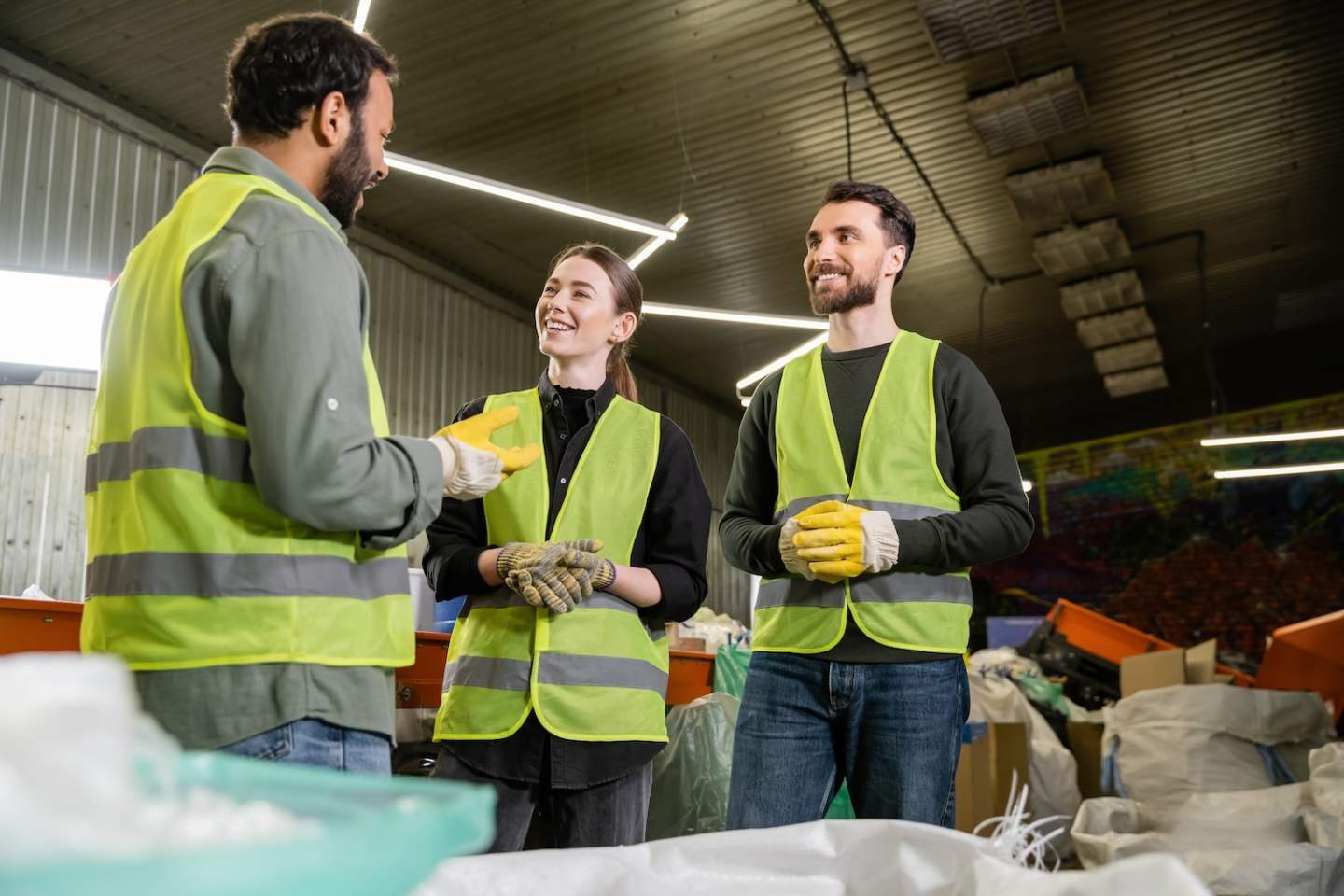
On a per-capita basis, Canada produces more waste than any other nation. Overall waste disposal has declined by only 2% from 2014 to 2020 — marginal, at best. Yet, the costs are mounting, with local governments spending $3.2 billion annually to manage waste. Even more staggering are the environmental impacts, as emissions from landfills account for 19 percent of Canada’s total greenhouse gases.
“The costs are mounting, with local governments spending $3.2 billion annually to manage waste.”
The 2021 Turning Point report presented a sobering reality: Canada’s national economy is only 3.6% circular. At first glance, this number is disheartening, but it also reveals the enormous potential still available. To seize this opportunity, we must replicate and expand local circular ecosystems like Montreal’s in cities across the nation. For example, in British Columbia, thanks to support from Metro Vancouver and other governments, the B2B platform FoodMesh has created several food recovery networks that connect players along the supply chain to efficiently redistribute surplus food, rescuing 34 million kilograms of food and providing 51 million meals since 2017.
Rethinking Waste: A Shift Towards Circularity

In a true circular economy, waste is designed out of the economic process. Materials are repeatedly cycled through reuse, repurposing, recycling, and regeneration, maximizing the value of the resources we have already extracted from the Earth. Montreal’s example shows us that “waste” is a false category — in fact, waste is just a resource we haven’t bothered to make use of yet.
This shift in mindset away from business-as-usual poses unique challenges for an extraction economy like Canada’s, where we’ve long treated natural resources as if they’re unlimited. Our culture has become fundamentally wasteful because we’ve undervalued our resources. Overcoming this will require reshaping not just economic frameworks but societal perspectives. With mounting challenges like climate change and potential economic recession, Canada cannot afford to keep squandering its resources.
““Waste” is a false category — in fact, waste is just a resource we haven’t bothered to make use of yet.”
Many of us are already taking micro circular actions every day. Donating clothes, repairing appliances, and freezing leftovers are positive steps. Circular business models like reuse systems for cutlery and containers, clothes designed from repurposed textiles, and various product-as-service models are also helping reduce waste. But these small, isolated solutions won’t suffice for Canada’s larger circular transition. We need to develop and expand regional-scale networks of interconnected businesses to make the most of the materials already circulating in the economy. Clusters are necessary because circular models can backfire if they’re implemented in isolation, often due to increased transportation emissions.
The Role of Investment and Policy Harmonization
Repair services, material repurposing, reverse logistics, and other circular business models are disrupting traditional linear systems on small scales across Canada. Catalyzing and expanding such innovation takes substantive investment, whether through research and development funding, grants, equity investments, or by adjusting institutional and municipal procurement priorities. Small and medium-sized enterprises, which account for the bulk of Canadian businesses, need extra support to experiment with and scale high-risk circular solutions that deviate from the status quo. They also need consistent government policy.
“Small and medium-sized enterprises, which account for the bulk of Canadian businesses, need extra support to experiment with and scale high-risk circular solutions that deviate from the status quo.”
Inconsistent policies and red tape make the circular economy virtually unworkable. What we need is a harmonized, innovation-friendly approach across jurisdictions in Canada. Metro Vancouver, in launching the National Zero Waste Council in 2012, recognized early on the importance of collaboration — across sectors, geography, and jurisdictions. Through the Council, we’ve been able to advance collaborative approaches to harmonization. For example, we helped establish the Canada Plastics Pact, where industry, government, and community leaders worked together on a landmark agreement that identifies 13 unnecessary and problematic types of plastic and a roadmap for eliminating them from supply chains.
“Consumers have the power to shape the transition by voting both with their ballots and wallets. Every day, we are sending messages through our actions about how we value resources.”
Ultimately, realizing a circular future requires champions at every level. Businesses, policymakers, and community leaders all have their roles to play in cultivating localized circular ecosystems across the nation. Consumers have the power to shape the transition by voting both with their ballots and wallets. Every day, we are sending messages through our actions about how we value resources. Consumer action responds to, but also drives, societal change.
Towards a Circular and Regenerative Future
Transitioning Canada to a circular, zero-waste, and carbon-neutral economy is an immense challenge. It means facing institutional inertia, overhauling entrenched linear systems, fostering unprecedented cross-sector collaboration, and realigning policies and business models. Yet, the costs of inaction are too great to bear. Allowing rampant waste to continue unabated will only exacerbate environmental degradation, resource depletion, and climate change. It will also stifle our nation’s innovation and competitiveness. Inaction means Canada risks irreversible environmental and economic damage that will burden future generations.
Canada’s path to a zero-waste, carbon-neutral, circular economy is clear: invest in innovation, harmonize policy, collaborate across sectors, and engage consumers. It’s not easy, but it can be done. Circularity presents immense economic opportunities for Canadian enterprises willing to blaze new trails in product design, business model innovation, reverse logistics, rental services, and more. This shift is vital to addressing the existential threat presented by climate change.
“Circularity opens the door for a true economic revolution: a regenerative economy that operates in harmony with natural systems.”
But more than that, circularity opens the door for a true economic revolution: a regenerative economy that operates in harmony with natural systems. This is one of the greatest societal and economic transformation opportunities of our lifetime, and Canada has the resources, knowledge, and creativity to be a global leader in this movement.
The Role of Platforms in Driving Change
Realizing a circular and regenerative future requires an unprecedented level of collaboration involving governments, industries, and non-profit organizations. The scale and complexity mean no one sector can go it alone.
And this is exactly why platforms like the National Zero Waste Council and Circular Economy Leadership Canada exist — to help connect, inform, and inspire all who seek to be a part of a sustainable future. Through our research studies, policy reviews, conferences, and advocacy efforts, the Council is working to link the many different efforts and solutions already unfolding around Canada. We’re dedicated to offering a better vision for our nation, and I encourage you to take action by launching your own circular and waste-free journey — and help to set Canada’s course towards a regenerative and zero-waste future.
-
 Rethinking Sustainability and Affordability Through Digital Bartering
 Firat Eren
CEO
Bunz.com
Firat Eren
CEO
Bunz.com
-
 From Waste to Wealth: Building Canada’s Circular Food Economy
 Dr. Tammara Soma
Director
Research Food Systems Lab
Dr. Tammara Soma
Director
Research Food Systems Lab
 Amr Addas
Senior Director, Sustainable Finance and Insights
Farm Credit Canada
Amr Addas
Senior Director, Sustainable Finance and Insights
Farm Credit Canada
 Barbara Swartzentruber
Senior Advisor
Canadian Alliance for Net-Zero Agri-food
Barbara Swartzentruber
Senior Advisor
Canadian Alliance for Net-Zero Agri-food
 David Hughes
President & CEO
Generate Canada
David Hughes
President & CEO
Generate Canada
-
 Eco-Effectiveness: Canada’s Path to Genuine Sustainable Growth
 Jury Gualandris
Associate Professor of Operations Management & Sustainability
Ivey Business School
Jury Gualandris
Associate Professor of Operations Management & Sustainability
Ivey Business School