
What Does Identic AI Mean for Canada’s Future?
AI is going through a profound change relevant to every person—but which it is not yet understood. AI is evolving from tools to active participants in our lives

A few times in my life, I was able to identify the next big thing in technology—but there was no book about it. In each case, I published a book that helped explain what was happening, why it mattered, and what we should be doing about it. I hope this is one of those times.
The Emergence of Identic AI
AI is going through a profound change relevant to every person—but which it is not yet understood. AI is evolving from tools to active participants in our lives. As our digital identities become smarter and more capable, we enter the age of Identic AI—a world where 24-hour AI companions can streamline daily tasks, improve health and wellness, and offer lifelong learning to those who seek it.
For professionals, theseAI co-pilots can amplify human capabilities, boosting creativity and supercharging productivity and effectiveness. Beyond the world of work, Identic agents will serve as our consigliere, private doctor, cultural curator, life mentor, financial planner, librarian, and even counsellor. If we do this right, our digital sidekicks will help us navigate life and build a more fulfilling future. Personal agents promise to transform how we live, work, and interact, fundamentally reshaping the institutions that underpin society. The promise and peril are both breathtaking.
Call this Identic AI.
The Three Phases of Digital Identity
To understand why this is happening and why I call this Identic AI, we need to trace the evolution of digital identity. Over the past 40 years, our digital selves have moved through three phases.
The first phase was basic digital identification. These were the logins, passwords, and government credentials that confirmed we were who we said we were. They acted as the online equivalent of house keys, letting us open accounts, cross borders, or move money.
“Every tap of a credit card, every location signal, photo, playlist, lab result, message, and social post feeds a record that is often more precise than our own memories.”
The second phase was the emergence of a full digital identity. Instead of a set of keys, this became a rich portrait built from the data we shed every day. Every tap of a credit card, every location signal, photo, playlist, lab result, message, and social post feeds a record that is often more precise than our own memories. It can track where we stood last June, when we went to bed, what we bought, what we read, and which stories we abandoned halfway through. It is a behavioural mirror that never stops recording.
We are now entering a third phase. Our digital identity is starting to think. It is developing memory, reasoning, creativity, and initiative. It will not simply store information about our lives. It will help run them. It will anticipate decisions, filter choices, and eventually negotiate on our behalf. This is the threshold of Identic AI, where our digital selves become intelligent partners that extend and amplify our capabilities.
The Importance of Universal Basic AI
“Canada needs what amounts to Universal Basic AI to enhance productivity and prosperity.”
With extraordinary promise comes extraordinary risk, and not just the usual worries about AI bias, bad advice, hallucinations, or our human dependency on technology that are much discussed.
First, Canada needs what amounts to Universal Basic AI to enhance productivity and prosperity. Identic AI will be central to national competitiveness. Workers will have superpowers that dramatically expand their judgment, creativity, and effectiveness. Students will be able to master information in ways we have never seen, because their personal intelligence will teach, coach, and guide them in real time. In healthcare, the supply and demand problem that has paralyzed the system for decades will begin to ease because the infinite demand for advice, triage, monitoring, and support can finally be met with an almost infinite supply.
The countries that ensure every citizen has access to personal intelligence will enjoy a surge in productivity and human potential. Those who do not will fall further behind.
Decentralizing Identic AI
“To own our digital selves, we’ll have to decentralize the AI infrastructure from the ground up for transparency, open source and community governance. Thanks to blockchain and other technologies, this is technically feasible. “
Second, we must confront the question of who will own the digital version of each of us. Will it be giant technology corporations? Or will it be you? The answer determines the future of human autonomy. In the Identic age, your personal intelligence will become your most valuable asset. It will contain your history, preferences, insights, and the cognitive patterns that define you. If this is owned by massive technology companies, your autonomy becomes a design choice made by companies that may not have your interests at heart. We need a model of self-sovereign AI where individuals own and control their cognitive extensions, supported by decentralized infrastructure and transparent governance.
To own our digital selves, we’ll have to decentralize the AI infrastructure from the ground up for transparency, open source and community governance. Thanks to blockchain and other technologies, this is technically feasible. The history of technological behemoths being displaced by new approaches shows that this is also achievable.
Identic AI and National Sovereignty
Third, this ownership challenge is even more urgent in Canada because it touches the core issue of national sovereignty. Canada cannot rely on foreign platforms to protect the interests of Canadian citizens. Canadians already worry about data sovereignty, and with good reason. American courts can subpoena the data of any person or organization using American software.
But the problem of data sovereignty pales when compared to what is coming. Identic AI raises not just the question of data sovereignty but the sovereignty of the self. The extension of our intellect and our consciousness could be captured and controlled by foreign corporations whose incentives do not align with our national or democratic interests. Imagine a world where the US so-called tech-bros can place products, views, and even political opinions in the digital extensions of our intellect.
A Call to Action
“If we build a mature strategy now, we can ensure that Identic AI strengthens our economy and reinforces our sovereignty. “
This is a wake-up call for Canadian government business leaders. AI is no longer your uncle’s AI. It is changing fundamentally, and that changes everything. Identic AI will shape the future of productivity, learning, healthcare, culture, and civic life. It will also determine whether Canada remains an independent and prosperous country or each of us becomes a digital branch plant of a handful of foreign platforms.
Canada has a brief window to act. If we build a mature strategy now, we can ensure that Identic AI strengthens our economy and reinforces our sovereignty. If we fail to confront these questions, our digital future, and perhaps our national future, will be decided elsewhere.
About the Expert
-

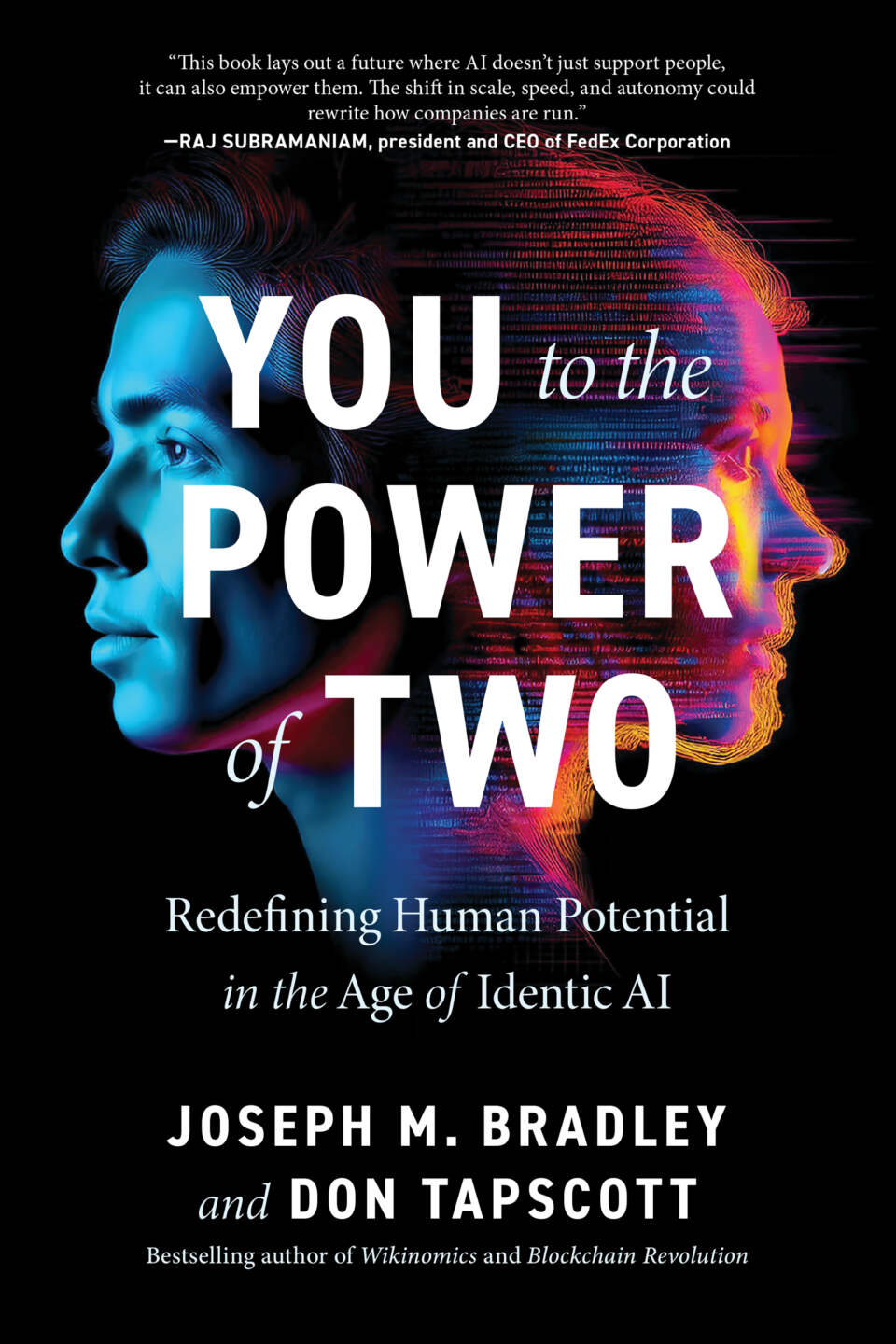
Don Tapscott is Co-Founder & Executive Chairman at Blockchain Research Institute as well as an author and consultant. He has written 16 books on the digital economy and technology’s societal impact. He also serves as an adjunct professor at INSEAD and is a Member of the Order of Canada. His new book (co-authored by Joseph Bradley) is “You to the Power of Two: Redefining Human Potential in the Age of Identic AI.”
See more
-
 Canada’s Insurance Industry Has A Productivity Crisis. AI Can Cure It.
 Jackson Fregeau
CEO & Co-Founder
Quandri
Jackson Fregeau
CEO & Co-Founder
Quandri
-
 Can AI Help Canada Build the Future of Life Sciences?
 Handol Kim
Co-Founder & CEO
Variational AI
Handol Kim
Co-Founder & CEO
Variational AI
 Martin Enault
Chief Entrepreneur in Residence
Centech
Martin Enault
Chief Entrepreneur in Residence
Centech
 David D. Jones
Managing Director
Merck Canada
David D. Jones
Managing Director
Merck Canada
-
 Adoption Is Not Adaptation: The Reskilling Wave Canada’s AI Strategy Leaves Out
 Tracey Taylor-O’Reilly
Founder
Promentus
Tracey Taylor-O’Reilly
Founder
Promentus