
Vehicle-to-Grid Technology Will Boost EV Adoption

Electric vehicles (EVs) have become an automotive mainstay across North America. Battery-powered cars have actually been around since the 1890s, but EVs didn’t gain popularity until 1997 with the introduction of the first gas-electric hybrid, the Toyota Prius. It wasn’t until 2006 that Tesla introduced the first all-battery-powered car with a 200-mile range. Since then, EV popularity has skyrocketed as consumers flock to EVs because they are less expensive to operate, quieter than gas-powered vehicles, and have zero emissions. However, battery-powered EVs still need to be charged, and the lack of a charging infrastructure has become a sticking point for many consumers. The solution is to make charging stations pay for themselves using vehicle-to-grid (V2G) technology.
“Consumers still have concerns about buying EVs, primarily due to the lack of infrastructure. Concerns about EV charging, specifically a lack of public charging stations, are slowing EV adoption.”
Sales of EVs in the United States hit a record 1.2 million cars last year, an increase of 50% over the previous year. However, sales have levelled off for the first time at the start of 2024. Sales will likely rebound, but the falloff is due to trepidation rather than market saturation. Consumers still have concerns about buying EVs, primarily due to the lack of infrastructure. Concerns about EV charging, specifically a lack of public charging stations, are slowing EV adoption.
A study by Cox Automotive revealed that 32% of consumers were considering an EV but cited a lack of charging stations in their area as the reason they wouldn’t purchase. A Consumer Reports study found that “purchase price” and “charging logistics” were the biggest buyer concerns. With the cost of lithium batteries continuing to drop, the lack of an EV charging infrastructure will soon be the biggest barrier to EV adoption.
The Lack of Charging Stations

Today, there just aren’t enough charging stations. Canada has laid out a plan to eliminate the sale of new gas-powered vehicles by 2035, which means new charging station infrastructure will need to be in place to enable Canadian EV owners to travel cross country. Natural Resources Canada estimates that there will need to be up to 469,000 charging stations by 2035. In the US, the Biden Administration has also committed $7.5 billion to build out charging infrastructure, including $623 million in grants to install charging stations along major travel corridors. However, upgrading charging infrastructure will take time.
“Natural Resources of Canada has already funded more than 43,000 chargers, but only 10,425 were operational in December 2023.”
The problem isn’t just a lack of charging stations. Many already installed stations don’t work. Natural Resources of Canada has already funded more than 43,000 chargers, but only 10,425 were operational in December 2023. A study by J.D. Power reports an increase in charger unreliability of 50% from 2021 to 2023. One in five public charging attempts fail, including 72% of failures due to broken equipment.
Charging stations are also concentrated in higher-income and more densely populated regions. Seven out of 10 EV chargers in the US are located where there is more demand, which means 72% of public charge ports are located in the top fifth of counties based on income. Poorer regions and less populated areas don’t have readily accessible chargers—for example, western states like Idaho and North Dakota average 1.3 chargers per 10,000 residents.
Creating Sustainable EV Infrastructure
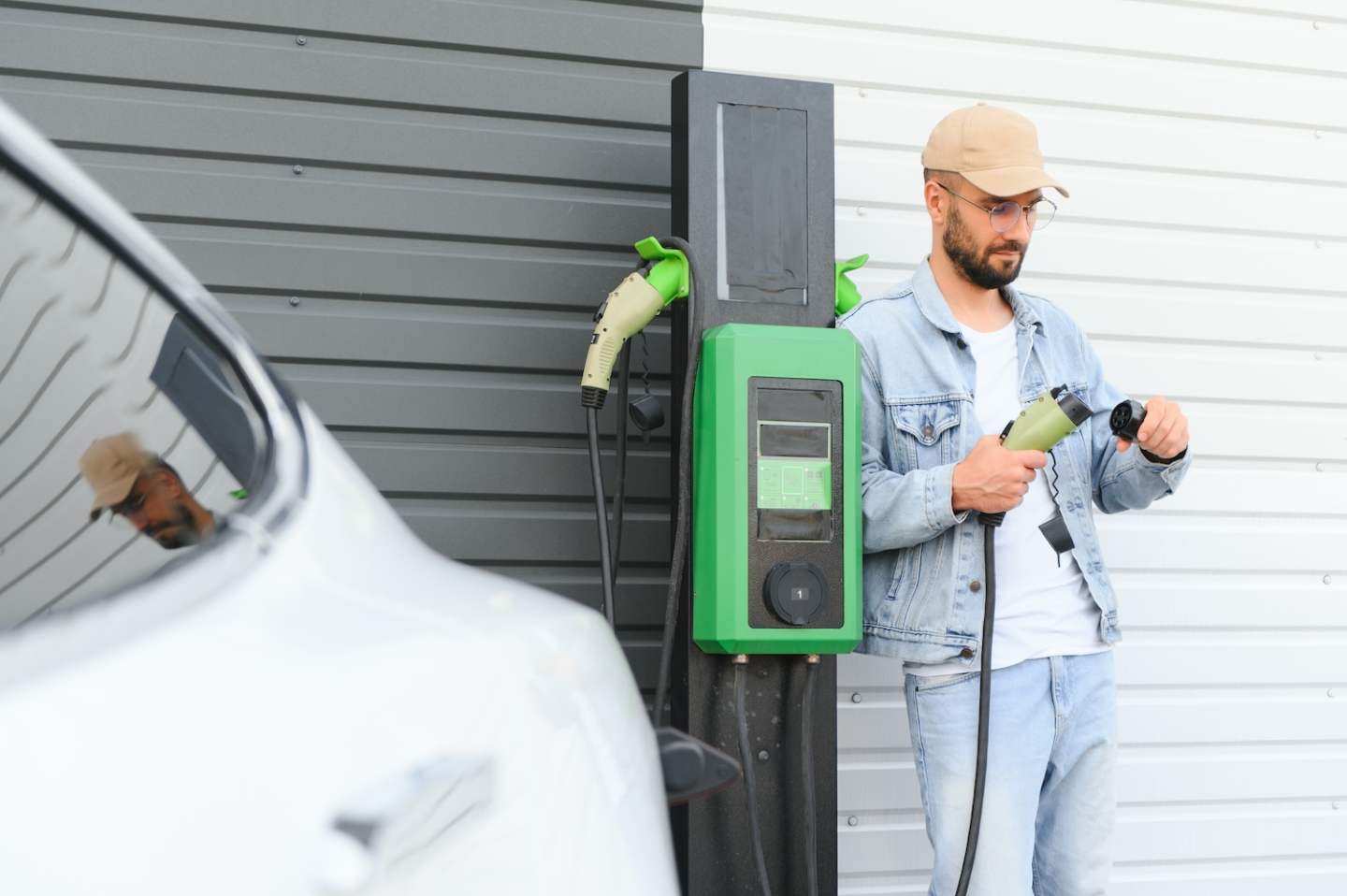
Creating a coast-to-coast EV charger infrastructure is a huge undertaking that will require more than federal funding. The private sector will need to get involved, which means EV infrastructure will have to yield a profit if corporations are to take responsibility for installing and maintaining public charging stations.
Of course, there are fees for EV charging. The average cost of using a Level 3 fast charger on a road trip ranges from $10 to $30 (still less than the cost of gas). However, those fees cover energy costs and don’t necessarily generate enough profit to pay for installing and maintaining the chargers themselves. To make the infrastructure fiscally sustainable, there must be additional profit incentives.
This brings us to vehicle-to-grid (V2G) technology. V2G systems offer the ideal solution to fund EV chargers and make an EV infrastructure financially sustainable.
“Using V2G charging can substantially offset the cost of the EV charging infrastructure by selling excess power back to utilities companies.”
V2G systems enable a two-way power exchange between EV batteries and the power grid. The bidirectional flow of energy delivers surplus energy from the battery systems to the power grid to offset demand, like how solar energy systems sell excess power to the grid. Using V2G charging can substantially offset the cost of the EV charging infrastructure by selling excess power back to utilities companies.
Consider where most public charging stations are located. While there is a need for fast charging stations on the highway, most charging stations are placed in shopping malls, public parking facilities, and other locations where drivers leave their cars for some time. These are perfect locations for V2G electricity sharing.
Public and fleet EVs are already taking advantage of V2G systems. School buses, bus fleets, and taxi fleets are converting to EVs to cut costs and emissions, and since these types of fleet vehicles have substantial idle time, recharging vehicles at the yard using V2G also cuts energy costs. The same V2G technology can be deployed at office buildings, apartment buildings, condo complexes, and other areas that accommodate long-term parking. The revenue from V2G should be sufficient to offset the cost of installing and maintaining V2G chargers.
New business models that make public charging stations profitable are needed to create a self-sustaining and profitable EV infrastructure. Emerging technologies like V2G have the potential to evolve into new business models that install and support EV charging stations. Turning EV charging stations into a lucrative business will reduce reliance on government agencies to develop the EV infrastructure and remove barriers to EV adoption.
Ultimately, it will be up to the private sector to invest in the EV infrastructure to make it sustainable. It won’t happen overnight, but there is an opportunity for savvy entrepreneurs to step in and install more charging stations, using V2G and other strategies to make it profitable. After all, all those gas stations didn’t appear overnight.
-
 EV Charging Is a Trillion-Dollar Problem. Batteries Themselves Might Be the Solution
 Edward Chiang
Chief Executive Officer
Moment Energy
Edward Chiang
Chief Executive Officer
Moment Energy
-
 Why It’s Time for Small Fleets to Electrify—and How Information Makes All the Difference
 Adam Thorn
Program Director, Transportation Policy
Pembina Institute
Adam Thorn
Program Director, Transportation Policy
Pembina Institute
-
 Unlocking Mass EV Adoption: Why Home Charging is Canada’s Key Solution
 David Corbeil
Co-Founder and CEO
RVE
David Corbeil
Co-Founder and CEO
RVE
 Marie-Pier Corbeil
VP Operations and Co-Founder
RVE
Marie-Pier Corbeil
VP Operations and Co-Founder
RVE