
Think Like Owners: Why Canada Must Stop Giving Its Future Away
Canada’s innovation isn’t the problem—ownership is, and unless we start backing and scaling our own entrepreneurs, we risk watching the wealth, IP, and future they create slip permanently out of our hands.


Canada’s entrepreneurial ecosystem is quietly eroding beneath the surface. Not because we lack ideas, talent, or ambition, but because we consistently fail to convert invention into ownership. We are watching a new generation of globally relevant, industry-defining companies emerge, and we are cheering from the sidelines while others reap the rewards.
Ownership is the greatest prize. Not job creation. Jobs follow capital, innovation, and commercialization—not the other way around. In a world shaped by geopolitical tensions, AI-led disruption, and rapid economic realignment, Canada can no longer afford to be a branch-plant economy in the industries that will define the future. Whether it’s energy, semiconductors, or artificial intelligence, the question is no longer just “Do we participate?” The real question is: “Do we lead, and do we own?”
From Talent Exporter to Value Creator
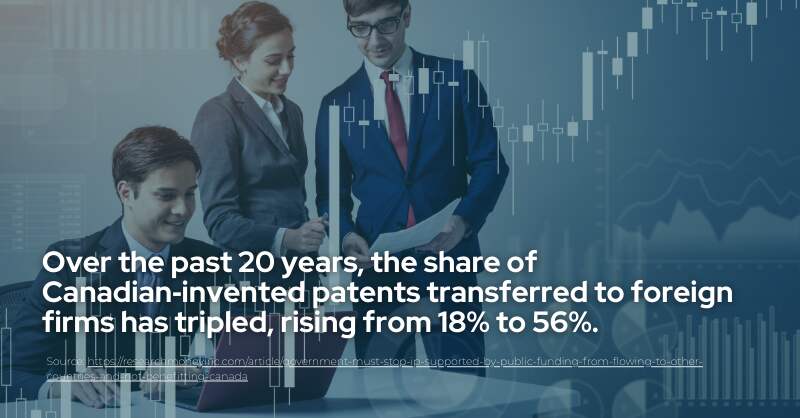
Canada produces world-class researchers, engineers, and founders, but our system is optimized to export them.
Instead of backing high-potential entrepreneurs early, we burden them with risk-averse funding structures and regulatory red tape. Instead of enabling scale, we incentivize exits. Instead of protecting intellectual property, we allow foreign capital to dictate the terms of success.
“Some of the most consequential companies in the world—OpenAI, Uber, and Y Combinator—all trace back to Canadian founders: Ilya Sutskever, Garrett Camp, and Garry Tan.”
The outcome is predictable. Canadian founders move abroad. IP migrates offshore. And wealth creation leaves the country.
Some of the most consequential companies in the world—OpenAI, Uber, and Y Combinator—all trace back to Canadian founders: Ilya Sutskever, Garrett Camp, and Garry Tan, respectively. These aren’t just success stories—they’re missed opportunities. They reflect a system that fails to retain the people and ideas that shape the future.
We’re left with press releases, not prosperity.
If we don’t own the companies, the technologies, or the data, we will never shape the value chain. Economic sovereignty requires more than participating in the global economy. It requires owning a meaningful stake in the future we are helping to build.
We Need Foreign Investment, But on Our Terms
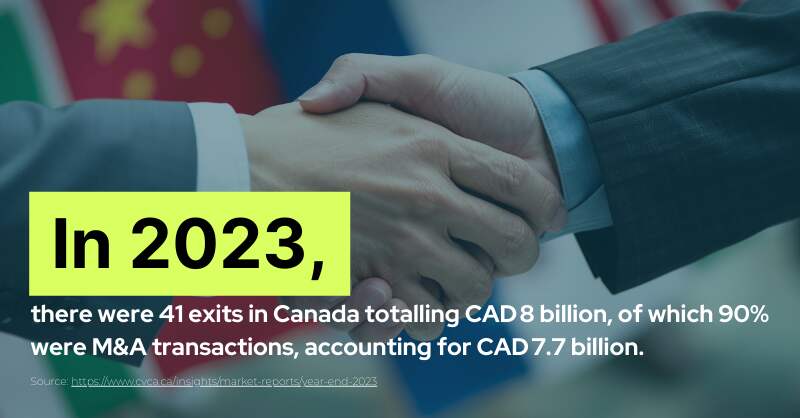
Let’s be clear. This is not a plea for economic nationalism—quite the opposite. We should make it easier to attract capital, not harder. The goal isn’t to isolate ourselves from the world; it’s to ensure we are in the driver’s seat.
Foreign capital can and should play a role in scaling Canadian innovation. But we cannot build a future where the survival of our ecosystems depends entirely on a handful of foreign players.
“Diversification of capital, customers, and collaborators is how we avoid single points of failure.”
Optionality is a safeguard. Diversification of capital, customers, and collaborators is how we avoid single points of failure. That balance is delicate, but essential.
Canada must be a magnet for global investment, while anchoring ownership, talent, and control of strategic companies here at home.
Learn from the Best: What Other Countries Get Right
We are not the first small country to face this challenge. But others have acted and won.
Israel created the Yozma program in the 1990s, blending government and private capital to seed its now world-renowned tech ecosystem. Today, Israel has more companies on the NASDAQ than any other country outside the US and China, many of them still headquartered in Tel Aviv.
Singapore established Temasek, a state-owned investment firm that scales strategic businesses, including high-tech manufacturing, AI, and fintech, while retaining national stakes in key sectors.
“When governments, investors, and institutions align around ownership and scale, small nations can become global giants.”
Sweden offers robust R&D tax credits and has built a culture of founder-led scale-ups. Companies like Spotify and Klarna didn’t exit early—they grew into global leaders under Swedish control.
The lesson is clear: When governments, investors, and institutions align around ownership and scale, small nations can become global giants.
Policy Must Match the Moment
If Canada is serious about fostering the next generation of global champions, we need bold, structural changes:
- Reward ownership, not just employment. Incentivize the creation and retention of Canadian-controlled private corporations (CCPCs) with long-term commercialization mandates.
- Adopt ownership-friendly tax incentives. Implement a Canadian equivalent of the United States’ Qualified Small Business Stock (QSBS) exemption to reward risk-takers and anchor growth-stage capital here.
- Protect and prioritize IP. Ensure that publicly funded inventions created in Canada stay in Canada long enough to generate meaningful returns. Canada’s IP Strategy must move beyond guidance to enforcement.
- Create real-scale pathways. Expand non-dilutive funding and launch a national procurement strategy that favours domestic innovation, especially in defence, energy, and health.
- Tell a new story. From government to media, we must elevate entrepreneurial builders the way we celebrate athletes and public servants. The future of Canada depends on risk-takers, not just rule-makers.
“Implement a Canadian equivalent of the United States’ Qualified Small Business Stock (QSBS) exemption to reward risk-takers and anchor growth-stage capital here.”
Small Country, Big Vision
We can’t keep using our relatively small population as an excuse. There are many countries with fewer people that outperform us in innovation, commercialization, and economic impact. Not because they have more natural resources, but because they align their entire society behind a cohesive vision of growth.
“There are many countries with fewer people that outperform us in innovation, commercialization, and economic impact.”
And let’s be honest: 40 million people is not small. We’re one of the G7. We have globally respected research institutions. We have immigrant talent flowing in. We have capital. What we lack is national coordination around ownership and scale.
Canada Must Think Like Owners Again
Canada doesn’t have a talent problem—it has a vision problem. We are still playing yesterday’s game with yesterday’s rules. If we want to be strong and free, we need to think like owners again.
“The next generation of wealth won’t be mined from the ground—it will be coded, commercialized, and controlled by those who act boldly now.”
We need to design for optionality, build for scale, and act with urgency.
Because the next generation of wealth won’t be mined from the ground—it will be coded, commercialized, and controlled by those who act boldly now.
We’ve seen what’s possible when we get it right. Companies like Shopify have scaled globally while staying anchored in Canada. But those wins are the exception, not the rule.
Canada can lead, but not by accident. Ownership is not just an economic lever. It’s a form of sovereignty. And if we don’t act with purpose, others will define our future for us.
About the Experts
-

Allen Lau is Co-founder and Operating Partner at Two Small Fish Ventures, an early-stage deep tech venture capital firm focused on the next frontier in computing and its applications. The firm is renowned for writing the crucial “first cheque” to promising startups that later became world-class companies, such as SkipTheDishes, BenchSci, Printify, Story Protocol, Ideogram, and Ada. He is also the co-founder and former CEO of Wattpad, a leading global social storytelling platform.
See more -
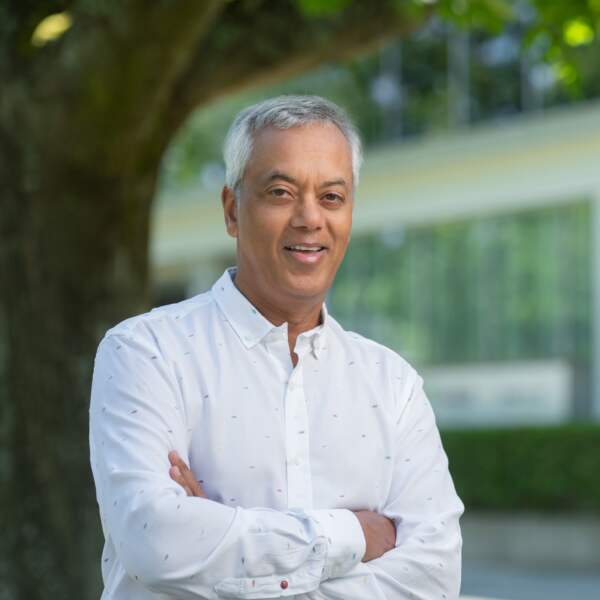
Praveen Varshney is Principal at Varshney Capital Corp., a Vancouver-based family office since 1991. A FCPA (FCA), serial entrepreneur, and impact investor, he co-founded ventures including Mogo Inc., Humanitas Smart Planet Fund, and Pyfera Growth Capital. He’s been named among BC’s most influential business leaders for three consecutive years.
See more
-
 The Future is Founder-Led: Canada’s Path to Global Innovation
 Rachel Rodrigues
Program Director
EY Canada Entrepreneur Of The Year
Rachel Rodrigues
Program Director
EY Canada Entrepreneur Of The Year
-
 Canadian Entrepreneurs Can Build Anything With the Right Start
 Shael Weinreb
Founder and CEO
The Home Equity Partners
Shael Weinreb
Founder and CEO
The Home Equity Partners
-
 Closing Canada’s Productivity Gap: Unlocking SME Potential Through Practical AI
 Cinzia Bazzo
Managing Director
Sage Canada
Cinzia Bazzo
Managing Director
Sage Canada