
The Longevity Economy is Part of Canada’s Future Economy
Canada must move beyond outdated approaches to aging and embrace the Longevity Economy as a strategic opportunity to drive innovation, strengthen the workforce, and unlock the full economic potential of an aging population.

In recent years, the theme of “longevity” has emerged in everyday conversation to expand on the more frequently used term “aging.” Both aim to boost a healthy future. But how to get there may differ, as longevity is more than healthcare.
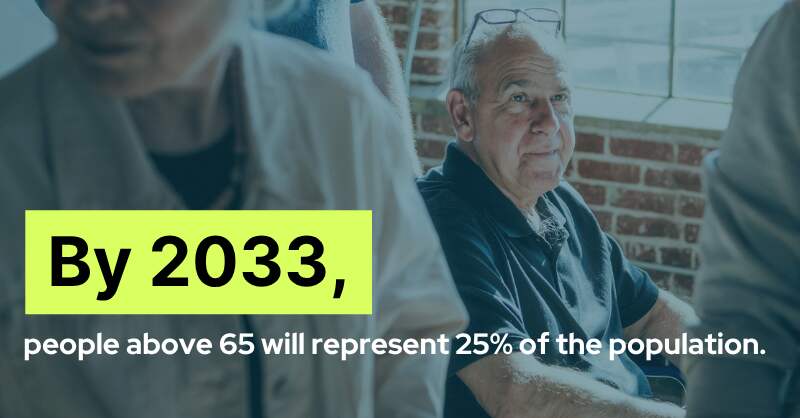
The trends are clear: The reality is that Canada is (normally and as predicted) aging fast: Nearly 20% (over 7.8 million) of Canadians are aged 65 or above in 2025. By 2033, people above 65 will represent 25% of the population. Projections estimate a 68% increase over the next 20 years. Today, centenarians are numbered at over 11,600 (2.8%), where women account for 81.4% of them. When Canada celebrates its bicentennial in 2067, the number of centenarians is projected to be nearly 100,000.
Canada is Facing an Aging Crisis
Compared to other countries, Canada is not an exception heading to a super-aged society. Most of us making today’s decisions will still be around in a decade. Overall, the demographic shift in the population aged 60 and older is expected to double by 2050. But compared to Canada, other countries are getting organized, and they are engaged in a strategic diversification of their approach toward longevity and the related impact on their economy. These countries are engaging with each other to partner and collaborate on the global stage. They are on the march of the Longevity Economy.
What is the Longevity Economy? What are the Principles of the Longevity Economy?
The Longevity Economy refers to the growing economic impact of people aged 50 and older. This includes their contributions to the global economy through labour, consumption, taxes, and non-market activities like volunteering and caregiving. It highlights the significant economic role of this population group, particularly in societies with aging populations. It is redefining retirement for a resilient and inclusive future.
“By 2050, the global retirement savings gap will be $400 trillion. By 2050, the percentage of old people in low- and middle-income countries will be 80%.”
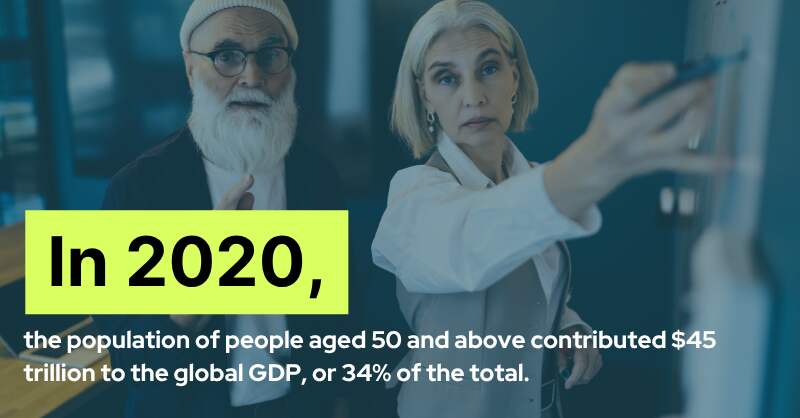
The World Economic Forum has outlined principles for fostering a Longevity Economy, including financial resilience, access to education and lifelong learning, and healthy aging. It estimates that in 2020, the population of people aged 50 and above contributed $45 trillion to the global GDP, or 34% of the total. Older adults account for a significant portion of total spending worldwide, with projections indicating continued growth in this area. By 2050, there will be 2.1 billion people above the age of 60. By 2050, the global retirement savings gap will be $400 trillion. By 2050, the percentage of old people in low- and middle-income countries will be 80%.
Longevity is the approach through which we can reshape healthcare. The vision is to embed longevity into mainstream care pathways via precision medicine clinics and then through digital tools capable of scaling best practices across health systems globally. And it should not be only the financial elites; it should be for all of us. Even the science of longevity made its way to the Empire Club of Canada.
Where is Canada With Respect to the Longevity Economy?
Many people believe that the Longevity Economy represents a formidable opportunity. The Longevity Economy is crucial for businesses to adapt to changing consumer behaviours and demographics, and to develop products and services tailored to the needs of older populations.
While longevity goes mainstream elsewhere, Canada is nowhere to be found in the discourse except for the dedicated efforts of a few groups of associations and organizations.
“The Longevity Economy is crucial for businesses to adapt to changing consumer behaviours and demographics, and to develop products and services tailored to the needs of older populations.”
Canada needs to transform its economy and optimize its workforce and social/health systems. We have no alternative but to embark on innovation linked to the Longevity Economy. Leading nations are already demonstrating the potential of longevity-focused governance.
Singapore has emerged as a model, investing in ageing research, health technologies, and community-based care programmes to extend the health span of its citizens. Switzerland, known for its progressive regulatory frameworks, has established itself as a hub for longevity biotech innovation. The UAE is pioneering longevity governance as a strategic priority. The Department of Health for Abu Dhabi recently announced the licensing of the Institute for Healthier Living Abu Dhabi as the first specialized healthy longevity medicine centre in the world.
Can Canada Lead?
Recent elections around the world reset global relations, highlighting that we were taking globalization for granted. Canada should realize that we need a strategic diversification of our future economy. In “Canada’s election: what Mark Carney’s win means for science,” published in Nature, the authors discuss how Canada needs to redesign its retirement systems by advancing financial innovations and fostering longevity literacy to ensure better financial and health outcomes for individuals and societies.
However, there are disagreements or not optimal alignment in Canada among leaders and key stakeholders when it comes to academic research, healthcare and homecare systems, and how it connects to the private sector in fostering innovation and solutions. The main question is whether Canada has the will to play a primary, front-and-center, and pivotal role in the global Longevity Economy.
Longevity Should Be a Global Government Priority. Here’s What Canada Must Do:
Canada needs a Longevity Economy Initiative—a comprehensive yet clear and simple strategy. Canada needs to shift its approach from only conducting social and health research on aging to focusing on identifying emerging trends and innovations in the Longevity Economy. We need to agree that funding social and health research has delivered us a critical amount of information, published in international peer-reviewed journals and trained a great many students to become highly qualified people. Canada is excellent at this.
“Canada needs a Longevity Economy Initiative—a comprehensive yet clear and simple strategy.”
What we also need to agree on is that the last decade’s projects, programs, and organizations, regardless of their comprehensive annual reporting, have not been able to achieve sustainability. They have not clearly defined economic return on investment (ROI), adoption of innovation, and wealth creation.
What Canada needs is a central, lean and efficient Canadian Longevity Directorate or a Canadian Centre for International Innovation in Longevity that will bring together academia, industry, and venture capital, and will establish a clear roadmap and network integrating all the strengths that Canada has to offer for addressing the challenges and opportunities of an ageing population. Such an entity will coordinate strategic funding and investment in aging research and innovation toward longevity elements cited above. The Canadian government must act as a catalyst, fostering innovation ecosystems and adopting bold, forward-thinking policies to position itself as a leader in this emerging field. Right now, there are too many fragmented initiatives.
“What Canada needs is a central, lean and efficient Canadian Longevity Directorate or a Canadian Centre for International Innovation in Longevity.”
Then, what Canada needs is to strengthen ties between us and the rest of the world and invite the private sector to innovate in Canada.
There is more to aging. There is more to healthy aging. There is more to social and health research on aging. There is a need to foster strong connections between innovative companies and reinforce global innovation value chains and commercial opportunities. Let’s ask ourselves why international investors are looking elsewhere. Canada is struggling to attract the level of funding required to develop and scale the next generation of solutions for an aging population. Elements related to that inadequate performance lie in the lack of adoption of our own innovation, national and provincial fragmentation of our health care systems, and the lack of directed and supportive venture capital investments.
Think about it: Longer life expectancy is a remarkable achievement. In the past 50 years (1955-2015), average life expectancy in Canada has increased from 69 to 82 years. The number of centenarians is growing. Experts predict that the future of human longevity will see us possibly reaching 100 years or more sooner than we previously expected. We must make the most of every moment through strength, resistance, memory, resilience, regeneration and acceptance: Push harder, live longer.
Taking Canada to the World Stage: Canadians as Innovators in the Longevity Economy
I believe that Canada can also participate in HELM, the Health, Endurance, Longevity, and Medicine cluster launched by Abu Dhabi. It is an economic cluster of life science facilities, integrating infrastructure, regulation and funding to remove barriers and accelerate the process of bringing scientific discovery to market. Canada needs to:
- Build a coherent and meaningful message and brand
- Establish a strong and mobilizing corporate structure and culture
- Deeply adapt to the needs of clients (AKA older adults)
- Innovate to maintain sustainable sector leadership
- Transform agility into a competitive advantage
- Promote partnerships to increase operational flexibility
Stem cell technology is the superpower of regenerative medicine. In Canada, we have the Stem Cell Network, a clear leader powered by a pan-Canadian community of multidisciplinary experts and next-generation talent, focusing exclusively on stem cell and regenerative medicine (RM) research.
“We must remain vigilant, as I’m not convinced that all longevity products, just like AI, will drive explosive growth companies.”
There is a growing number of venture-backed startups trying to make this vision a reality. There are emerging shops for preventive testing and scans. Many are raising millions of dollars. That said, we must remain vigilant, as I’m not convinced that all longevity products, just like AI, will drive explosive growth companies. Evidence backing up many longevity and wellness products, like certain supplements and popular peptides, is dubious. Evidence-based best science shall and must prevail. The road ahead is to be part of global networks, strengthen our VC ecosystem, streamline our regulatory process, and leverage our research and innovation hubs. Let’s share the vision and accept the mission.
About the Expert
-

Dr. Bruno Battistini is an Adjunct Professor and Lecturer at the University of Ottawa’s Interdisciplinary School of Health Sciences and Principal and Senior Advisor at NorthStar InnoVention. He brings decades of leadership in health innovation, policy, and research strategy, with a strong focus on interdisciplinary collaboration and evidence-informed decision-making.
See more
-
 Innovation Is Not Guaranteed: Canada’s Life Sciences Moment
 David D. Jones
Managing Director
Merck Canada
David D. Jones
Managing Director
Merck Canada
-
 We Need an Accountable Federal Response to Food Insecurity in Canada
 Valerie Tarasuk
Founding Investigator
PROOF
Valerie Tarasuk
Founding Investigator
PROOF
 Lynn McIntyre
Founding Investigator
PROOF
Lynn McIntyre
Founding Investigator
PROOF
-
 The Economic Impact of Menopause: How Sleep Disruption Affects Canada’s Workforce
 Michelle Jacobson
Co-Founder
Coven Women's Health
Michelle Jacobson
Co-Founder
Coven Women's Health