
Tackling Indigenous Youth Employment Barriers in Remote First Nations
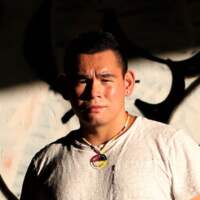

As Canada strives to tackle the lack of skilled employees, which is currently affecting nearly every industry in our country, there is an equally problematic and completely opposite situation that exists in remote and northern First Nations.
“In order to participate in post-secondary education or pursue employment, Indigenous youth must make the difficult choice to leave their community and are often met with immediate and unexpected hurdles.”
There are hundreds of thousands of Indigenous youth living in remote and northern First Nations who are currently or will soon be of working age. They are the fastest-growing segment of Canada’s population. Yet, due to the isolation of their communities, in order to participate in post-secondary education or pursue employment, Indigenous youth must make the difficult choice to leave their community and are often met with immediate and unexpected hurdles.
Barriers to Indigenous Youth Employment: John’s Story

In order to get a better understanding of the hurdles, we are going to follow the experiences of John, a 24-year-old young man living in a northern First Nation with a population of 1,100 people. Like many remote and northern First Nations, John’s community has very limited resources: a band office, a school, a health center, a small gas station, and a store that offers limited food and supplies. The store acts as both a market and the local bank. Community members cash their cheques and then use that money to buy necessities. The store runs a tab for you if you run out of cash before your next cheque.
“On the day his new adventure begins, John has only his status card and $180 in his pocket, which is left over from his $300 monthly welfare cheque.”
John has always dreamed of pursuing a life beyond the invisible borders of his reserve. Unlike many of his cousins, he has had some experience in the city when he played in hockey tournaments. These trips to the city made him believe that if he could handle being called a “dirty savage” by the spectators in the stands at the hockey games, he had the internal strength to take control of his future. So, John decides that he is going to leave everything behind and venture out to pursue a career in construction. He enjoys working with his hands and has been told that the construction industry is in desperate need of basic labourers. John borrows his cousin’s laptop and sees the job postings for himself. He makes plans to head into the city, which is many hours away, and will pay another community member who has a vehicle $100 to get him there. He also makes arrangements to sleep on the couch of a relative who lives in the city until he gets established. On the day his new adventure begins, John has only his status card and $180 in his pocket, which is left over from his $300 monthly welfare cheque. He is extremely nervous but excited and determined.
As soon as he is settled, John uses his relative’s computer and starts to apply for construction labour positions. They are asking for a resume. He has no job experience to put on a resume. With so few jobs available back home, he has never had a chance to even apply for a job. John decides to send a letter explaining his situation rather than a resume. It works! He gets a response asking him to come in for an interview. The next challenge is catching a city bus to get to the interview. John nervously sets out, and although he leaves himself extra time to get there, he misreads the posted bus routes and catches the wrong bus, making him late.
“He finds a nearby bank only to learn that in order to open an account, he needs a birth certificate, which he doesn’t have, and a current photo ID.”
His potential employer decides to overlook his lateness and offers John a job as a labourer for his company, with the understanding that he will need to have a driver’s license within the next few months because this is a requirement to operate some of the equipment he will eventually be trained to run. He is sent to the HR department and told to email them a direct deposit form and be ready to start in two days with work clothes and steel-toed boots. By the time John arrives back at his temporary home, he is already feeling apprehensive but still determined. He has no idea what a direct deposit form is or how to open a bank account.
The next day, he finds a nearby bank only to learn that in order to open an account, he needs a birth certificate, which he doesn’t have, and a current photo ID. He will have to tell the HR department that he will open a bank account as soon as he can order a birth certificate. Hopefully, they will understand.
“Completely deflated and realizing that he has no way to move forward, John suddenly understands why so many of his relatives who leave with big dreams of making it in the city return almost immediately.”
The day before he is supposed to start his new job, he calls home, trying to borrow money from family members in order to purchase work boots. He has already spent $60 on groceries and only has $120 cash left, but everyone has already spent their welfare cheques, so nobody has any money to loan him. Completely deflated and realizing that he has no way to move forward, John suddenly understands why so many of his relatives who leave with big dreams of making it in the city return almost immediately.
After a sleepless night, desperately trying to think of a plan that will allow him to keep going, he crawls out of bed, packs his bags, and calls someone to come pick him up. On the day he is supposed to start his first job, he returns to his community as another person who realizes that there are too many hurdles for success outside the reserve. Unfortunately, he will never try again.
In this scenario, John doesn’t experience the disappointment he would feel when he learns that in order to advance in a construction career, he would need to have upgraded math skills before he could even fill out an application for trade school.
He doesn’t realize that he needs glasses to read a measuring tape because he has never had an eye exam.
John doesn’t have to experience the gut-wrenching feeling when he begins the search for a place to live before realizing that he cannot provide the necessary credit and reference information or the money to pay a deposit and first month’s rent.
How to Support Indigenous Youth Employment

Indigenous youth living in remote and northern First Nations, born in the ’90s and later, are the first generation who have been told they have the autonomy to make decisions for themselves. For generations before them, all choices over absolutely every aspect of their lives had been taken away.
“These initiatives are being designed with the best of intentions, but for Indigenous youth from northern and remote communities, they can be the perfect set-up for the unintended destruction of self-esteem and confidence.”
Post-secondary institutions have created programs to support Indigenous youth and encouraged them to register. Businesses and organizations are trying to come up with innovative ways to hire Indigenous youth through scholarships and internships. These initiatives are being designed with the best of intentions, but for Indigenous youth from northern and remote communities, they can be the perfect set-up for the unintended destruction of self-esteem and confidence.
A good example of how these programs feel to Indigenous youth from isolated communities is to imagine yourself at an international food buffet. You are handed a plate and told that you can only fill your plate one time. You have no idea how anything tastes. When you ask if you can have a sample before making your decision, you are told no. You must make your selection based on what you think things might taste like. After several trips around the buffet, the choices are so unfamiliar that you are overwhelmed and decide to stick with the spam and kraft dinner that you have grown up eating.
In order to allow Indigenous youth living in remote and northern First Nations to actively participate in Canada’s economy, a new approach needs to be implemented that includes some very specific steps.
The first step is to offer opportunities for youth, accompanied by a chaperone, to leave their community for a short period to “sample” from the vast choices. Even a one-week trip will expose them to careers that they probably had never even thought of and allow them to narrow down the choices that are right for them. This can include things like camps, businesses offering one-week “try out a career” opportunities or arranging conversations with individuals from different career paths. These trips should include arrangements for transportation, accommodation, meals and excursions.
For youth who make the difficult decision to leave their community to pursue their newfound passion, the next step is vital and is based on #10 of the Truth and Reconciliation Calls To Action, which calls for “improving education attainment levels and success rates.” There must be the creation of a “home-away-from-home” that delivers a College Preparation/Employment Preparation Program. Youth can live in dormitory-style housing where everyone has a safe and comfortable space to call their own.
The program should be up to twelve months long but not based on a traditional school calendar. It should run on a block system, allowing the youth to reconnect with family every few weeks or months. This will allow families to see their children in person on a regular basis so they can be confident that their children are being taken care of and are safe. It will also help to address the ongoing trauma caused by Canada’s history that understandably makes youth and their families hesitant to leave their communities.
There should be full-time staff who have an understanding of the specific needs of the youth in terms of all aspects of their personal wellness and life goals. Staff should be dedicated to supporting youth during the program and beyond.
Life skills to teach Indigenous youth would include:
- Time management and employment expectations, including practice for interviews
- Basic nutrition, shopping, meal planning, cooking
- Typing and computer and office skills development
- Public transportation navigation
- Budgeting, banking and how to build credit
- How to remain safe in an urban setting
- Building self-esteem and confidence through group and individual activities
- Meeting new people and learning how to appropriately handle conflict
Practical resources would include:
- Medical appointments, dental appointments, eye exams and counselling
- Applying for birth certificates, SIN and photo ID
- Opening bank accounts
- Obtaining a learner’s driver’s license and arranging for driver’s training
- Career planning, resume and cover letter building, and discovering other interests and hobbies
- Filling out applications for post-secondary and trade schools, etc.
- Job shadowing
Academic resources would include:
- Assessments of each individual’s level of English, Math and Science
- Individualized academic upgrading in the areas needing support
A Brighter Future for Indigenous Youth
The Government of Canada released a report in 2017 based on a survey of youth (and their families) who attend on-reserve schools to see what they need to continue their education off-reserve. The following information is from that report:
Transition programming/supports was a top theme. Youth suggested this could include many advanced tours/visits to off-reserve schools, orientation programs (especially how to get around and be safe in a big city), mentor/buddy programs, and support groups/networks. These would help new students adapt to the changes, help them meet other people (including other First Nation students or those experiencing similar transitions), and minimize their culture shock.
“When our children go to university/college they are not prepared and are lacking essential skills and knowledge.” – Manitoba participant
“There needs to be some sort of transition between the two. It can be overwhelming to come from a small school where you know everyone, and enter a school with a thousand children, many different classrooms and different teachers for every subject.” – British Columbia participant
First Nation students transitioning to off-reserve schools need more transition support programs. These programs should help students prepare for culture shock and different expectations around attendance and behaviour.
Respondents commented that transition programs can help students to get used to their new school mostly by giving them information about their new surroundings: information on the area near the school, public transportation, where to get food, where and how to access support programs, etc. Transition programs should also help them to get used to living off-reserve with non-First Nation people.
Advance participation was another key theme that included ideas about slowly showing a First Nation student what their new school and its location will be like and how to adapt to it. This could mean advance visits, perhaps starting a year in advance, during which the student could meet teachers, and get to know the school. Participants described how students could also participate in social events or sports with students from the off-reserve school before the transition.
The two problems of lack of skilled workers and lack of opportunities for Indigenous youth living in remote and northern First Nations have the potential to solve each other. In order for Indigenous youth living in these communities to successfully participate in post-secondary education or employment in an urban center, there needs to be a bridge between the two. Indigenous youth and their families have taken the time to share what they need. Now it is up to us to decide if we are willing to provide what is necessary for the success of Indigenous youth living on-reserve and allow them to fully participate in Canada’s economy.
-
 Addressing Media Narratives: Indigenous Procurement Policies Are Not the Problem
 Tabatha Bull
President and CEO
The Canadian Council for Indigenous Business
Tabatha Bull
President and CEO
The Canadian Council for Indigenous Business
-
 Indigenous Digital Equity: Overcoming Digital Colonialism in Canada
 Rhode Thomas
Executive Director
The Centre for Indigenous Innovation and Technology
Rhode Thomas
Executive Director
The Centre for Indigenous Innovation and Technology
-
 The Evidence of Our Time: The Rise of Indigenous Economic Power
 Carol Anne Hilton
Founder & CEO
The Indigenomics Institute
Carol Anne Hilton
Founder & CEO
The Indigenomics Institute