
Robotics is the Future. Can Canada Lead?

At one time, penning an op-ed about the future of robotics was an endeavour that reeked of the musings of science fiction stalwarts like Isaac Asimov and William Gibson. Now, it’s as much a prediction as it is a reality, and Canada is at the crossroads of ensuring its prime spot in this transformative industry.
Disruptive technologies often behave much like black swan events: unpredictable and unforeseen, but with massive consequences. Today, we stand on the precipice of the third wave of disruptive robotics technology.
Waves of Transformation in Robotics
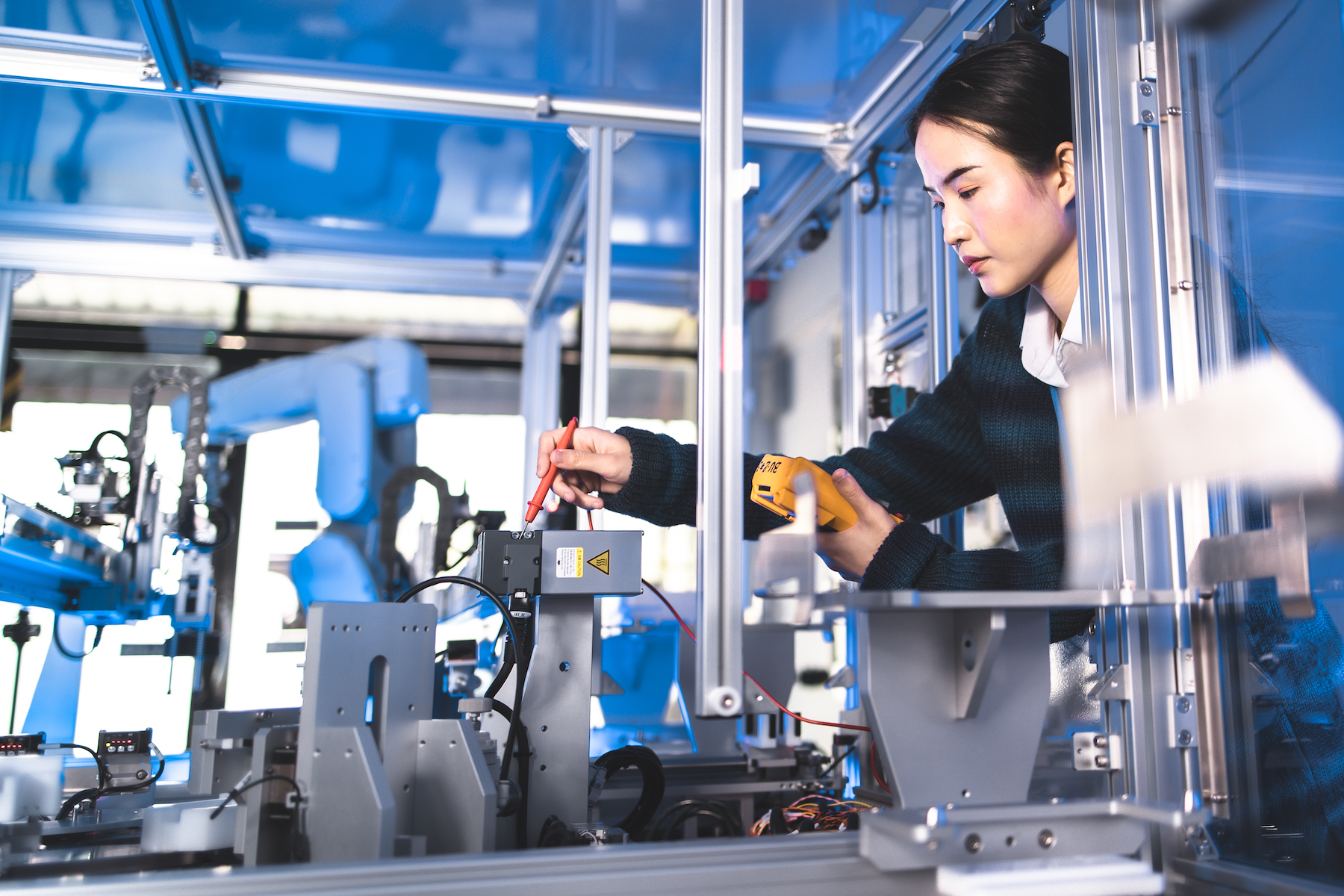
First came the collaborative robots (cobots). Unlike their predecessors, these machines, with reliable safety systems, could coexist and cooperate with humans. Launched into the mainstream by Universal Robots in 2005, these cobots have now proliferated, finding uses in various industries, from pick-and-place operations to welding.
“The imminent third wave of robotics, which mixes simulated training of control systems with reinforcement learning, is about to bring us the ultimate technological marvel: Humanoid Robots.”
Then came the profound advancements in neural nets. Innovations in deep neural networks, coupled with substantial computational power and data, have enabled machines to understand and process human language. More recently, these technologies are upending industries dealing with image and video processing, led by giants like Dall-E, Photoshop, and Tesla’s Full-Self Driving.
But the imminent third wave of robotics, which mixes simulated training of control systems with reinforcement learning, is about to bring us the ultimate technological marvel: Humanoid Robots. What was once a dream, spanning decades, is now a tangible reality, achievable within months.
Investment giants like Tesla, Google, Sanctuary AI, and Apptronik already see the horizon. And as the post-pandemic world grapples with worker shortages and the repercussions of remote work, businesses are increasingly relying on automation. This demand has now eclipsed traditional market reactions like wage hikes, causing governments worldwide to reevaluate their strategies.
A Decade of Robotic Renaissance

The implications are vast and profound. Within the next decade, humanoid robots could permeate every aspect of our daily lives. Governments, businesses, and even families need to anticipate and adapt to this forthcoming change.
As it stands, with only a few notable players in the robotics industry, Canada is at a pivotal juncture. Our next steps will determine if we become a leader or merely an observer in the global robotics race.
Canada’s Blueprint for Robotic Supremacy
For Canada to secure its place as a robotics superpower, here are some actionable measures:
Government of Canada:
- Venture Investments: Mandate diverse investment models for the venture capital space, tailoring them to the unique needs of hardware and software startups.
- Tax Incentives: Offer tax breaks for robotic entrepreneurs ensuring Canadian intellectual property remains within the nation. Include tax clawbacks to deter M&A by foreign companies dislocating the IP and talent.
- Manufacturing & Supply Chain: Establish a robust supply chain and manufacturing hub to facilitate the creation and deployment of robots.
- Corporate Collaborations: Create lucrative incentives for major tech corporations like Nvidia, IBM, and Intel to invest and innovate in Canada.
- Futuristic Policy: Experiment with concepts like the 4-day workweek and universal income to pre-emptively shape policies for the robotic future.
Canadian Academia:
- R&D Enhancement: Prioritize research and development in humanoid robotics.
- Talent Acquisition: Actively recruit accomplished professors and researchers with highly competitive compensation packages.
- Open Innovation: Encourage collaboration to speed up technological progress, focusing on applications for humanoid robots and their potential role in addressing global challenges like climate change.
Finance:
- Robotic Investment: Encourage investors to back promising robotics ventures, forming a crucial feedback loop to foster Canadian startups.
The future is undeniably robotic. For Canada, the choice is clear: seize the moment and lead the world into a new era, or risk being left behind in the annals of history.
-
 Canada’s Semiconductor Strategy: Are We Mistaking “Not Winning Everywhere” for “Not Competing at All”?
 Glen Lougheed
CEO
Applied Post
Glen Lougheed
CEO
Applied Post
-
 Canada’s Tech Future Depends On What We Do Next
 Kevin d’Entremont
President & CEO
TECHNATION
Kevin d’Entremont
President & CEO
TECHNATION
-
 Digital Trust and Verification in Action: A Catalyst for Economic Prosperity
 Joni Brennan
President
DIACC
Joni Brennan
President
DIACC