
Rethinking Menopause for the Health of Women and the Future of Our Economy
Menopause is a natural life stage, but Canada’s lack of awareness, healthcare support, and workplace accommodations is costing women their health, careers, and the economy billions each year.

Menopause has long been one of life’s biggest mysteries—shrouded in stigma and spoken about in hushed tones, if at all. Across Canada, a national menopause movement is gaining momentum. And the stakes are high.
“The fastest growing group of working women are aged 45 to 55, right when most experience menopause.”
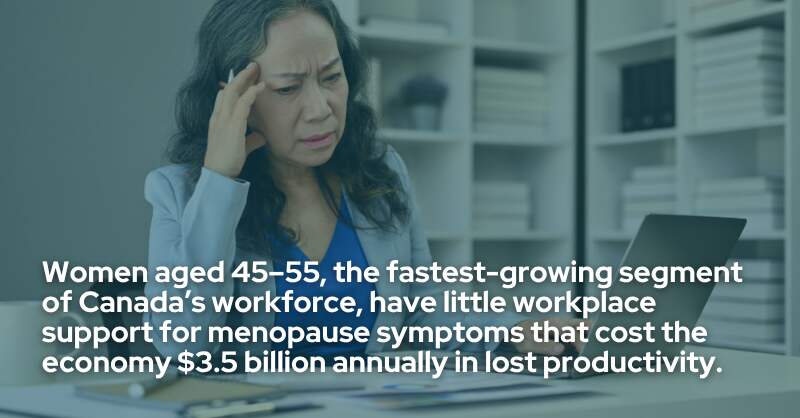
Women over 40 now make up one quarter of Canada’s workforce, which is the largest proportion in our country’s history. We’ve never had so many women in midlife playing such a vital role in the economy. The fastest growing group of working women are aged 45 to 55, right when most experience menopause. Despite the prevalence of more than 30 symptoms that can disrupt work and life—from sleep deprivation and brain fog to joint pain, anxiety and hot flashes—support remains scarce. The result? A staggering $3.5 billion loss to the Canadian economy each year, including lost productivity and missed workdays.
The Cost to Healthcare and Society
The economic impact only scratches the surface of the broader costs to our healthcare system. Menopause is poorly understood, not just by women themselves but also by many healthcare providers. As a result, women often cycle through multiple doctors, undergo unnecessary testing and receive a patchwork of treatments aimed at managing individual symptoms. This lack of coordinated, informed care drives up healthcare costs and leads to poor health outcomes.
“It is estimated that up to one in ten women step back or leave their jobs due to untreated symptoms.”
It’s time to rethink menopause not just as a natural stage of life, but as a significant health transition with far-reaching economic, social and personal consequences. When challenging symptoms are dismissed or left unaddressed, they become a barrier to women achieving their full potential. They undermine physical and mental health, disrupt families, strain healthcare systems, and drive experienced, capable women out of the workforce or into lesser roles. It is estimated that up to one in ten women step back or leave their jobs due to untreated symptoms. This loss of leadership and expertise is highly preventable.
That’s why we created the Menopause Foundation of Canada: to educate, advocate and position menopause as a critical health, economic and workplace issue that demands urgent attention and action. Through our reports—The Silence and the Stigma: Menopause in Canada, Menopause and Work in Canada, and Menopause and Nursing in Canada—we helped ignite a national conversation and brought attention to an issue hiding in plain sight.
How to Rethink Menopause
To tap into the full potential of women, Canada must act. Here’s how:
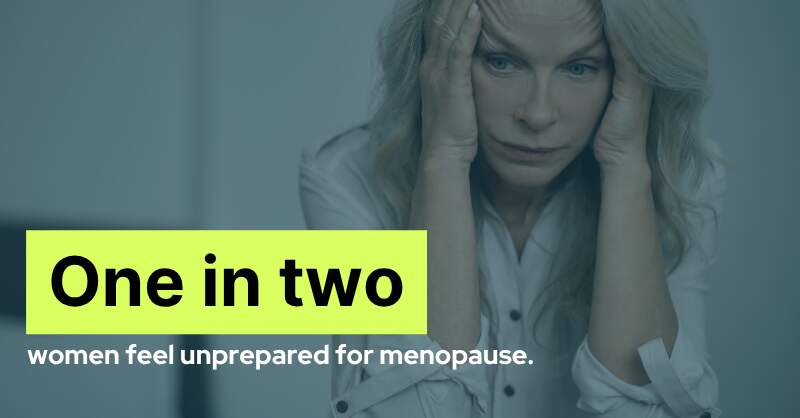
- Close the menopause knowledge gap: One in two women feel unprepared for menopause. While most expect hot flashes, many are blindsided by symptoms affecting their mental health, sleep, cognition and sexual well-being. Few know that perimenopause can begin several years before their last period, or that estrogen loss increases the risk of heart disease, osteoporosis and genitourinary issues. Menopause is natural, but suffering through years of unmanaged symptoms should not be the norm. The Menopause Foundation of Canada offers free, evidence-based resources to empower women and inform policy and public awareness. Governments and public health agencies must make menopause education a priority. It’s time to act.
- Improve access to menopause care and treatment: Most healthcare professionals in Canada receive little or no menopause training, leaving them ill-equipped to provide proper care and support. This reality fails half the population. We don’t expect people to tough out puberty or pregnancy, so why menopause? This isn’t just unfair; it reflects a deep inequity in how we value women’s health across their lifespan. Every provider who sees midlife women—from nurse practitioners to cardiologists to psychiatrists—must understand menopause. We are calling on medical institutions, healthcare providers and governments to invest in ensuring all women have access to high-quality menopause care and treatment.
- Create menopause-inclusive workplaces. Education and open conversations about menopause at work can drive real change. Supporting women at all stages of life is not only the right thing to do; it also benefits the bottom line. Retaining the leadership, expertise and knowledge of midlife women directly strengthens workplace performance and culture. That’s why more than 150 companies have joined our Menopause Works Here campaign, including Sun Life, IKEA, AMEX, PwC and BMO. Our free Menopause Inclusive Workplace Playbook provides a five-step action plan and practical tools to help employers retain talent and improve wellbeing across teams.
“Menopause is natural, but suffering through years of unmanaged symptoms should not be the norm.”
A Vision for the Future
Momentum is growing. But we must keep pushing.
We have an opportunity to rewrite the story of menopause, replacing ageist stereotypes with powerful truths: that this life stage is one of strength, wisdom and renewal. Many women report feeling happier, more energized and purposeful in menopause. They launch businesses, lead teams, mentor others, and drive positive change in their families, workplaces and communities.
“Imagine a Canada where every woman enters menopause informed and supported by healthcare systems that listen, by workplaces that adapt, and by a culture that not only understands but values women as they age.”
But this isn’t just about individual resilience. It’s about how we, as a country, choose to value women’s health, contributions and leadership.
Imagine a Canada where every woman enters menopause informed and supported by healthcare systems that listen, by workplaces that adapt, and by a culture that not only understands but values women as they age, recognizing their continued growth and contributions, where symptoms are taken seriously and addressed with care, and where women are empowered to thrive and reach their full potential.
That’s not just the future of women’s health. That’s the future of our economy. And it begins with recognizing menopause for what it truly is: a turning point we can no longer afford to overlook.
About the Expert
-

Janet Ko is the President and Co-Founder of the Menopause Foundation of Canada, a national nonprofit dedicated to raising awareness of menopause and its impact on women and society. A passionate advocate for women’s health, she is committed to closing the menopause knowledge gap, improving access to care and treatment, and creating menopause inclusive workplaces. She was recognized as one of the Top 25 Women of Influence in 2023 for her impact and leadership.
See more
-
 Menopause Care in Canada: The Moment Must Become a Movement
 Viktoria Friedrich
Country President & General Manager, Pharmaceuticals
Bayer Canada
Viktoria Friedrich
Country President & General Manager, Pharmaceuticals
Bayer Canada
-
 Closing the Women’s Health Gap: Why Canada Must Invest in Femtech Now
 Louise Pichette
Director of Health Sciences
MaRS Discovery District
Louise Pichette
Director of Health Sciences
MaRS Discovery District
-
 The Economic Impact of Menopause: How Sleep Disruption Affects Canada’s Workforce
 Michelle Jacobson
Co-Founder
Coven Women's Health
Michelle Jacobson
Co-Founder
Coven Women's Health