
Powering the Global Energy Future: Anticipating the Next Great Energy Transformation
As global energy demand hits record highs, the pressure is on for a total infrastructure overhaul. Canada’s unique mix of traditional resources and critical minerals positions the country to lead this generational transformation.


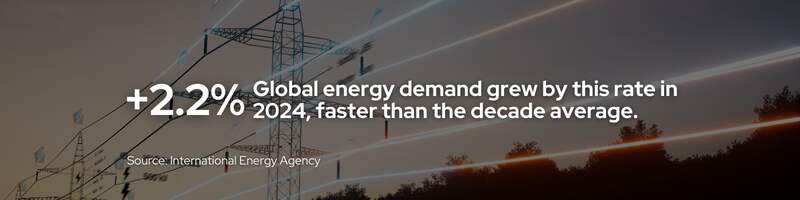
Since the beginning of the 1950s, global demand for energy has been on a rapid upward trajectory, a trendline unlikely to change anytime soon. The world continues to need and use more energy every day, as billions of people seek to accommodate their needs, and as a range of industries, commercial and residential buildings, data centres and transportation compete for available power.
At the same time, while we currently see and expect continued progress on the transition to renewable energy, rising demand is putting pressure on supplies from all sources, including fossil fuels. Consider that about 30% of the world’s population still depends on traditional biomass, our oldest source of energy, for cooking. Or that demand for hydrocarbons in general has yet to peak or even plateau, with the portion of total energy usage represented by burning fossil fuels changing little since 1990, even with massive growth in renewables. In fact, over that same period, total energy use has increased by 70% worldwide.
Energy Accessibility and Population Growth
Against this backdrop of growing demand, two factors will be instrumental in shaping the world’s energy future.
The first is energy accessibility. The global population is expected to grow by an estimated two billion people in the coming decades, with much of that growth taking place in the rapidly developing and industrializing global South. That will bring the world’s population to nearly 10 billion people by 2050, exponentially increasing demand for housing, transit, air conditioning, lighting and digital services — all of which require increased access to energy.
Energy Security in a Fragmented World
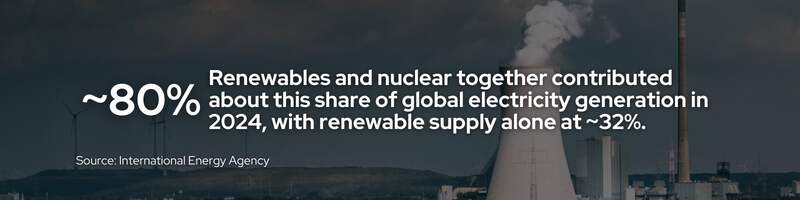
A second, related factor is energy security. Geopolitical tensions and policy-driven trade disruptions are reminders that energy access must be protected to ensure economic growth, societal wellbeing and an orderly energy transition from finite fossil fuels to an energy system built on reliable, abundant renewable or low-carbon power. As demand for energy rises across the globe, meeting energy needs will have a decidedly regional flavour as countries seek to protect their resources, secure supply chains, and shape their energy systems according to their distinct circumstances.
Both factors lead to some fundamental questions about the world’s energy future:
- Is there enough energy supply to meet demand?
- Will we see an extension of fossil fuel use well beyond what was expected?
- Will this demand stunt the very real progress of, and investment in, the energy transition?
- Are we entering a new phase of energy weaponization?
- Will energy “hoarding” limit access to power for some regions, creating both a moral and an economic imperative to deliver secure energy?
- And what will the evolving energy environment mean for a planet and its people, who are struggling to cope with the intensifying negative effects of climate change?
Is the Current Energy System Enough?
“Clearly, powering the global energy future is poised to become one of the most complex and critical challenges facing the world today.”
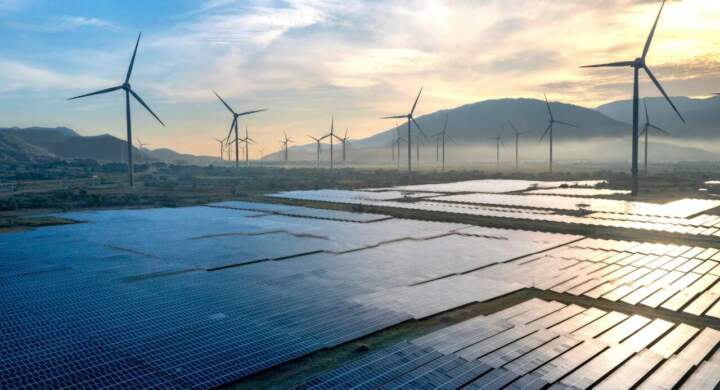
While the answers to those questions, and the future of global energy in general, are uncertain, one thing is clear: meeting the escalating demand for global energy based on the world’s current infrastructure will not be possible. Although the transition to renewable energy sources like wind and solar remains an essential path, climate mitigation, competing against demand, access and security considerations, is no longer the only driver of the global energy agenda. The key need today is to reengineer the global economy, which will require an overhaul of how the world produces, stores, and distributes power.
This fundamental transformation of the energy ecosystem is a process that will require enormous quantities of raw materials, trillions of dollars in new physical infrastructure, the application of highly innovative technological solutions and unprecedented levels of investment.
Clearly, powering the global energy future is poised to become one of the most complex and critical challenges facing the world today.
Canada poised for leadership in the new global energy landscape
“Canada possesses both established and growing expertise in areas like complex oil extraction, cold weather LNG production and carbon capture, utilization and storage (CCUS) technology and capacity.”
What is Canada’s position in this evolving energy landscape? At Mackenzie, we believe, as many do, that energy developments place Canada on the cusp of becoming one of the world’s true energy leaders. In many ways, we’re already there. Canada ranks third in global oil reserves, fourth in oil production and is the fifth largest producer of natural gas. Our country is also the world’s third largest producer of hydroelectricity and the second largest of uranium, both of which are crucial to low-emission power.
Canada is already ranked eighth globally in wind power generation. Canadians may think of Alberta as oil country, but wind accounts for more than a fifth of the province’s electricity generation capacity. More importantly for the green energy future, Canada ranks in the top three in the world for key critical mineral reserves, such as nickel, cobalt and rare earth elements, all essential building blocks for renewable power infrastructure.
Beyond raw materials and resources, Canada possesses both established and growing expertise in areas like complex oil extraction, cold weather LNG production and carbon capture, utilization and storage (CCUS) technology and capacity. Add to these advantages strong, secure institutions, clear and fair rules of law and financial stability, and Canada’s position as a reliable producer and exporter of energy is further strengthened. In an increasingly fragmented and unpredictable world, Canada stands apart.
Opportunities for Canadian Investors
That’s good news for the Canadian economy and Canadian investors, who have the opportunity to win twice in the race to meet the world’s demand for energy: first, by investing in Canadian energy companies and projects; and second, by investing in what’s good for Canada, in places across the globe that need Canadian energy. The key will be how quickly, effectively and sustainably Canada can move from, in the words of Benoit Gervais, Head of the Mackenzie Resource team, “resource-rich to resource-ready”.
Being “resource ready” isn’t just about scaling up quickly. For example, while mining projects are a priority for both the federal and provincial governments, developing projects of this scale must be done responsibly, by managing carbon and water intensity of production, carefully monitoring potential deforestation and biodiversity impacts, and working with local communities and Indigenous Peoples to ensure consent, cooperation and sharing of economic benefits.
The Ongoing Role of Fossil Fuel and LNG
Developing and delivering energy responsibly also doesn’t mean walking away from Canada’s rich fossil fuel reserves. As we steadily progress towards an energy system based on renewables, the world will continue to depend on hydrocarbons for decades to come. But not all fossil fuels will be treated equally.
Natural gas, with the lowest carbon emissions of fossil fuels, can act as a much-needed bridge fuel on the road to alternative and more climate-friendly power sources, helping lower system-wide emissions in regions that still rely on coal, as well as providing a reliable energy source to support the essential manufacture of renewable components and infrastructure.
Liquified natural gas (LNG) will also play a key role, presenting a significant export opportunity to European, but especially Asian markets, where Canada has a geographical shipping advantage. We have a second advantage in this area, too, due to Canada’s low-carbon electricity grid and colder temperatures, which enhance the production of LNG with lower overall emissions than other jurisdictions.
The Need for Decisive Action
“Energy policy uncertainty and project gridlock have historically weakened Canada’s ability to fully realize the country’s leadership potential.”
While there is little doubt about the potential opportunity, leveraging Canada’s advantage requires a renewed energy commitment from the government and the energy industry. Underinvestment, energy policy uncertainty and project gridlock have historically weakened Canada’s ability to fully realize the country’s leadership potential.
Now, standing at the dawn of a new global energy era, there is a growing consensus that Canada must act quickly and decisively to participate in this transformation and deliver the related economic benefits to Canadians.
We’re Going Deep to Provide the Energy Insights Investors Need
So, what will it take to get there? That’s the question we’ll seek to answer over the next few months in partnership with TheFutureEconomy.ca. Through a series of videos hosted by John Cook, Co-Lead of the Mackenzie Greenchip team, and insights authored by other thought leaders at Mackenzie, we’ll dive into the complex issues and investment opportunities impacting Canada’s energy leadership ambitions.
In interviews with some of Canada’s (and the world’s) energy experts, we’ll cover topics like transportation, Indigenous rights, Canada’s renewables roadmap, global and domestic demand for Canadian energy, the future of fossil fuels in the energy mix, and leveraging our critical minerals advantage.
At Mackenzie, we view the global energy transformation as a truly generational opportunity for Canadian investors. That’s why Mackenzie is committed to providing the broadest possible range of insights and investment solutions tied to this trend. To make the most of this opportunity, investors and advisors need the kind of information this series will provide to ensure they can make the best decisions possible when it comes to investing in both Canada’s and the world’s energy future.
Disclaimer
Commissions, trailing commissions, management fees and expenses all may be associated with mutual fund investments. Please read the prospectus before investing. Mutual funds are not guaranteed, their values change frequently and past performance may not be repeated. The content of this document (including facts, views, opinions, recommendations, descriptions of or references to, products or securities) is not to be used or construed as investment advice, as an offer to sell or the solicitation of an offer to buy, or an endorsement, recommendation or sponsorship of any entity or security cited. Although we endeavour to ensure its accuracy and completeness, we assume no responsibility for any reliance upon it.
About the Expert
-
David Rutherford is AVP, Sustainability Research and Insights at Mackenzie Investments. David leads the delivery of sustainability insights to investment managers and the stewardship team, and supports the firm’s thought leadership on themes shaping advisors and investors. Before joining Mackenzie in 2025, David spent nearly a decade at NEI Investments and its parent company, Aviso, where he led NEI’s responsible investing team, oversaw a rebrand anchored in the firm’s responsible investing legacy, and helped develop Aviso’s enterprise-wide sustainability strategy. Earlier in his career, he held senior marketing and communications roles across Canadian and U.S. financial services firms, including a previous tenure at Mackenzie Investments.
Mackenzie Investments is a Canadian asset management firm providing investment solutions to retail and institutional clients. It offers a broad range of mutual funds and investment strategies, including sustainable and environmental investing.
See more
-
 The Culture and Politics of Building an Energy Superpower
 John Cook
Senior VP & Portfolio Manager
Mackenzie Investments
John Cook
Senior VP & Portfolio Manager
Mackenzie Investments
 Jackie Forrest
Executive Director
ARC Energy Research Institute
Jackie Forrest
Executive Director
ARC Energy Research Institute
 Dr. Bruce Lourie
President
Ivey Foundation
Dr. Bruce Lourie
President
Ivey Foundation
-
 Canada’s Energy Superpower Moment: What It Will Take to Build
 Christine Healy
President & CEO
Northland Power
John Cook
Senior VP & Portfolio Manager
Mackenzie Investments
Christine Healy
President & CEO
Northland Power
John Cook
Senior VP & Portfolio Manager
Mackenzie Investments
-
 Consent, Not Checkboxes: Energy Projects and Indigenous Rights in Canada
John Cook
Senior VP & Portfolio Manager
Mackenzie Investments
Consent, Not Checkboxes: Energy Projects and Indigenous Rights in Canada
John Cook
Senior VP & Portfolio Manager
Mackenzie Investments
 Raylene Whitford
Director
Canative Energy
Raylene Whitford
Director
Canative Energy