
Nunavut’s Untapped Potential: The Infrastructure Gap and Arctic Security

The Government of Canada recently signed the largest land and resource devolution agreement in Canadian history. The agreement involves the official transfer of responsibilities for Nunavut’s public lands, natural resources, and rights with respect to water to the Government of Nunavut. Nunavummiut can now decide how lands, freshwater, and non-renewable resources are used and reap the benefits of those decisions—which up to this point have been made in Ottawa.
Nunavut is the last jurisdiction within Canada to sign such an agreement. With over 85% of Nunavut’s population being Inuit and Nunavut making up one-fifth of Canada’s total land mass, this is a significant step towards Inuit self-determination.
“Our country needs a strong commitment to Nunavut—one that addresses its growing infrastructure gaps and ensures all Canadians, especially Nunavummiut, can realize the benefits of the national energy transition.”
The federal government’s important work to support and empower Nunavut is, however, just beginning. As we near the release of another federal budget, our country needs a strong commitment to Nunavut—one that addresses its growing infrastructure gaps and ensures all Canadians, especially Nunavummiut, can realize the benefits of the national energy transition.
Growing Infrastructure Gap
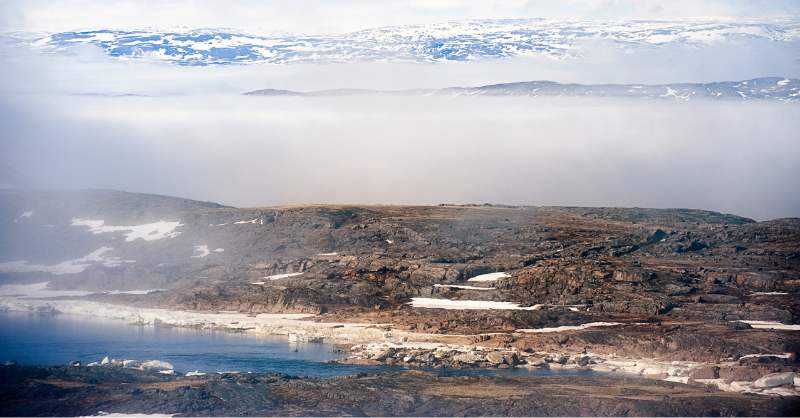
The gap between the state of Nunavut’s infrastructure and that of the rest of Canada is widening. As much of Canada benefits from energy innovation and rapid climate action, Nunavut remains the only territory or province without an infrastructure link to the rest of Canada. It is one of two jurisdictions in all of North America that still solely relies on diesel generation for energy.
With no regional grid connectivity across the territory, communities must rely completely on local diesel plants. Approximately 250 million litres of fuel are imported to Nunavut each year for power generation, home heating, aviation, and transportation.
“Diesel and gasoline costs in Nunavut increased by 11% in 2024. And even though power costs are heavily subsidized to maintain some degree of affordability, the increasing cost of diesel has a direct impact on the quality of life for Nunavummiut.”
The dependency on, demand for, and transportation costs of diesel continue to drive price increases for fuel. Diesel and gasoline costs in Nunavut increased by 11% in 2024. And even though power costs are heavily subsidized to maintain some degree of affordability, the increasing cost of diesel has a direct impact on the quality of life for Nunavummiut and drives other cost increases, like food and shelter.
Nunavut’s energy woes have a domino effect, impacting education, healthcare, housing, and economic activities. These intertwined challenges have trapped the territory in a cycle of dependency and severe underdevelopment. Addressing the infrastructure gap is not just a matter of economic development; it’s a matter of fundamental human rights.
The Opportunity in Canada’s Arctic

Nunavut accounts for 20% of Canada’s total land mass and enjoys a prominent position in Canada’s Arctic. For us to realize a bold vision for continued Canadian sovereignty, we must begin investing in our future and in a connected north.
Nunavut’s access to some of Canada’s northernmost ports and harbours is economically critical to safeguard. It is where our nation desperately needs to strengthen Arctic security and where critical mineral exploration and mining potential is vast.
The Inuit of Nunavut have knowledge of the land that will help protect and preserve it for generations to come. But after years of injustices, inequities, and neglect, the infrastructure required to build up a thriving economy is out of reach.
“Nunavut’s access to some of Canada’s northernmost ports and harbours is economically critical to safeguard. It is where our nation desperately needs to strengthen Arctic security and where critical mineral exploration and mining potential is vast.”
Nunavut and the rest of the country are at a crossroads. Canada cannot boast of energy transition initiatives or climate action while leaving Nunavut out of the picture. We need Nunavut to become more integrated rather than more isolated, and major, nation-building investment is needed to do so.
Energy Infrastructure Will Unlock Potential
The Kivalliq Hydro Fibre-Link (KHFL) is a project developed by Nukik Corporation—a 100% Inuit-owned organization—that will bring renewable energy and broadband connectivity to the Kivalliq region of Nunavut. The KHFL consists of a 1,200-kilometre transmission line that would start around Churchill in Northern Manitoba, taking several communities and mines off of burning diesel.
The project stands not only as the first step in connecting Nunavut to the rest of Canada with critical infrastructure, but as a nation-building project that will deliver on climate action and carbon reduction, economic reconciliation and Inuit self-determination, and Arctic security and sovereignty. It will also enable improved access to health and education services via high-speed internet.
With this infrastructure in place, other gaps can begin to close. The KHFL will establish foundational infrastructure in the Kivalliq that will change the future of Nunavut and its people through economic opportunities, such as the ability to generate and sell electricity to other jurisdictions in the future and participate in Canada’s energy transition.
Delivering on Canada’s Commitments to Energy and Nunavut
The Prime Minister’s mandate letter to the Minister of Natural Resources in 2021 specifically outlined the need to work with Indigenous partners and communities to support the transformation from diesel-fueled power to clean, renewable, and reliable energy by 2030. The Nunavut Agreement, among various other government strategies and mandates, also commits the government to similar collaboration with Indigenous communities and environmental action.
A report issued by Nunavut Tunngavik calls to attention that while Nunavut’s infrastructure gap is mentioned by elected leaders, little has been done to action a solution. The report reinforces that the “infrastructure gap cannot remain just a talking point, recognized but not remedied.”
“This lack of serious and long-term commitment from Ottawa is putting the schedule at risk, ultimately making major shovel-worthy projects more expensive to complete.”
Investment in Nunavut is sorely lacking from the federal government. For example, the KHFL received pre-feasibility financial support from the government but is still waiting on a funding commitment of the magnitude required to get such a major Inuit-owned project to financial close. This lack of serious and long-term commitment from Ottawa is putting the schedule at risk, ultimately making major shovel-worthy projects more expensive to complete.
Our neighbours to the south have been doing what we should be doing: investing and incentivizing participation in the energy transition. The Biden administration reinforced a commitment to more than $30 billion in investments into the country’s electric grid this past Fall. The U.S.’s Inflation Reduction Act is further aimed at incentivizing investments in clean technology, transmission infrastructure, and renewable energy.
Canada must similarly escalate its efforts or risk falling behind in the global energy transition.
Moving Forward: Envisioning a Connected Nunavut in Budget 2024
Nunavut stands as a significant source of untapped economic potential for Canada—potential that energy infrastructure and a connected Nunavut could start to unlock. The government’s recent land devolution agreement was a promising step towards the kind of substantial change Nunavut needs to see, and it can continue that momentum and positive progress in Budget 2024.
The upcoming federal budget presents a crucial opportunity for action. The Government of Canada must translate its commitments into concrete investments in Nunavut’s infrastructure. This includes not just financial support but also policy initiatives that align with the goals of economic reconciliation, environmental sustainability, and Indigenous self-determination.
“The upcoming federal budget presents a crucial opportunity for action. The Government of Canada must translate its commitments into concrete investments in Nunavut’s infrastructure.”
All Canadians should be able to participate in the energy transition, and Inuit and Nunavummiut are currently the ones left out because “Nunavut is too far,” “Nunavut is not very populated,” or because “this has never been done before.” It’s time to stop making excuses.
The path forward is clear: A connected, empowered Nunavut is vital for a thriving, inclusive Canada.
-
 From Rubble to Resource: Building Canada’s Circular Construction Future
 Meredith Moore
CEO
Ouroboros Deconstruction
Meredith Moore
CEO
Ouroboros Deconstruction
 Michelle Laidlaw
Associate VP of the Home Portfolio
Co-operators
Michelle Laidlaw
Associate VP of the Home Portfolio
Co-operators
 Paul Shorthouse
Managing Director
Circular Economy Leadership Canada
Paul Shorthouse
Managing Director
Circular Economy Leadership Canada
 David Hughes
President & CEO
Generate Canada
David Hughes
President & CEO
Generate Canada
-
 The Importance of Innovative Collaborations in Construction
 Chloe Smith
CEO and Co-Founder
Mercator
Chloe Smith
CEO and Co-Founder
Mercator
-
 Building Our Future: Priming Canada’s AEC Sector for Global Success
 Mansoor Kazerouni
Global Director of Architecture and Urbanism
Arcadis
Mansoor Kazerouni
Global Director of Architecture and Urbanism
Arcadis