
Navigating the Road to Fleet Electrification

Electric vehicles (EVs) are poised to disrupt the transportation industry in the same way gas-powered vehicles did 90 years ago. According to the Canada Energy Regulator, battery EVs have grown steadily since 2017, when they represented less than 1% of all registrations. Today in Canada, more than one in every 10 new cars is a zero-emission vehicle (ZEV).
The Benefits of Change

The benefits of pursuing fleet electrification—both financial and otherwise—are considerable. Ottawa is incentivizing companies to begin decarbonizing their fleets in an effort to meet targets set in its Emissions Reduction Plan, which calls for all new light-duty vehicles to be zero emissions by 2035, and medium and heavy-duty vehicles by 2040. According to a 2023 Deloitte report, around $3 billion in government funding will be available through 2027, with the goal of reducing the transportation sector’s environmental impact, as it generates more than 25% of Canada’s greenhouse gas emissions.
“Fleet electrification plays an increasingly important role in supplier selection as more and more companies, customers, and investors demand emissions calculations.”
Financial incentives aside, fleet electrification plays an increasingly important role in supplier selection as more and more companies, customers, and investors demand emissions calculations. Suppliers that commit to environmental, social and governance (ESG) targets will have a competitive edge as the shift to carbon-efficient transportation intensifies.
In addition to environmental benefits, EVs also support the well-being of drivers and other workers, opening an important opportunity to attract and retain talent. Drivers appreciate the fact that ZEVs are close to silent, resulting in far less cabin noise. The heavy, low-mounted battery also significantly reduces the vehicle’s centre of gravity, thereby improving handling and stability. Drivers also report a feeling of pride by not contributing to pollution levels.
EVs can transform operations as well, as drivers can head directly inside facilities without exhaust fumes impacting workers’ health. Indoor depots can be designed with much smaller, lower-cost, and more efficient ventilation systems, and doors can remain closed to retain treated air in hot or cold weather.
“EV trucks cost anywhere from 30% to 40% less to maintain than internal combustion engine (ICE) vehicles.”
Switching to EVs also brings lower maintenance costs compared to regular vehicles. As a result, EV trucks cost anywhere from 30% to 40% less to maintain than internal combustion engine (ICE) vehicles.
It’s no wonder that many companies in Canada are electing to pursue electric options in their fleets, from IKEA to BC Transit. In fact, the tech company Geotab, which provides sustainability-minded data on commercial vehicle fleets, saw a 72% jump in users between 2022 and 2023.
Plan for Key Challenges to Fleet Electrification
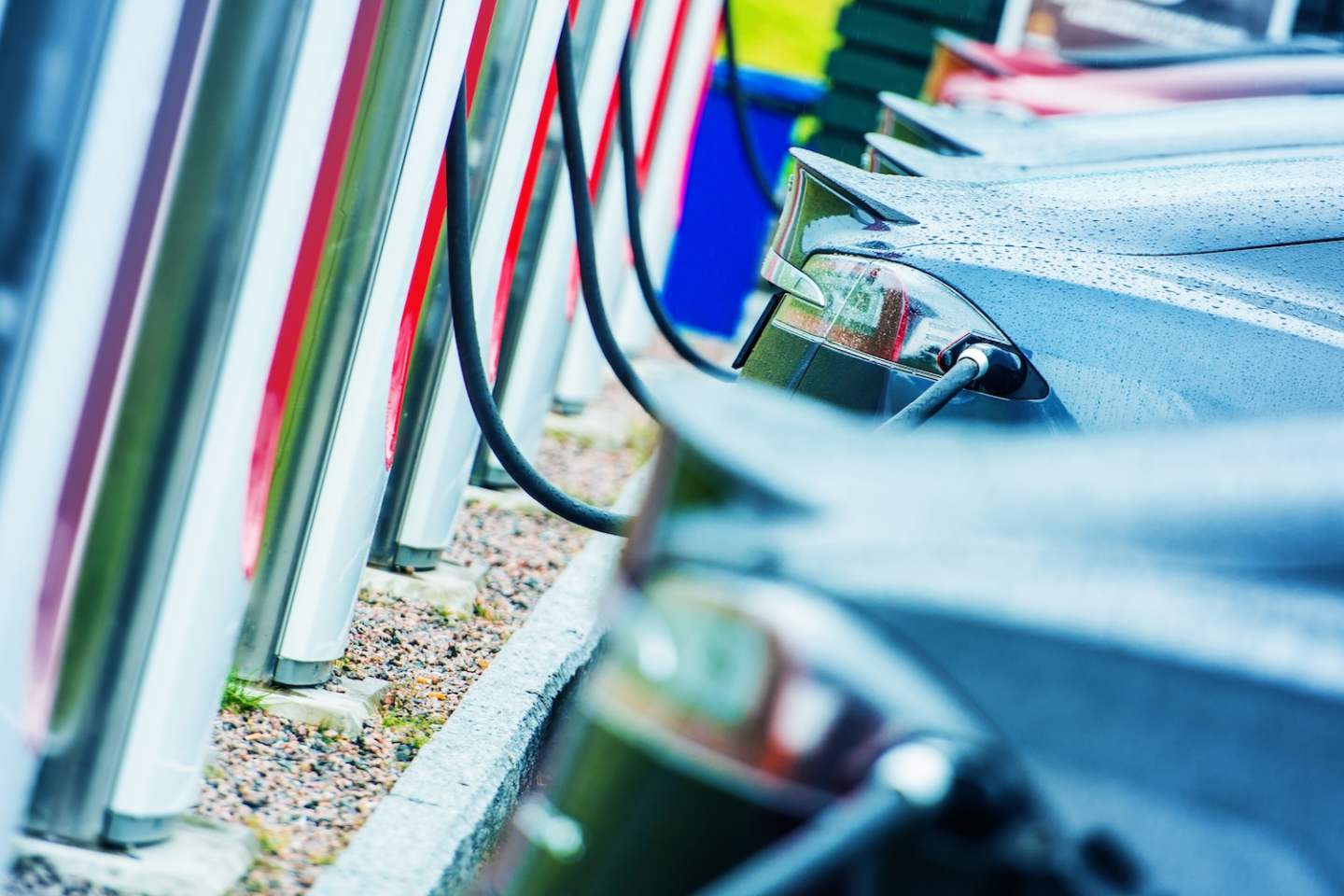
Such a bold transformation requires a thoughtful approach to predict and prepare for as many challenges that might be possible along the way, especially in an area that is still emerging. Expect such long-term planning to sometimes be at odds with near-term business needs.
The initial challenge lies in major upfront costs where the return on investment may not materialize for years. The simple fact is that electric trucks are, for now, more expensive than equivalent gas or diesel trucks (though less so as carbon taxes rise).
At the moment, batteries are a significant cost and larger batteries are needed for vehicles to travel long distances on one charge or move heavier payloads. This results in an electric heavy-duty or semi-truck costing up to four times more than its diesel equivalent. Still, it’s expected that as technology improves, the price of EV batteries will come down.
“Fewer than 20% of federally-funded charging stations are in operation.”
A second challenge lies in infrastructure, particularly around charging stations. The Canadian Press reports that fewer than 20% of federally-funded charging stations are in operation—a gap that companies like Purolator are trying to fill. Still, a 2022 report prepared for the federal government says Canada needs 52,000 chargers before 2026 and 200,000 before 2030 to meet EV targets. There are about 23,000 today.
A related concern is the electrical supply companies will need to power fleets within their depots. Buildings or substations may need upgrades, and there is no consensus on who should shoulder those costs.
Another key challenge is supply chains. Gas or diesel-powered vehicles are available much sooner than EVs, forcing companies to wonder if they can wait. For some classes of vehicle, demand far outpaces supply, and the more niche the truck, the more difficult it may be to find.
Case Study: Purolator Pledges $1 billion in Fleet Decarbonization

Environmental sustainability is a pillar of Purolator’s culture, and the company has gone all-in on fleet electrification in an effort to curb its emissions. The initial changes occurred in 2005 when we first experimented by adding more than 500 hybrid EVs to the Purolator fleet.
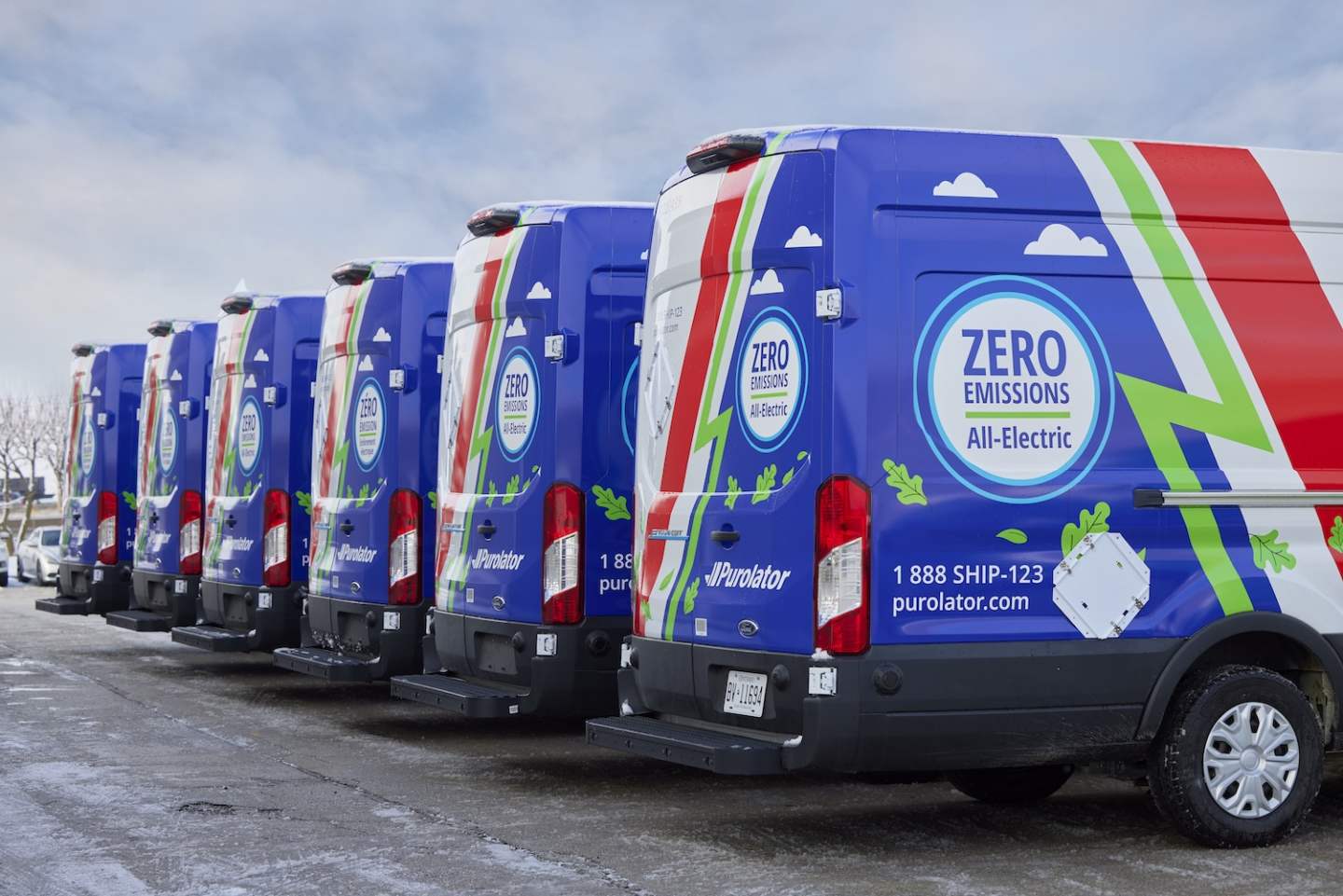
As technology evolved over the years, so did we. In 2020, we piloted all-electric vehicles, and the following year became the first Canadian courier to deploy fully electric delivery vans. Next, we developed a 2030 fleet decarbonization roadmap and, last year, pledged $1 billion to electrify our Canadian network by the end of this decade. This translates into around 60 terminals and the purchase of about 3,500 zero-emission vehicles.
Still, as for any company, electrifying our fleet cannot come at the expense of operations and customer service. To date, we’ve added 100 electric trucks, and we plan to add another 150 this year, securing partnerships with vendors chosen for their market-leading technology and operational support. Complementary moves are also underway, including the rollout of electric cargo bikes (e-bikes) in urban high-density neighbourhoods.
8 Steps for Building a Fleet Electrification Roadmap
What have we learned along the way? Here are eight key lessons that guided our fleet electrification journey.
1. Anchor electrification strategy in corporate values: Such a shift requires support from all levels, and it starts with what’s important to the company. Purolator’s EV roadmap is, in part, guided by corporate values, of which sustainability is a major focus. Consider how each element of your strategy, from fleet operations to infrastructure to organizational, can be tied back to your company’s values.
“A business case for fleet electrification is necessary and is best built thoughtfully with the right team members and expert consultants.”
2. Build strong governance to support collaboration: It’s essential to have a sound strategy reviewed and approved by the board and key stakeholders. A business case for fleet electrification is necessary and is best built thoughtfully with the right team members and expert consultants. Stay transparent and factor in uncertainty and unknowns, emphasizing that learnings will be incorporated along the way. Answer both why this is the right thing to do and how you will accomplish goals, broken down into phases and steps.
“Engage with your utility partner to review electrification plans and understand how the dynamics of local power supply will impact your strategy.”
3. Prepare infrastructure: While long lead times may be a current reality when it comes to service upgrades and installation, the economy of scale will eventually tilt toward a turnkey approach for EVs. Internally, you must determine what charging infrastructure is needed and where it will be built. Engage with your utility partner to review electrification plans and understand how the dynamics of local power supply will impact your strategy. For hardware, examine charging speeds, costs, and any vendor’s after-sale services. Software considerations include data visualizations, energy management, automated reports and the ability to monitor charging status.
4. Prioritize change management, communication, and training: A roadmap to fleet electrification must involve both internal change management and communication strategies. Training will be needed by those most affected, from drivers to load planners to maintenance staff. It’s a big shift, so take care in reskilling and retraining affected workers for a smooth transition.
5. Assess the supply chain: Proactively consider any supply chain risks and the lead times for equipment when strategizing timing and operational rollouts. Flexibility is key here, as the pace of innovation influences the available supply chain, with vehicles and components continuously improving over time. One consideration is to analyze the cost-effectiveness of upcycling existing vehicles in the meantime.
“Test-drive your plans through different use cases, vehicles, chargers, and charge management solutions.”
6. Put strategy to the test: Test-drive your plans through different use cases, vehicles, chargers, and charge management solutions. Make sure you account for all relevant driving conditions, temperatures and geographies that the fleet will encounter, and incorporate all key learnings into the future phases of your roadmap.
7. Engage with external stakeholders early: Your fleet electrification journey will involve those outside the organization, including landlords, utilities, municipalities, fire departments, and insurance companies. Engage early and often during planning. Your operations will change, and these stakeholders must be informed and, where necessary, asked for feedback.
8. Fail fast: Learn as quickly as possible. There will be impacts on a company’s processes and procedures, such as vehicle maintenance and others, understood only after the fact. Consider these “failures” and the time you’ll need to learn and pivot in your upfront plans. This is an evolving area, and some of the unknowns are in the purview of others: permits, guidelines, regulations, infrastructure, and manufacturing. Stay flexible enough to absorb hiccups along the way.
Fleet electrification is a clear path forward for the industry, though one that’s not without its challenges. As with any new system, change can be expensive and time-consuming in the beginning. Look for government and private resources for engineering and power management that can support this journey. Remember that patience is key, as it takes a long-term commitment to realize the full benefits to people, our planet, and your bottom line.
-
 The Future of Sustainable Business in Canada
 Anjana Meel
Consulting Director of Corporate Sustainability and Climate Change
ERM
Anjana Meel
Consulting Director of Corporate Sustainability and Climate Change
ERM
-
 Capturing Canada’s Electric Vehicle Opportunity
 Joanna Kyriazis
Director of Public Affairs
Clean Energy Canada
Joanna Kyriazis
Director of Public Affairs
Clean Energy Canada
 Sicellia Tsui
Communications Specialist
Clean Energy Canada
Sicellia Tsui
Communications Specialist
Clean Energy Canada
-
 EV Charging Is a Trillion-Dollar Problem. Batteries Themselves Might Be the Solution
 Edward Chiang
Chief Executive Officer
Moment Energy
Edward Chiang
Chief Executive Officer
Moment Energy