
In a Volatile Economy, Marketing (and Its Adoption of AI) Isn’t Optional. It’s Survival.
In a volatile economy where attention is currency, businesses that embrace AI-powered, video-first marketing will outpace those clinging to outdated strategies.

With the economy shifting daily, businesses are holding their breath, waiting to see if the next rate hike or policy change will blow a hole in their forecast. But these are also moments of opportunity. Cracks appear. Assumptions are challenged. And bold moves stand out.
One of the first areas to get hit in uncertain times is marketing. Budgets are dissected and often cut. But here’s the reality: attention is the new digital currency, and marketing is how you earn it. Without visibility, demand fades. Leads slow, repeat purchases dip, and while the decline might not be obvious at first, it rarely turns around on its own.
Can AI Save the Day?
No. But if used strategically, it can turn pressure into progress.
Before jumping into tools or platforms, take a serious look at your current strategy. Is it working? Is it current? Competitive? What’s actually driving results? If the answer is “same as last year,” you’re already falling behind.
“Before jumping into tools or platforms, take a serious look at your current strategy. Is it working? Is it current? Competitive? What’s actually driving results?”
To understand where marketing is headed, it helps to revisit where we’ve been:
- 2005: Digital-First
Brands focused on building websites to support e-commerce, hired teams to run their SEO, and spent against traditional media that nudged consumers to spend on their new fancy website - 2015: Mobile-First
It was about designing digital experiences—especially websites and marketing strategies—with smartphones and tablets as the primary platform, rather than an afterthought. Personalization ruled. Omni-channel experiences, influencers, and early UGC took center stage. - 2025: Video-First
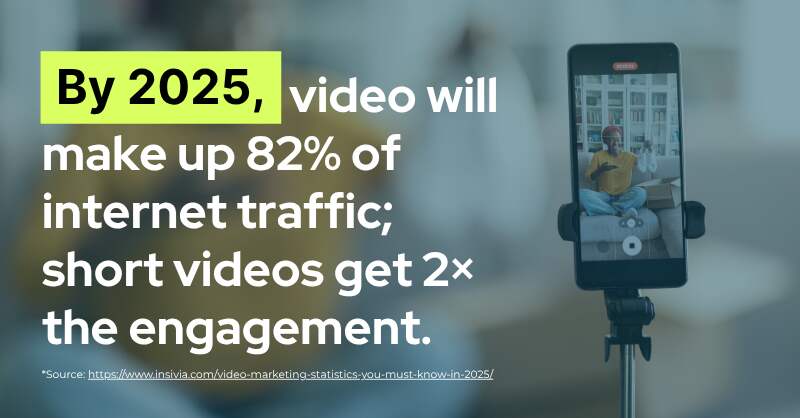
Every social platform, including your website, should transform into a vertical video feed. Digital transformation’s key focus is video-first. We are in an AI-assisted world driven by one device your customer never stops scrolling: their phone.
We now live in a binge culture. Binge-watching, binge-scrolling, binge-consuming. If your brand isn’t producing binge-worthy content, you’re already behind.
“It’s time to evolve your content mix. Think less polish, more ‘real and average’ people. Real stories. Customer videos. Employee voices. Quick, relevant, and frequent.”
Yes, this shift is uncomfortable, especially for marketers who built careers on high-production campaigns. The instinct during a downturn is to cut headcount and fall back on safe tactics. But that’s risky. The race for attention hasn’t slowed. It’s just changed format. And in this environment, authenticity on video isn’t a nice-to-have. It’s the whole game.
That means it’s time to evolve your content mix. Think less polish, more ‘real and average’ people. Real stories. Customer videos. Employee voices. Quick, relevant, and frequent. It’s not about doing more for the sake of it. It’s about doing things differently.
The Good News? The Tech Has Caught Up
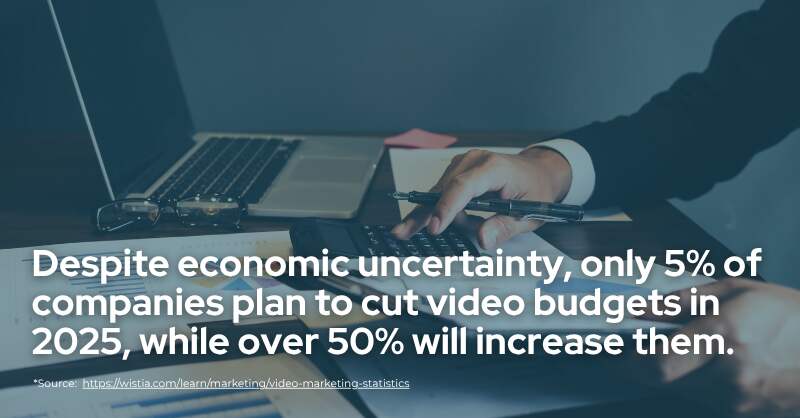
Daily video content no longer needs massive teams or huge budgets. AI tools now handle the production, editing, and distribution. Most platforms cost less than a single influencer post and deliver long-term value.
And this isn’t just about doing more. Most companies today are operating in a cautious, uncertain space. AI, if used intentionally, can be the foundation for a strategy built on authenticity, consistency, and scale.
What’s Coming:
To keep pace, marketers need to pay attention to what’s on the horizon.
“Traditional ad slots are giving way to short-form, vertical, and story-driven video that blends into native environments.”
1. What Comes After Binge-Video? Some trends are already taking shape:
- Predictive and Contextual Content
Content will find the user before they even search, based on behaviour, location, and emotion.
- Short-Form is the New Prime Time
We’re seeing a resurgence in media buying, but not as we knew it. Traditional ad slots are giving way to short-form, vertical, and story-driven video that blends into native environments. Instead of polished 30-second spots, we’ll see raw, authentic, customer-led content driving performance. The lines between content and ad are blurring, and the brands that embrace this shift will win the scroll.
- Conversational and Interactive Media
Content will respond. Through voice, gestures, or selections, people will co-create the experience.
2. AI’s New Role: From Creator to Watchdog
AI isn’t just changing how we create. It’s reshaping the whole lifecycle of content.
- Content Personalization at Scale
AI tailors content to individuals, using real-time data to deliver exactly what each person needs. - Trust and Authenticity Concerns
Deepfakes and synthetic reviews are on the rise. We’ve already been fooled by fake text reviews. Video is the next frontier. - Using AI to Police AI
With the temptation to fake testimonials or social proof, new AI tools are emerging to detect inauthentic content. Platforms like Deepware and Reality Defender analyze facial cues, vocal patterns, and metadata to spot manipulated content. Consumers will expect brands to prove what’s real.
3. From Webpages to Watch Pages: Rewriting the Digital Playbook
There’s no single platform or silver bullet anymore. Brands need to be “watched” everywhere, and do it consistently.
- Diversify Your Video Content
Repurpose content into different formats. The brand cannot be the only video voice. It’s not one to many, it’s now many to many. Make it easy to consume, wherever your audience is. - Lead With Authenticity and Storytelling
Show how your product or service fits into real life through honest, human stories. Let your customers and employees tell those stories in their own words. Don’t shy away from the messy middle—real moments build trust far more than polished perfection ever could. The best marketing doesn’t just tell what you do, it shows you why it matters. - Stay Ahead of Misinformation
With so many people creating content, brand misuse is a growing threat. Larger brands should invest in monitoring tools to catch fake reviews, impersonations, and misrepresented branded content.
As a former marketer, I know how relentless it gets—chasing trends, juggling platforms, doing more with less. I’ve lived that grind, working nonstop to keep the board, the C-suite, and the sales team happy. Let’s face it, marketing is the face. If the team isn’t seeing it and loving it, marketing definitely hears about it.
“Show how your product or service fits into real life through honest, human stories.”
And even with all that effort, moving the needle to meet the level of video production required to thrive—not just survive—is incredibly hard.
“Don’t bring a knife to a gunfight. Your competitors are adopting, so you need to adopt.”
That pace isn’t sustainable. And honestly, it’s not a strategy.
Don’t bring a knife to a gunfight. Your competitors are adopting, so you need to adopt. Marketing needs AI the way online businesses need the internet. The economy didn’t create the need to evolve. It forced us to act on it.
And as history shows, when the ground shifts, the boldest moves lead to the biggest breakthroughs.
About the Expert
-

Bernadette Butler is the CEO and Co-Founder of StoryTap, a Canadian video technology company based in Vancouver that enables brands to scale authentic, brand-led video content at scale, from real customers, staff and their community, powered by AI.
See more
-
 Canada’s Insurance Industry Has A Productivity Crisis. AI Can Cure It.
 Jackson Fregeau
CEO & Co-Founder
Quandri
Jackson Fregeau
CEO & Co-Founder
Quandri
-
 Can AI Help Canada Build the Future of Life Sciences?
 Handol Kim
Co-Founder & CEO
Variational AI
Handol Kim
Co-Founder & CEO
Variational AI
 Martin Enault
Chief Entrepreneur in Residence
Centech
Martin Enault
Chief Entrepreneur in Residence
Centech
 David D. Jones
Managing Director
Merck Canada
David D. Jones
Managing Director
Merck Canada
-
 Adoption Is Not Adaptation: The Reskilling Wave Canada’s AI Strategy Leaves Out
 Tracey Taylor-O’Reilly
Founder
Promentus
Tracey Taylor-O’Reilly
Founder
Promentus