
Financed Emissions: Is That a Megatonne in Your Portfolio?


Responding to growing public expectations for climate action and acknowledging the financial risks that climate change poses, a number of big banks and pension plans have begun the process of aligning their investment portfolios with Canada’s targets for net zero by 2050 or sooner. Being able to accurately track and report financed emissions will be critical to meeting these targets.
What are Financed Emissions?

Put simply, financed emissions are greenhouse gas emissions funded by lending and investment activity. The thinking is that when a financial institution supplies capital to a polluting firm, it assumes some responsibility for the resulting climate impact of that company’s operations.
“For investors to significantly reduce financed emissions, they will eventually have to eliminate high-emitting firms from their portfolios or ensure that emissions reduction plans are being put in place.”
This past summer, the world endured the highest temperatures on record and daily reports of disastrous fires, floods, and storms, resulting in enhanced scrutiny of financial institutions (FIs) that have signed up for net-zero pledges but continue to fund the expansion of fossil fuels. However, we should acknowledge that this shift won’t happen overnight, and there are challenges to overcome as financial institutions work to improve the quality of tracking and reporting and move to reduce financed emissions.
So, what needs to happen?
Financed emissions will rise, all else equal, if a financial institution increases or begins an investment in an asset with emissions greater than zero, or if there is emissions growth from an existing investment. For investors to significantly reduce financed emissions, they will eventually have to eliminate high-emitting firms from their portfolios or ensure that emissions reduction plans are being put in place, and met, by companies they lend to or invest in. Some pension plans, with longer investing horizons and greater sensitivity to climate risk, have been leading the way in planning to reach net zero in their investments.
The Challenges of Sustainability

There are reasons to expect faster progress on financed emissions in the near future. Soon, regulations will mandate their disclosure. The March 2023, release of a guideline document on Climate Risk Management from the Office of the Superintendent of Financial Institutions of Canada sets clear minimum mandatory climate-related financial disclosure expectations that will help advance financed emissions reporting and give it overall greater (and needed) exposure.
The document specifically states that it expects that by 2025, the major banks and insurers of Canada (and other federally regulated financial institutions by 2026) will disclose “Scope 3 greenhouse gas emissions for the period (absolute basis), and the related risks.”
“Scope 1 and 2 emissions disclosure rates by firms are less than 100%. This makes it difficult to have complete information to calculate financed emissions.”
Herein lies the challenge for financial institutions. The category of Scope 3 emissions refers to emissions created in a company’s value chain rather than directly through its own operations. Essentially, financed emissions are made up of other firms’ Scope 1 (direct emissions of a firm’s operations) and Scope 2 (indirect emissions from consumed or purchased electricity) emissions. This is an issue because Scope 1 and 2 emissions disclosure rates by firms are less than 100%. This makes it difficult to have complete information to calculate financed emissions.
To fill the gaps that exist in reporting Scope 1 and Scope 2 emissions, the Partnership for Carbon Accounting Financials (PCAF) recommends using various estimation techniques to address data quality that ranges from more accurate verified emissions (authenticated by a third party) to less accurate estimates based on economic activity data. Recording these data quality values is key since they give a data consumer some context and an overall indication of its accuracy.
“12 FIs in Canada have disclosed financed emissions, including all five major banks (RBC, CIBC, BMO, Scotiabank, and TD). However, a lot of this reporting is not complete as it reports emissions from lending and not investments.”
Financed emissions reporting in Canada using PCAF was limited to small FIs in 2020 and followed by a group of large FIs (banks) in 2022. PCAF’s website tracks financial institutions using PCAF and currently reports that 12 FIs in Canada have disclosed financed emissions, including all five major banks (RBC, CIBC, BMO, Scotiabank, and TD). However, a lot of this reporting is not complete as it reports emissions from lending and not investments.
How to Reduce Financed Emissions
There is no general consensus on how to reduce financed emissions to meet climate targets. Two central approaches are divestment and engagement. Generally, divestment involves selling assets in high-emitting activities whereas engagement involves encouraging and working with firms to reduce their emissions over time.
Strategies employed by FIs usually do not fall wholly into divestment or engagement, rather there is nuance and sometimes a mix of both is used, where the allocation could depend on several factors including the invested firms’ economic sector, general awareness of climate risk, and reaction to demands for climate action.
“Canada is falling behind other jurisdictions on disclosures and should move forward with robust disclosure requirements quickly.”
There are numerous ways to improve the data quality of financed emissions disclosures. One way is via regulation that encourages or explicitly requires firms to disclose their emissions (which in turn would serve as the input for financial institutions’ financed emissions), as it would lower the number of estimates needed. Nearly two years ago, the Canadian Securities Administrators proposed rules for climate-related financial disclosures by firms. Canada is falling behind other jurisdictions on disclosures and should move forward with robust disclosure requirements quickly.
Financial institutions can also improve their own data quality by encouraging the companies they invest in to disclose their emissions using frameworks and standards such as those developed by the GHG Protocol and Task Force on Climate-Related Financial Disclosures. Using standard frameworks and methodologies can help analysts make meaningful comparisons across years and firms. Externally verifying emissions data is another clear way to boost overall data quality.
“Financial institutions, in the interest of meeting their various financed emissions net-zero targets, should know their invested firms’ GHG emissions reduction plans.”
Completing and submitting CDP’s climate change questionnaire can be helpful as the questionnaire draws attention to the nuance of some data values and asks for other granular and useful pieces of information beyond what is normally found in a traditional corporate sustainability report. CDP, formerly the Carbon Disclosure Project, is a London-based not-for-profit charity which holds the most comprehensive collection of self-reported emissions data in the world.
Financial institutions, in the interest of meeting their various financed emissions net-zero targets, should know their invested firms’ GHG emissions reduction plans. This information is usually provided in a sustainability report, or, in a more structured/standardized way, through CDP. Having more information on invested companies can remove guesswork and help to shed light on expected emissions.
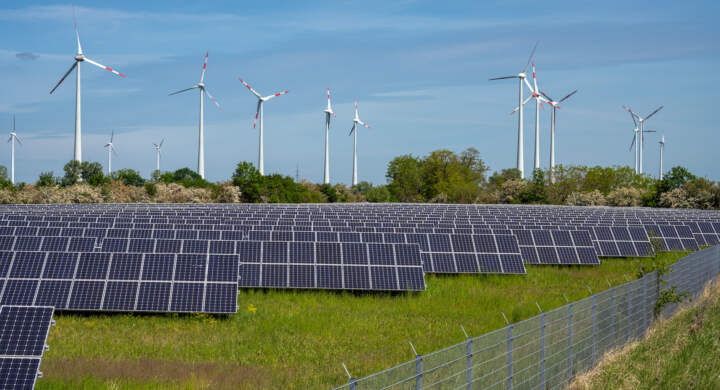
It’s also important to keep in mind that there is a flip side to reducing financed emissions: Increasing investment in climate solutions such as renewable energy. Many Canadian FIs have made substantial pledges, often in the hundreds of billions of dollars, for investing in sustainability. What’s required now is a set of definitions, or a “taxonomy”, so that capital providers can have confidence that investments will in fact reduce GHG emissions. This is another area where other jurisdictions, such as Europe and Australia, are leaving Canada behind. After some delay, the federal government recently announced that it will fund the development of a Canadian taxonomy based on the recommendations of the Sustainable Finance Action Council. It should move quickly to establish a green and transition taxonomy that will help unleash the billions in new capital required to meet this country’s net zero targets.
Investing in a Net Zero Future
Reporting and general awareness of financed emissions are increasing and will accelerate as regulations and standards come into force and are adopted. As financial institutions progress towards their own net zero targets, it will send powerful signals to the market that capital allocators are targeting firms with low emissions or firms that have robust GHG reduction plans.
Capital has influence, and measuring, tracking, and working to reduce financed emissions will be a very important contribution to the global fight against climate change.
-
 Advancing Sustainable Finance in Canada: Key Priorities for a Low-Carbon Economy
 Olaf Weber
CIBC Chair in Sustainable Finance
Schulich School of Business
Olaf Weber
CIBC Chair in Sustainable Finance
Schulich School of Business
-
 Pension Reform in Canada: How to Build a Stronger, Smarter Retirement System
 Sebastien Betermier
Associate Professor of Finance, Desautels Faculty of Management
McGill University
Sebastien Betermier
Associate Professor of Finance, Desautels Faculty of Management
McGill University
-
 The Rise of Renting: How Companies, Not Renters, Must Adapt
 Lizaveta Akhvledziani
Founder and CEO
Chexy
Lizaveta Akhvledziani
Founder and CEO
Chexy