
Advancing Sustainable Finance in Canada: Key Priorities for a Low-Carbon Economy
By scaling “bankable” green projects and implementing clear regulatory standards, Canada can transform significant climate risks into strategic economic opportunities.

Canada stands at a crossroads in sustainable finance. Over the past decade, green bonds, ESG investing, and climate-related disclosure have moved from niche concerns to global market forces. Research shows that sustainable finance is no longer peripheral. Despite recent political attacks, it is reshaping global capital allocation and corporate governance through climate- and green-finance policies.
Why Sustainable Finance in Canada Matters Now
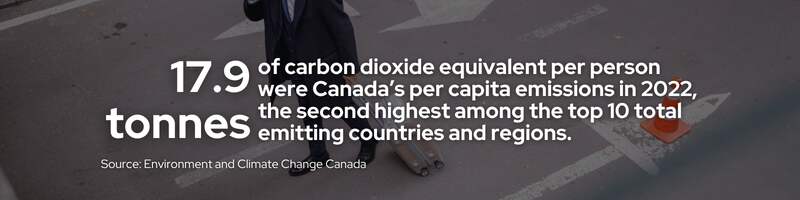
In Canada, however, though being a high-emitting economy facing acute transition risks, sustainable finance has not played a core role. In contrast, many financial institutions are criticized for their significant funding of high-emitting oil sands and natural gas operations.
“To manage the transition to a low-carbon economy and address the main social issues, sustainable finance concepts are urgently needed in Canada.”
Furthermore, there are no significant sustainable finance regulations yet, despite expert groups addressing the issue for years. Nevertheless, to manage the transition to a low-carbon economy and address the main social issues, sustainable finance concepts are urgently needed in Canada.
Therefore, many sustainable finance proponents place high hopes on the Carney-led government, since he has long been active in sustainable and climate finance. Also, though in the making for a long time, even a green and sustainable transition finance taxonomy seems to be within reach.
But what are the main fields for sustainable finance in Canada? We would like to focus on clean and renewable energy, transportation, housing, the transition to a low-carbon economy, and financing for natural assets.
Clean Energy Opportunities for Sustainable Finance in Canada
Though the Canadian electricity grid is relatively clean compared to other countries, electrification will increase demand for low-carbon, renewable electricity. Canadian financial institutions are involved in clean energy finance, but it is often abroad, for instance, in the US and in Europe. In Canada, however, the supply of bankable projects is low. Hence, the federal and provincial governments could scale renewable energy projects to increase sustainable finance.
Financing Sustainable Transportation Infrastructure
“Other countries demonstrate that blended-finance approaches can drive significant change toward greater sustainability.”
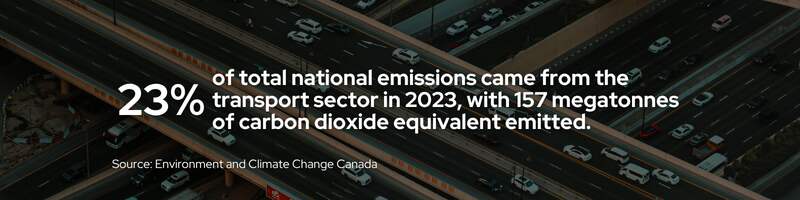
As a large country with a few high-density urban areas, Canada has high transport-related emissions. While there is a need for flying longer distances, connections between major centres in Ontario and Quebec could be made by high-speed train services. Again, this will need major sustainable financial investments, including blended finance.
So far, the financial collaboration between public financiers, such as CIB, EDC, and BDC, and private financiers is rather sporadic. However, other countries demonstrate that blended-finance approaches can drive significant change toward greater sustainability.
Sustainable Housing Finance and Social Resilience
Housing is a significant social sustainability issue, and, combined with the need for energy-efficient housing, it is one of the main underserved areas of sustainable finance. In contrast to many other countries, data on the connection between green buildings, mortgage risks, and real estate value are not collected. However, data from other countries show positive correlations. Hence, Canada needs to tap into this opportunity by employing sustainable housing finance.
Transition Finance and the Need for a Canadian Taxonomy
“Economies dependent on fossil fuels face heightened “transition risk”, the financial volatility associated with rapid decarbonization.”
Canada’s sustainability challenge is compounded by its economic structure. As studies on transition finance note, economies dependent on fossil fuels face heightened “transition risk”, the financial volatility associated with rapid decarbonization. Transition finance is needed to enable traditional sectors to adapt to a low-carbon economy. However, this field is prone to greenwashing and to opaque approaches.
Therefore, an expert group has developed a sustainable and transition finance taxonomy for Canada. Such a taxonomy has proven useful in other countries. What is missing, however, is the implementation of it as a regulatory standard at the earliest possible time. This will create more certainty and reduce risks for sustainable and transition finance.
Valuing Natural Assets in Canada’s Financial System
“Recognizing the economic and Indigenous values of ecosystem services ensures that conservation and restoration are treated not as costs but as strategic investments in national wealth and sustainable development.”
Finally, valuing natural assets is essential for Canada because forests, wetlands, rivers, and biodiversity provide critical ecosystem services, such as carbon sequestration and flood control, that underpin economic growth, climate resilience, and public safety for a country that is affected by climate change.
By integrating natural capital accounting into public policy, fiscal planning, and corporate disclosure, Canada can better manage climate and biodiversity risks, improve land-use decisions, attract sustainable finance, and align with global environmental commitments. Recognizing the economic and Indigenous values of ecosystem services ensures that conservation and restoration are treated not as costs but as strategic investments in national wealth and sustainable development.
How to Advance Sustainable Finance in Canada
“We need a significant increase in renewable energy projects, including infrastructure, sustainable transportation, and climate-friendly housing.”
Hence, what does Canada need to do to catch up on sustainable finance? We must scale transition finance, offer bankable sustainable investment opportunities, and enhance credibility.
Research emphasizes that fragmented policies across jurisdictions weaken impact and investor confidence. Hence, Canada should implement a transparent, national, sustainable, and transition-finance taxonomy. This taxonomy would reduce greenwashing and guide capital toward low-carbon activities that support the growth of low-carbon sectors and emissions reductions in high-emitting sectors.
Secondly, without bankable sustainable investment opportunities, the implementation of a transition taxonomy and other regulatory activities will not increase the amount of sustainable finance in Canada. We need a significant increase in renewable energy projects, including infrastructure, sustainable transportation, and climate-friendly housing. Although Canada is among the top-ten countries in renewable energy investments, given that per capita emissions are among the highest globally, significantly higher levels of sustainable finance investment are needed.
Thirdly, Canada needs to implement mandatory, harmonized climate-related disclosures aligned with ISSB standards and require credible corporate transition plans to increase sustainable finance and to avoid greenwashing. Expanding green and transition bond frameworks and reporting standards can support emissions-intensive sectors in decarbonizing responsibly. Integrating climate risk and sustainable finance into financial supervision and fiduciary duty will embed sustainability into core market decision-making rather than treating it as optional ESG branding.
The Future of Sustainable Finance in Canada Depends on Action
Sustainable finance is not a silver bullet. Carbon pricing, industrial policy, and infrastructure investment remain indispensable. If Canada aligns financial markets with climate science and social equity, it can transform risk into opportunity. In a world obliged to progress toward net zero, capital will reward jurisdictions that combine clarity, credibility, and opportunities. The future of sustainable finance in Canada will depend on whether we choose to act decisively or settle for incrementalism in a time that demands rapid transformation.
Let us be clear, private finance will follow the money and profits. We need to build financially attractive, sustainable investment opportunities. If we fail, sustainable finance will be invested abroad. While this might be acceptable for financial institutions, it is not for Canadian sustainable development.
About the Expert
-

Olaf Weber is a professor at the Schulich School of Business at York University, where he holds the CIBC Chair in Sustainable Finance. He also directs the Centre of Excellence in Responsible Business (COERB), focusing on sustainable finance, impact investing, and the integration of environmental, social, and governance factors into financial systems. Furthermore, he is an ASAC Fellow and a Research Fellow at the Institute for Sustainable Finance.
Schulich School of Business is a leading Canadian business school based at York University in Toronto.
See more
It is known for its research and programs in finance, sustainability, and global business education.
-
 Pension Reform in Canada: How to Build a Stronger, Smarter Retirement System
 Sebastien Betermier
Associate Professor of Finance, Desautels Faculty of Management
McGill University
Sebastien Betermier
Associate Professor of Finance, Desautels Faculty of Management
McGill University
-
 The Rise of Renting: How Companies, Not Renters, Must Adapt
 Lizaveta Akhvledziani
Founder and CEO
Chexy
Lizaveta Akhvledziani
Founder and CEO
Chexy
-
 Climate-Aligned Finance Will Future-Proof Canada’s Economy
 Rosa Galvez
Senator
Senate of Canada
Rosa Galvez
Senator
Senate of Canada