
The “Write” to Sign in an Evolving e-Signature Landscape

The passing of Bill C-42 in Parliament last November put a piece on the board for Canada, along with over 130 other countries, to address concerns about the money laundering, tax evasion, and criminal activity that the Panama Papers exposed in 2016. The legislation provides new powers to collect and disclose beneficial ownership information from Federal corporations. A key part of tracking ownership will be to create stronger links between the signing authority and the identity of the signatory.
This can be done by requiring physical or electronic signatures (e-signatures) that include a handwritten signature and electronic identity verification. To put this in context requires two steps back. The first step back is to a pre-COVID world where e-signatures were not widely accepted for a variety of legal documents. The second step was just over 20 years ago when e-signature legislation was first being introduced.
The adoption of best practices within Canada to link signing authority, the identity, and the act of individual informed consent will help Canadian firms take the lead in this sector, reduce financial losses in the mortgage and auto financing space where they are currently rampant, and help reduce money laundering channels.
Before looking at the interaction between technology and remote signing laws, a historical view of signatures is warranted.
The Conundrum With e-Signatures

On January 1, 1863, President Abraham Lincoln signed his name to the Emancipation Proclamation and said, “Never in my life have I felt more certain that I was doing right than I do in signing this paper. If my name goes into history, it will be for this act, and my whole soul is in it.”
“The identity of the signatory in these handwritten documents was known to be truthful and trusted because they were signed face-to-face, often with one or more witnesses present.”
A handwritten signature, whether penned by President Lincoln, depicted in paintings of the signing of the Magna Carta, or presented as one of the historical signatures affixed to the Declaration of Independence, has always been the foundation of both proof in the form of a pen-to-paper record. It has also stood as a symbol of personal consent and responsibility for the contents of the ethical and legally binding commitments in the document being signed. Lincoln’s emotional connection with the act of signing is also evident in his act of signing. This is why, even today, important legislation features a signing ceremony as part of high-level government and business workflow.
The identity of the signatory in these handwritten documents was known to be truthful and trusted because they were signed face-to-face, often with one or more witnesses present.
There are four significant threats to the power and integrity of a handwritten signature as the foundation for human consent and trust. These existing and pending challenges can be addressed in two ways. The first is to shift the signing workflow to the next generation of existing remote signing technology. The second is to monitor and adopt e-signature technology as it is developed or deployed in lower-trust commercial markets globally.
Threats to the Integrity of e-Signatures
1. The Bane of Convenience
The first threat is the market preference for convenience. After COVID-19, both businesses and consumers are not prepared to give up the immediacy, time savings, and efficiency of remote commerce. This preference for speed and the associated anonymity of commerce implied with remote transactions have created short and long-term potential for fraud. Even before the pandemic, the costs of fraud for credit card and e-commerce abuse were priced into the business models that banks and e-commerce platforms like Amazon passed onto consumers. Unfortunately, during the pandemic, mortgage and auto financing fraud expanded dramatically worldwide. The per-ticket item price tag for this criminal activity is high.
“This preference for speed and the associated anonymity of commerce implied with remote transactions have created short and long-term potential for fraud.”
2. Legacy Technology
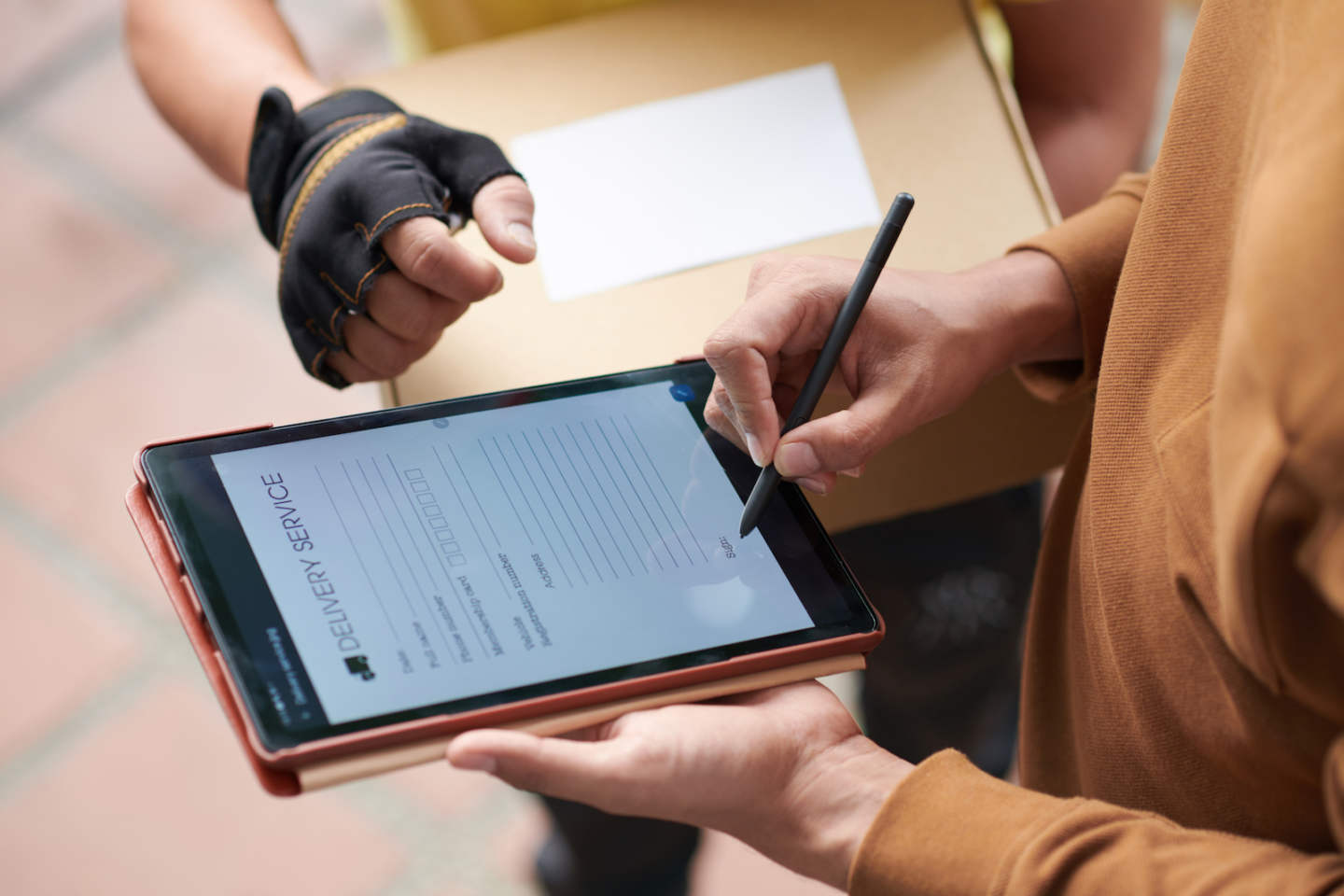
The second threat, which can be mitigated, stems from legacy technology and practices that were duct-taped together during COVID-19. This on-the-fly workflow and the evolution to the next generation of control, if not retooled, will leave these windows for abuse open. The reality of e-commerce and the adoption of terms and conditions─for example, in smartphone upgrades─has convinced all parties to a contract that a click is sufficient proof of acceptance. This ignores the ugly reality of a bad actor potentially taking control of your computer or other electronic devices and using Type to Sign in your name.
Convenience and the misplaced belief that “good enough” will suffice has, in our view, created a dangerous and growing compliance timebomb because the foundation for consent being granted is the identity certainty of the signatory and their signature. A proper legislative response to protect consumers might be to require any important organizational or consumer approval to require either two electronic actions like a click and a swipe with separate controls of the capturing of the individual’s signature physically or electronically. In the case of an important legal or financial commitment, Video Signing or Remote Online Notarization should be considered. The flaws in Click-to-Sign also extend from the original design restrictions found in the first generation of e-signature platforms that were coded and deployed during the era of the keyboard. Type to Sign is a process that generates via a computer a replica of a person’s name in a standard proforma cursive that has no relationship to the actual signatory’s handwriting.
“Clicks to accept acknowledgments undermines the individual accountability of the signer for their actual signature, creating confusion over the providence of that signature and ultimately leaving Clicks open to legal challenges that seek to repudiate the legality of those forms of e-Signature.”
Click and Type to Sign have been restricted so far in Canada by the Ontario and British Columbia Courts for certain transactions. This is because legal professionals and the Courts recognize the concern that Clicks to accept acknowledgments undermines the individual accountability of the signer for their actual signature, creating confusion over the providence of that signature and ultimately leaving Clicks open to legal challenges that seek to repudiate the legality of those forms of e-Signature. Click and Type to Sign signatures, especially if the electronic record is lost and only a paper copy exists, are open game in terms of tracing the identity of the signer given, which is generic.
This is one reason why iinked Sign™ allows signers the option of using their one-time-use original signatures. The origin of iinked Sign™ is linked to a robotic pen known as the LongPen®. The LongPen® delivers a biometrically correct legal wet signature, pen-to-paper style, but over the internet.
Canada has an opportunity to foster its domestic e-signing industry by adding requirements in its next versions of e-signature law for an actual signature in an electronic document as already mandated by two provincial courts.
3. Artificial Intelligence
The third challenge to the successful and safe implementation of remote signing is the advent of artificial intelligence. One can imagine that Time’s Person of the Year for 2023, had it not been Taylor Swift, might have been Artificial Intelligence personified. The potential threats to control over consent that AI presents are too numerous to list. These include security vulnerabilities, hacking of passwords, and virtual identity, such as deepfake video generation via generative AI, the theft of voice prints, and other biometric spoofing. Adding a handwritten signature to express consent mitigates identity theft. To expand on this, original signatures, combined with Video Signing, offer one of the best defences for fraud and identity uncertainty.
“For provinces that permit the remote execution of wills, a recorded video signing session should be required along with a provision that the recorded video is stored until the estate is fully settled.”
Canada has several leading Identification verification providers such as Trulioo and Bluink. The Law Society of Alberta, which recently accepted the Syngrafii iinked Sign™ platform into its Innovation Sandbox, and the Law Society of Ontario have both recognized the importance of mandating the use of technology to confirm virtual identity verification as part of remote transactions. These identity verification guidelines and best practice methods should be mandated coast-to-coast. For provinces that permit the remote execution of wills, a recorded video signing session should be required along with a provision that the recorded video is stored until the estate is fully settled.
Given the rise in title fraud across Canada, all real estate conveyance documents in physical or electronic form should require an actual signature and a recorded video session that is stored, at a minimum, for the life of the first mortgage or until the property is resold. As a reference point, most of Canada’s title insurance providers advise comparing new signatures in closing to old signatures on file or against provided government documents. This fraud protection mechanism is not viable without collecting a handwritten signature in the e-signature or paper workflow.
4. The Right to Sign
The fourth but intangible challenge to remote signing is the loss of the “Human Right to Sign.” Technology brings us convenience but is increasingly a dehumanizing force. There is a global recognition and return in the education of young students to include teaching cursive handwriting. This is shown to improve a variety of cognitive and motor skills.
“Abandoning the right of human consent that handwriting has expertly delivered, is the proverbial slippery slope with no clear bottom that voids the notion that professional or personal signing authority is not just a legal bond but also a personal one.”
Whether it be an important piece of legislation, an internal government or corporate decision, or an important personal legal or financial document, society and governments, on behalf of their citizens, need to acknowledge that abandoning the right of human consent that handwriting has expertly delivered, is the proverbial slippery slope with no clear bottom that voids the notion that professional or personal signing authority is not just a legal bond but also a personal one. Original signatures and human intent have a strong history of success in binding transaction assuredness. To take that control and undeniable benefits away is a denial of the Right to Sign as well as the Write to Sign.
Canada’s Charter of Rights and Freedoms is recognized globally. It is too late to add the Right to Sign, but it is important to remember that when the Charter was signed, there was an iconic picture of Queen Elizabeth II and Pierre Elliot Trudeau at a table together as the Charter was physically signed into law.
-
 Canada’s Spectrum Policy: Securing Mid-Band Capacity for 5G and 6G Leadership
 Luciana Camargos
Head of Spectrum
GSMA
Luciana Camargos
Head of Spectrum
GSMA
-
 Canadian Banks Must Power the Platform Economy, Not Just Participate In It
 Mike Cook
Head, Industry Advisors
Zafin
Mike Cook
Head, Industry Advisors
Zafin
-
 Canada Can Lead the World in Open RAN Evolution
 Nazim Benhadid
Chief Technology Officer
TELUS
Nazim Benhadid
Chief Technology Officer
TELUS