
Canada’s Philanthropic Moment: Five Policy Shifts to Unlock Impact
The non-profit sector, a $182 billion economic engine and Canada’s largest employer, requires strategic investment and policy modernization to meet surging social demand.

As Canada navigates economic uncertainty, rising inequality, and global instability, the philanthropic sector stands at a crossroads. With 11,000+ foundations stewarding over $135 billion in assets, Canadian philanthropy is a powerful force. We must modernize the sector’s regulatory framework and unlock its capacity to drive inclusive, sustainable change.
Here are five urgent reforms that can strengthen Canada’s philanthropic ecosystem and ensure it delivers maximum public benefit.
1. Modernize the Disbursement Quota Framework
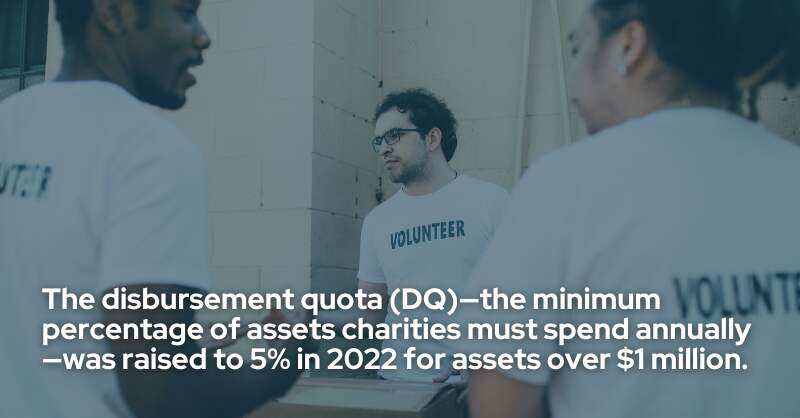
The disbursement quota (DQ)—the minimum percentage of assets charities must spend annually—was raised to 5% in 2022 for assets over $1 million. While this was a step forward, the current framework lacks flexibility and transparency. PFC recommends a data-driven formula that balances philanthropic impact with responsible asset management.
The federal government must begin preparations now for the promised 2027 review. This review should be regular, evidence-based, and guided by a formula that considers inflation, investment returns, and operating costs. A modern DQ framework will ensure capital flows into communities while preserving long-term sustainability.
2. Unlock Impact Investing Through Risk Mitigation
Impact investing—using capital to generate both financial and social returns—is a game-changer for philanthropy. Yet many foundations remain hesitant due to unclear regulations and perceived risks.
The federal government should underwrite impact investments that align with public policy goals, such as affordable housing or climate resilience. This would de-risk philanthropic capital and catalyze co-investment without burdening taxpayers.
3. Fix the Qualifying Disbursement Regime to Enable Collaboration
“The government needs to amend the Income Tax Act to explicitly allow pooled funding and grants to NQDs.”
The 2023 introduction of the Qualifying Disbursement Regime allowed charities to grant to non-qualified donees (NQDs). It was a long-overdue recognition of the vital role non-profits play. However, technical barriers remain. Charities risk losing their status if they pool funds or grant to NQDs without precise legal language in their purposes.
The government needs to amend the Income Tax Act to explicitly allow pooled funding and grants to NQDs. They should also provide sample language for charitable purposes so foundations can revise their objects without legal ambiguity allowing them to grant to NQDs. These changes would empower charities to respond quickly in crises and collaborate more effectively across sectors.
4. Close the Data Gap: Make the Sector Visible
“The government should establish a permanent Statistics Canada unit dedicated to the non-profit and charitable sector, and make the nonprofit module an annual fixture.”
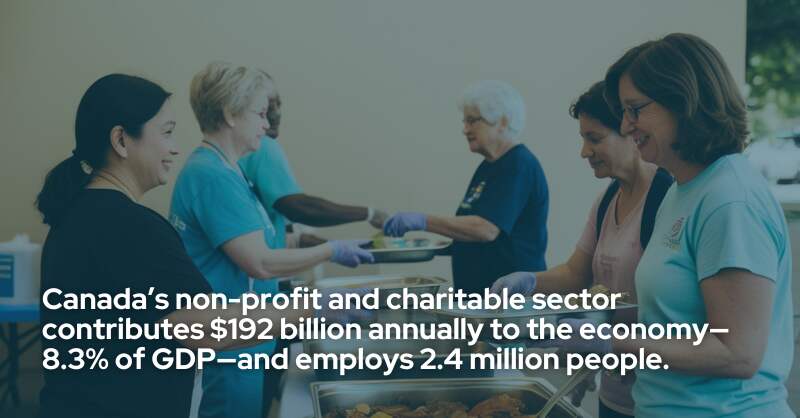
Canada’s non-profit and charitable sector contributes $192 billion annually to the economy—8.3% of GDP—and employs 2.4 million people. Yet policymakers lack consistent, reliable data to inform decisions. The 2024 nonprofit module of the Canadian Survey of Business Conditions was a breakthrough, but it must not be a one-off.
The government should establish a permanent Statistics Canada unit dedicated to the non-profit and charitable sector, and make the nonprofit module an annual fixture. This data is essential for designing effective policies, allocating resources, and recognizing the sector’s economic and social contributions.
5. Ensure Fair Appeals for Charities: Designate the Tax Court
“The government should designate the Tax Court of Canada as the primary appeals reviewer for CRA decisions affecting charities. “
Charities facing CRA decisions, such as refusal or revocation of registration, currently face an expensive, opaque appeals process through the Federal Court of Appeal. This limits access to justice and stifles the evolution of charity law.
The government should designate the Tax Court of Canada as the primary appeals reviewer for CRA decisions affecting charities. The Tax Court offers more accessible hearings, broader evidence consideration, and a fairer process. This reform, recommended in the 2019 Senate Report Catalyst for Change, is long overdue.
A Call for Courage and Collaboration
“Canada’s philanthropic sector is ready. It has the capital, the commitment, and the creativity to help solve our most pressing challenges. But it cannot do so within outdated regulatory constraints or without meaningful government partnership. “
Charities and nonprofits are not just service providers—they are policy partners, economic drivers, and community anchors. From foundations to food banks, housing supports to human rights advocacy, they contribute vital public benefits and services.
The federal government must prioritize and deepen its partnership with our sector. This includes recognizing the sector’s expertise in policy development, co-designing programs, and streamlining funding mechanisms. A resilient Canada depends on a thriving civil society.
Canada’s philanthropic sector is ready. It has the capital, the commitment, and the creativity to help solve our most pressing challenges. But it cannot do so within outdated regulatory constraints or without meaningful government partnership. The reforms outlined above are levers for transformation. Let’s build a philanthropic ecosystem that reflects our values, meets our challenges, and shapes a more just, equitable, and sustainable future.
About the Expert
-

Jean-Marc Mangin is President & CEO of Philanthropic Foundations Canada. Born in Manitoba, raised in Quebec, and educated in BC and Ontario, he as an MA from the University of Toronto. With a background in global development, climate, and research, he’s held leadership roles across sectors. Jean-Marc serves on Canada’s Advisory Committee on the Charitable Sector.
See more
-
 Indigenous Youth Are Key Partners in Strengthening Canada’s Security
 Jennifer Brennan
Senior Director
Mastercard Foundation
Jennifer Brennan
Senior Director
Mastercard Foundation
-
 Why Nonprofits Are the Unsung Drivers of Canada’s Economic Growth
 Duke Chang
CEO
CanadaHelps
Duke Chang
CEO
CanadaHelps
-
 Women in Finance Are Driving Change in Canada’s Finance Industry
 Heather Cooke
Board Chair
CFA Society Toronto
Heather Cooke
Board Chair
CFA Society Toronto