
Canada’s New AI Ministry is a Bold Commitment to Sector’s Homegrown Revolution
Canada’s new AI ministry marks a bold shift from quiet leadership to global ambition—aiming to keep homegrown innovation, talent, and industry at the heart of the country’s economic future.

Prime Minister Mark Carney’s creation of a dedicated Artificial Intelligence ministry—with Evan Solomon sworn in as Canada’s first federal AI minister—deserves high praise. This move signals a meaningful national commitment to a field that Canada quietly pioneered for decades.
Boosting Recognition of Canada’s AI Contributions

The new AI ministry’s top priority should be boosting public and international recognition of Canada’s outsized AI contributions, past and present. By celebrating our achievements and promoting our talent, Canada can sustain its intellectual leadership in AI, even as capital-rich competitors like the United States vie for our brightest minds. It may surprise many Canadians to learn that Solomon and his team will have plenty to brag about.
“The new AI ministry’s top priority should be boosting public and international recognition of Canada’s outsized AI contributions, past and present.”
Some of the earliest foundations of artificial intelligence were laid here at home. As far back as 1949, Canadian psychologist Donald O. Hebb at McGill University proposed the idea that “neurons that fire together, wire together,” now known as Hebbian learning. Modern artificial neural networks still build on Hebb’s principles, forging the link between neuroscience and the now ubiquitous field of AI.
When much of the world soured on AI research during what’s been dubbed the “AI Winter,” Canada continued to support frontier research through institutions like CIFAR. Turing Award winners Geoffrey Hinton, Yoshua Bengio, and Richard Sutton—recipients of the highest honour in computer science—all call Canada home. In 2024, Hinton did something no AI researcher had done before: he won the Nobel Prize in physics for his contributions to neural networks. Yet these Canadians are hardly known outside tech circles. We should be shouting their names and accolades from the rooftops.
The Deep Learning Revolution and Canadian Talent
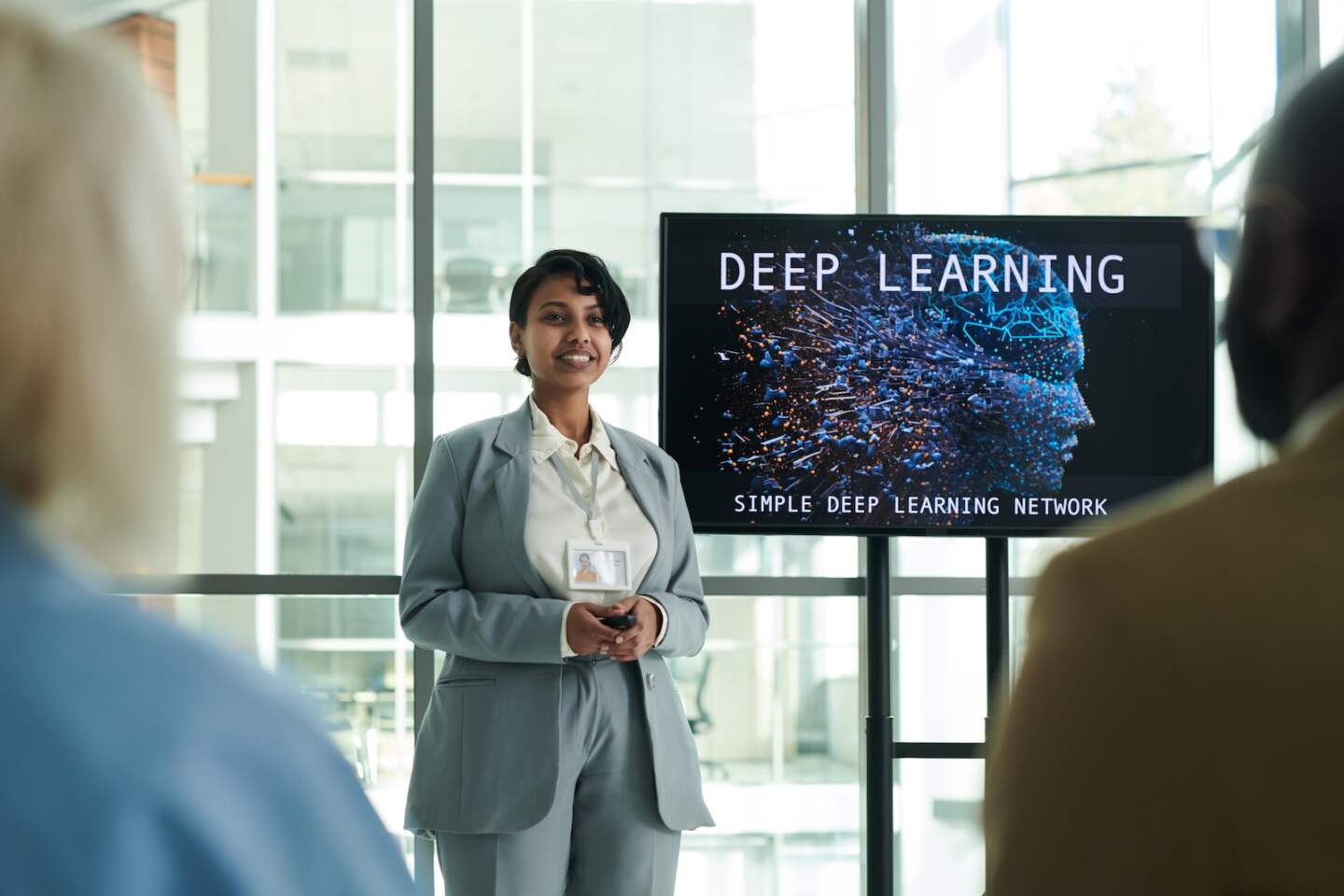
From research to practice, Canada was again the cradle of an AI revolution. In 2012, a University of Toronto team led by Hinton achieved an AI vision breakthrough that kicked off what is called the “Deep Learning Revolution.” The team’s research was quickly snapped up, kickstarting global funding for AI.
“In 2012, a University of Toronto team led by Hinton achieved an AI vision breakthrough that kicked off what is called the “Deep Learning Revolution.””
Crucially, the 2012 breakthrough seeded today’s leading AI labs. One of Hinton’s students on the project, Ilya Sutskever, went on to co-found the Silicon Valley research powerhouse OpenAI. Sutskever’s journey epitomizes Canada’s often underappreciated role in training world-class AI talent. The landmark 2017 paper “Attention Is All You Need”—which introduced the architecture that now underpins Generative AI—benefited from Canadian ingenuity. One co-author, Aidan Gomez, co-founded Cohere, a leading Canadian startup that competes with OpenAI in the enterprise market. From the earliest neural network theories to the latest developments, Canadians have been key architects at every step.
That’s no accident. It’s the result of deliberate government policy choices. For decades, Canada prioritized a curious and intellectually diverse research environment. In 2017, it became the first country to launch a national AI strategy. Canada’s AI institutes are internationally regarded as powerhouses. They anchor our reputation as a leader and cultivate the next generation.
Challenges in Capitalizing on AI Strength
Yet for all these strengths, Canada has struggled to fully capitalize on its AI prowess. We lead in ideas, but others often reap the profits. It’s a well-worn refrain that Canada produces great inventions but loses out on industrial rewards. AI has been no exception. Over the past decade, our AI brain drain has seen many of our brightest minds, especially younger graduates, lured away to Silicon Valley or absorbed by US tech companies setting up Canadian outposts. Businesses looking to adopt AI tend to know about American giants but are unaware of domestic competitors.
“Canada has struggled to fully capitalize on its AI prowess. We lead in ideas, but others often reap the profits.”
The establishment of an AI ministry is a powerful signal that Canada is serious about closing that gap. It’s a chance to double down on what we’ve done right—supporting fundamental research and education—while addressing our shortcomings: aggressive promotion and scaling of Canadian innovations. A top ministry priority should be celebrating Canada’s AI heritage and talent on the world stage. Recognition itself can help stem the brain drain and catalyze businesses to trust local companies.
“Solomon should lead a cultural shift: making national pride in our AI leadership part of Canada’s identity.”
Practically speaking, Solomon should lead a cultural shift: making national pride in our AI leadership part of Canada’s identity. Why not celebrate our “AI godfathers” in public venues, support science communication about Canadian breakthroughs, and ensure that when Canadian researchers win international awards, it’s front-page news at home? In a world where AI has become a strategic race, Canada’s best asset is not the deepest pockets—it’s our legacy of innovation and the brainpower we continue to generate.
About the Expert
-

Ryan Khurana is an AI practitioner in Toronto, a senior fellow at the Foundation for American Innovation, and a contributor for the Macdonald-Laurier Institute.
See more
-
 Canada’s Insurance Industry Has A Productivity Crisis. AI Can Cure It.
 Jackson Fregeau
CEO & Co-Founder
Quandri
Jackson Fregeau
CEO & Co-Founder
Quandri
-
 Can AI Help Canada Build the Future of Life Sciences?
 Handol Kim
Co-Founder & CEO
Variational AI
Handol Kim
Co-Founder & CEO
Variational AI
 Martin Enault
Chief Entrepreneur in Residence
Centech
Martin Enault
Chief Entrepreneur in Residence
Centech
 David D. Jones
Managing Director
Merck Canada
David D. Jones
Managing Director
Merck Canada
-
 Adoption Is Not Adaptation: The Reskilling Wave Canada’s AI Strategy Leaves Out
 Tracey Taylor-O’Reilly
Founder
Promentus
Tracey Taylor-O’Reilly
Founder
Promentus