
Canada’s Creative Renaissance: A Call to Action for Agentic AI
Just as the printing press shifted the social paradigm with widespread literacy and the internet connected the world, agentic solutions are now unlocking creativity at a scale we never thought possible.

We’ve all seen how technology has democratized creativity over the years. The printing press made knowledge accessible, the camera transformed storytelling, and the internet ushered in a new era of digital content creation. Now, we are standing on the precipice of another profound shift: the Augmented Creativity Era, which is being catalyzed by agentic AI. This is not merely an incremental upgrade; it is a fundamental evolution in the relationship between humans and technology, where AI becomes an active, collaborative partner in the creative process.
At RHEI, we are witnessing the dawn of this new era. We have entered a world where creativity is no longer constrained by an individual’s capacity, time, or resources. Instead, agentic AI is poised to become an intuitive collaborator, understanding our unique creative processes, anticipating our needs, and elevating our work beyond what was once imaginable. This isn’t a new set of tools; it’s the beginning of a fundamental evolution where AI becomes an active contributor to creative expression, not just a passive assistant.
From Tools to Collaboration
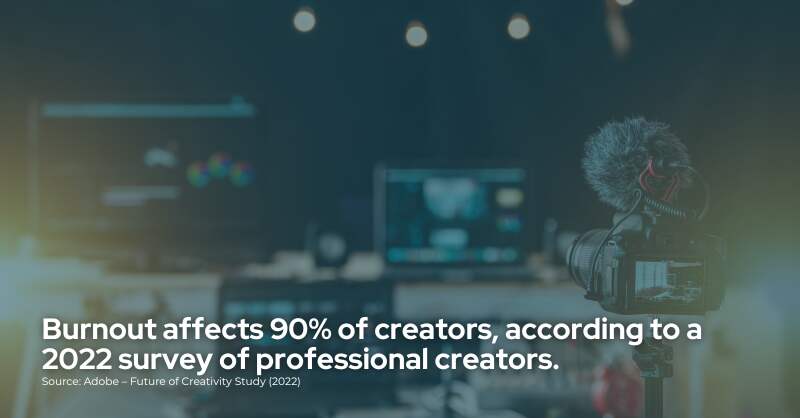
Historically, human creativity has been bound to the tools of the time: a sculptor’s hammer and chisel, a maestro’s piano. These tools were inert without human mastery, but the paradigm is shifting. Traditional systems rely on humans hiring other humans and on fragmented tools that only offer what you can extract from them. Agentic AI changes the equation. It doesn’t just respond to commands; it collaborates, pushes boundaries, and expands what individuals believe they’re capable of. We see this not just as a technological evolution, but as a new foundation for unleashing human potential at scale, giving billions the power to apply their creativity without constraint.
Consider the filmmaker of the past, juggling scriptwriting, production planning, post-production, and distribution, often with a scattered network of specialists. In the Augmented Creativity Era, an agentic creative director can analyze emerging storytelling trends, generate mood boards, refine scripts in the creator’s voice, and even suggest the most strategic platforms for release. All of this, without replacing or diluting the creator’s vision; instead, it enhances it.
We have seen this pattern before. When photography emerged, painters feared obsolescence, but it instead liberated them to explore new frontiers like impressionism and abstraction. Similarly, when synths and digital music production tools became widely accessible, they didn’t replace musicians; they expanded the possibilities of sound creation, ushering in new genres. Agentic AI represents a major departure from previous AI applications. Unlike static tools that require direct human input for every action, agents have the ability to function as dynamic and proactive collaborators with highly specialized skills. They can understand context, make decisions, and execute tasks, freeing us from the burden of micro-managing every aspect of our work.
The Exponential Shift: From Tools to Teams
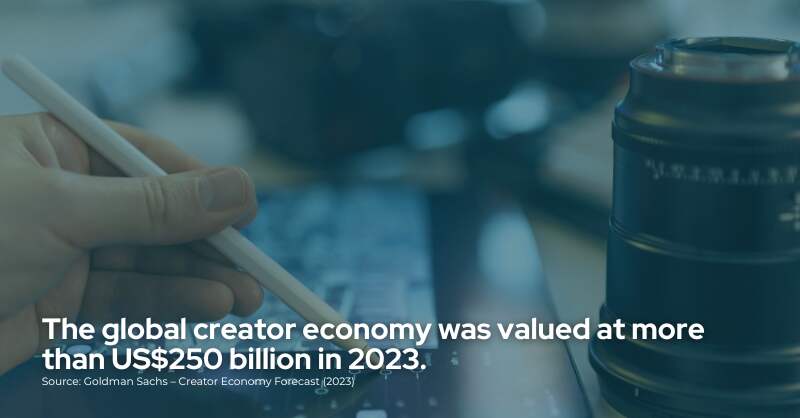
One of the greatest challenges facing creative professionals today is the sheer complexity of maintaining a creative career or business. A single creator has to be a visionary, a strategist, a producer, a marketer, and a distributor all at once. The cognitive load is immense, and burnout is a real threat, with a significant number of creators struggling with it. This is a critical problem we are solving through agentic innovation at RHEI.
The way we see it, AI isn’t just helping with isolated tasks; agentic solutions should effortlessly empower human creativity with proactive and personalized teams. We need to shift our thinking from “having better tools” to “having your own creative team.”
Imagine an emerging content creator struggling to come up with new concepts or engage their audience. An agentic creative director like Made’s Milo can help them transform their visions into compelling, high-impact stories, driving engagement and performance. Simultaneously, a community manager agent like Zara can draw insights from audience sentiment and manage a community, authentically building loyalty and augmenting the creators themselves. These are activities that have largely fallen to the wayside as the social and digital landscape has grown to an unimaginable scale. This is not theoretical; this is happening now.
A Call to Action for Canada’s Digital Future
“We must develop policies that foster innovation while ensuring ethical use. This means creating regulatory sandboxes where companies can test and refine agentic AI solutions responsibly.”
For Canada to lead in this new digital economy, we must take concrete steps now to embrace and integrate agentic AI into our creative and business sectors. This is a moment of renaissance, where ideas that once seemed too ambitious can now be realized effortlessly.
Agentic solutions are not just changing how we create; they are rewriting the relationship between human imagination and execution to reach new heights and actually improve the quality of what we make. Creative potential is no longer gated by access to resources or technical expertise.
- For Policymakers: We must develop policies that foster innovation while ensuring ethical use. This means creating regulatory sandboxes where companies can test and refine agentic AI solutions responsibly. We must also invest in digital literacy programs to prepare our workforce for a future where human-AI collaboration is the norm. By doing so, we’re not just supporting a new industry; we’re unlocking the potential of a new generation of creators who may have previously lacked the means to bring their ideas to life.
- For Business Leaders: Embrace agentic AI as a strategic asset, not just a cost-cutting tool. The goal is not to replace your team but to augment every member with the limitless potential of AI. By integrating these solutions, businesses can help their talent shine even more brightly, reduce burnout, and increase output and quality. This is a chance for Canadian businesses to become global leaders in creative innovation.
- For Educators: We must adapt our curricula to focus on human-AI collaboration. Instead of teaching skills that can be easily automated, we should emphasize critical thinking, creative problem-solving, and the ability to effectively partner with AI agents. By teaching students to harness this technology, we’re preparing them to thrive in the future economy.
We are only scratching the surface of what is possible. Just as the printing press shifted the social paradigm with widespread literacy and the internet connected the world, agentic solutions are now unlocking creativity at a scale we never thought possible. Let’s work together to ensure Canada is at the forefront of this transformation. And the best part? This is just the beginning.
About the Expert
-

Shahrzad Rafati is the Founder and CEO of RHEI, formerly BBTV, a technology company that builds AI to amplify human creativity, scale audiences, and enhance impact. Shahrzad has driven RHEI to be a groundbreaking leader in the tech space, pioneering Made as the first emotionally intelligent platform for human creativity. RHEI is a leading global powerhouse, reaching over 600 million unique viewers every month in over 150 countries. Shahrzad supports several influential Boards and Associations, including G20 EMPOWER as its Co-Chair, G7 Gender Equality Advisory Council (GEAC), Invest in Canada, Hootsuite, and Bjarke Ingels Group, and is recognized for her contributions to the media industry and entrepreneurship.
See more
-
 Canada’s Insurance Industry Has A Productivity Crisis. AI Can Cure It.
 Jackson Fregeau
CEO & Co-Founder
Quandri
Jackson Fregeau
CEO & Co-Founder
Quandri
-
 Can AI Help Canada Build the Future of Life Sciences?
 Handol Kim
Co-Founder & CEO
Variational AI
Handol Kim
Co-Founder & CEO
Variational AI
 Martin Enault
Chief Entrepreneur in Residence
Centech
Martin Enault
Chief Entrepreneur in Residence
Centech
 David D. Jones
Managing Director
Merck Canada
David D. Jones
Managing Director
Merck Canada
-
 Adoption Is Not Adaptation: The Reskilling Wave Canada’s AI Strategy Leaves Out
 Tracey Taylor-O’Reilly
Founder
Promentus
Tracey Taylor-O’Reilly
Founder
Promentus